

Why So Many Professional Chefs Turn To This Salt Brand
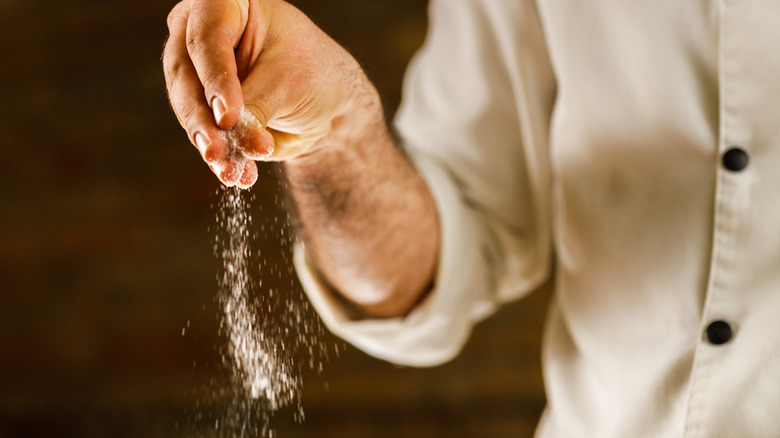
Salt is a critical component in cooking. This is glaringly obvious when you watch a competition cooking show, and it is almost like removing a limb if you ask a chef to cook without it. While you may be tempted to think that all salt is the same, that is definitely not the case. Salt varies in how it is produced, which yields different crystal textures. Various salts also have differing amounts of sodium. And, all of these things directly impact how salt functions in a dish. Many recipes call for kosher salt, which simply means the salt contains no additives, and the brand that chefs seem to reach for is Diamond Crystal.
Another popular chef choice for a workhorse salt is Morton Kosher Salt, but they are not exactly alike and there are several reasons that professionals lean towards Diamond Crystal. First, it has a unique hollow pyramid structure that makes the crystals easy to manipulate and control. Chefs like Ina Garten also gravitate towards Diamond Crystal because it has less sodium than other brands, so there is less of a chance that your food will be overly salty. In fact, the difference is quite dramatic. A ¼ teaspoon of Diamond Crystal has 280 milligrams of sodium while a ¼ teaspoon of Morton Kosher Salt has 480 milligrams of sodium.
Diamond Crystal is a flake above
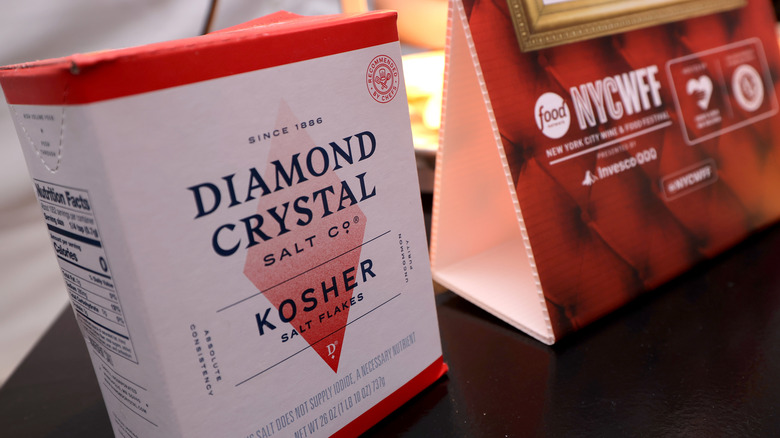
Diamond Crystal Kosher Salt has been manufactured in St. Clair, Michigan, since 1886 and is made by evaporating salt brine in open pans. This trademarked production method creates those uniquely shaped crystals that so consistently delight chefs. Because the flakes are more visible than other salts, they also act as a guide for pros who are continually tasting and adjusting seasoning as they cook. The flake structure also allows chefs to season food evenly, which is part of why they season food from high above.
Kosher salt like Diamond Crystal is one of two types of salt always on hand in chef Alex Guarnaschelli's kitchen, the other being flaky sea salt for finishing. While salt has always been a prized ingredient, so much so that in Ancient Rome salt was used as money, the type you use counts. That selection also directly affects recipe results, so sticking with one will ensure your food tastes exactly the way you intended. For consistency, flake structure, and sodium control, industry vets appear to choose Diamond Crystal on repeat, which may influence your salt choice moving forward.