

Soy Sauce Effortlessly Creates Restaurant-Worthy Soup In Seconds
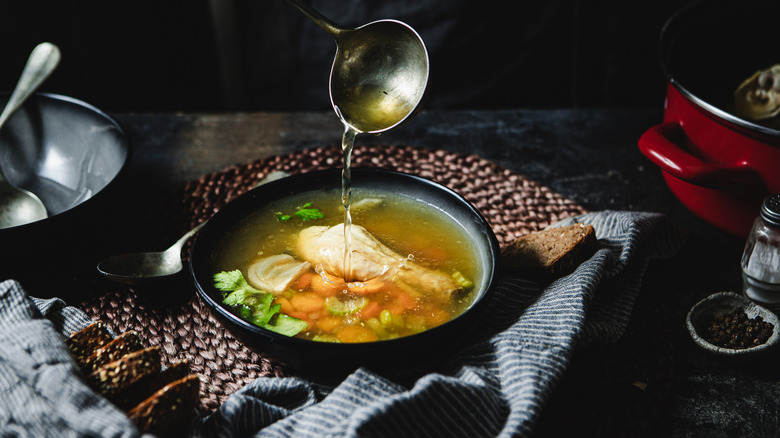
If your soup often ends up coming out a little lacking in the flavor department, just a small splash of soy sauce could be all you are missing. This reliable Asian sauce brings many things to the table — saltiness, savoriness, and a more rounded taste. The condiment owes its unique flavor in large part to glutamate, the amino acid responsible for umami flavor. Umami is that deeply savory taste that you will also find in other common soup ingredients such as Parmesan, miso paste, tomato paste, and fish sauce. All too often people act like soy sauce is just an alternative to salt, but it has a lot more going on than its saltiness — traditional soy sauce is brewed and fermented over a period of time, a process that develops a whole range of flavor compounds alongside glutamate.
Soy sauce in soup isn't as out-of-the-box as it may sound either. It has been used in soups and broths across East Asian cuisines for centuries. In Japanese shoyu ramen, for example, soy sauce is a defining part of the flavor profile. So it makes perfect sense that even America's favorite soy sauce brand could earn a permanent place in your next pot of soup.
How to add soy sauce to soup without overdoing it
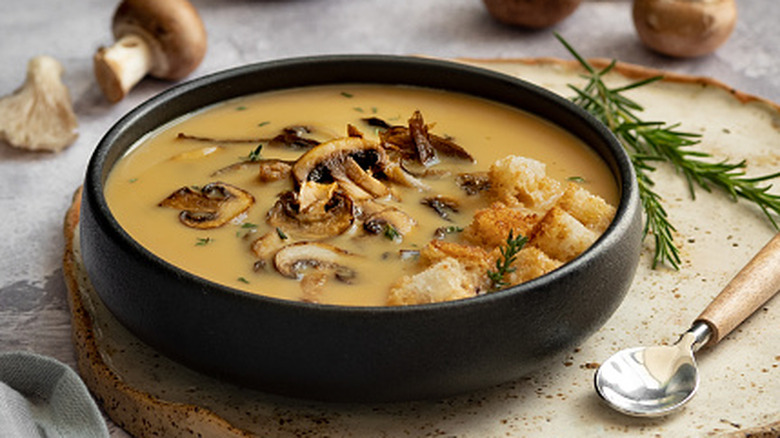
Japanese noodle dishes like udon and ramen may be the most obvious match for soy sauce, but that's not where its usefulness ends. You could give it a try in mushroom soup, as it has the ability to build on the mushrooms' natural umami, or add it to lentil and bean soups to give these earthier ingredients a richer dimension. And even a more basic vegetable soup or chicken noodle soup can benefit from soy sauce for the same reason, especially if it's made with a fairly simple stock.
The important part is controlling the quantity. Soy sauce should not be the dominant flavor of your soup, so start with a few splashes, about 1 or 2 tablespoons, then stir and taste before deciding whether to add more. Of course, there are limits to this trick; soy sauce is going to be most useful when a soup needs more savoriness, not sharpness or acidity. Sometimes a soup is a little flat even though it has enough depth and saltiness, in that instance a squeeze of lemon is probably a better fix. Soy sauce works best with ingredients that have an earthier taste that needs to be built on, like roasted vegetables, legumes, and mushrooms. Delicate and creamy soups may be less forgiving — in fact, a light cream soup could easily take on too much of soy sauce's flavor and color if you go overboard.