

What Is Thick Soy Sauce And How Is It Different From Regular Soy Sauce?
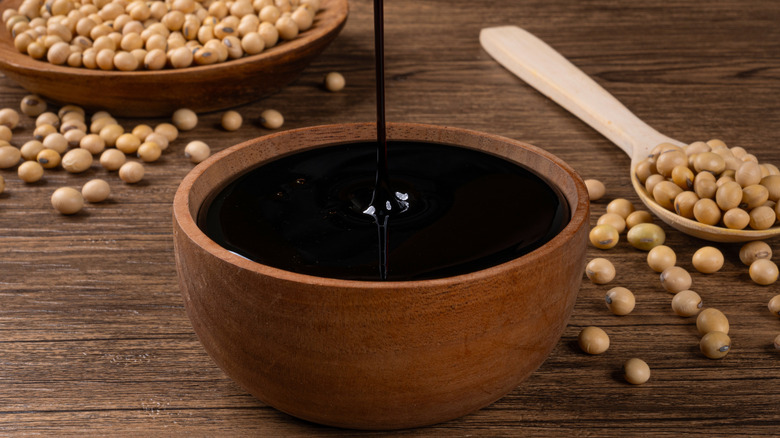
If you dabble in east Asian cuisines, you're probably aware that there's different types of soy sauce, like light and dark varieties. However, one that you might not be familiar with is thick soy sauce. As the name suggests, it's thick in texture, with a syrup-like consistency a bit like hoisin sauce. Sometimes called "soy paste" although not to be confused with other soy pastes like miso, it's popular in Taiwanese cuisine. You could argue that it's similar to Indonesia's relatively thick soy sauce variety called kecap manis, but that one is sweeter, so strictly speaking, the name refers to the Taiwanese variety.
Thick soy sauce isn't too far removed from its "regular" counterparts: It starts with a soy sauce base, and sugar and thickeners are added. It's worth noting that Taiwanese soy sauce tends to use pre-fermented black soybeans instead of the yellow ones common elsewhere, which gives a richer base flavor even before the sweetening and thickening.
Compared to both "regular" light and dark soy sauces (Taiwan doesn't really differentiate between these versions), you'll notice a sweeter and less-salty taste. While dark soy sauce is sweeter than light, the thick version is sweeter than both. While the thinner versions are used more for seasoning dishes or adding rich notes, the thick version tends to be used more for glazing or dipping.
Uses for thick soy sauce, and making it at home
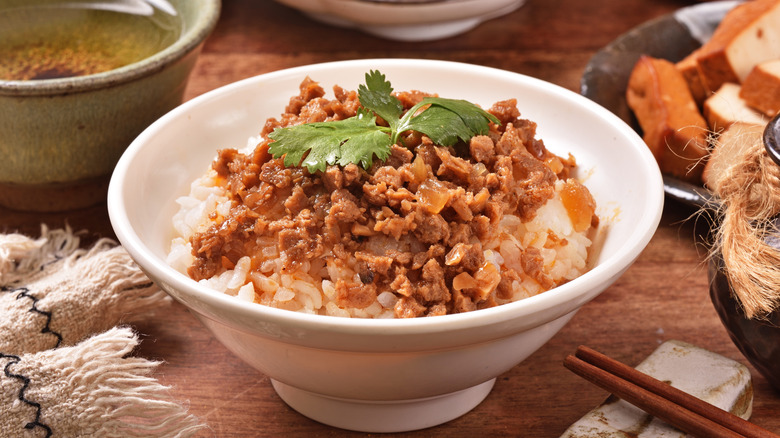
Beyond glazing, thick soy sauce tends to be used more for finishing dishes, rather than mixed in like its runnier counterparts. It's most prominent in Taiwanese food, where it might be drizzled onto dishes like oyster omelets. It's a go-to dipping sauce for dishes like scallion pancakes, dan bing (a popular Taiwanese breakfast food of rolled-up egg crepe often served with various fillings), and zongzi (a bamboo-wrapped rice ball with fillings like pork). It can also add some rich flavor to steamed vegetables.
Kimlan, a popular Taiwanese producer of thick soy sauce, also suggests using it in braised pork rice, another popular Taiwanese dish. It works well in saucy dishes where you want a sauce that sticks to the ingredients, and sometimes appears in marinades for an umami kick, too. You might also find garlic versions out there that add an extra layer of flavor, although you could easily just add your own garlic, too.
If you don't want to track thick soy sauce down (you might need to go to specialty grocers for it, or purchase it online), it's something you can whip up at home as long as you have regular soy sauce on hand. You'll simmer that soy sauce with some sugar and then whisk in a thickener like cornstarch or glutinous rice flour.