

Butter Molds Are The Gorgeous Vintage Trend That Needs To Make An Immediate Comeback
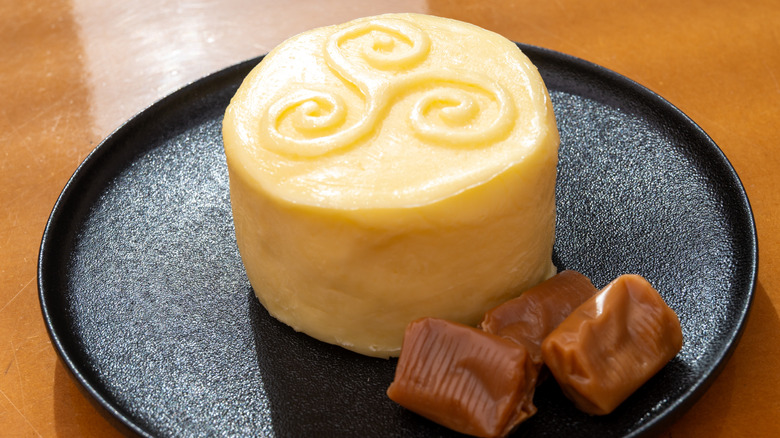
If vinyl records, fanny packs, and leg warmers prove anything, it's that we love recycling old things. Just like pop culture trends, food trends come and go, but some have yet to get the second chance they deserve, like butter molds. Butter used to be beautifully molded and displayed on tables for effect, but nowadays, we just get a boring pat of butter with our food. You might be familiar with the butter lambs that appear on some Catholic tables at Easter, or you might have seen butter-shaped turkeys for Thanksgiving and Christmas trees in December at the grocery store. But the days when they were the norm at the dinner table are long gone. And some of us are suckers for nostalgia and wish they would make a comeback.
Molding butter was a way for 18th and 19th century farmers to leave their mark on the butter they produced so people would know exactly where it came from. Some artisans would use tools to hand-carve it into easily identifiable shapes, while others used molds that would create consistent designs. The molds were typically made from wood or glass and would allow the farmers to create the same designs over and over again. Customers would use them as centerpieces for holiday tables or as elegant additions to the place setting for guests. Today, like Jell-O molds that you don't want to pass up at the thrift store, butter molds can add a personal touch and a dash of sophistication to your table. Vintage molds can be displayed, and if you want a modern version that is easy to work with, there are plenty of options made from modern materials like silicone available at stores and online retailers.
Tips for achieving beautiful butter molds
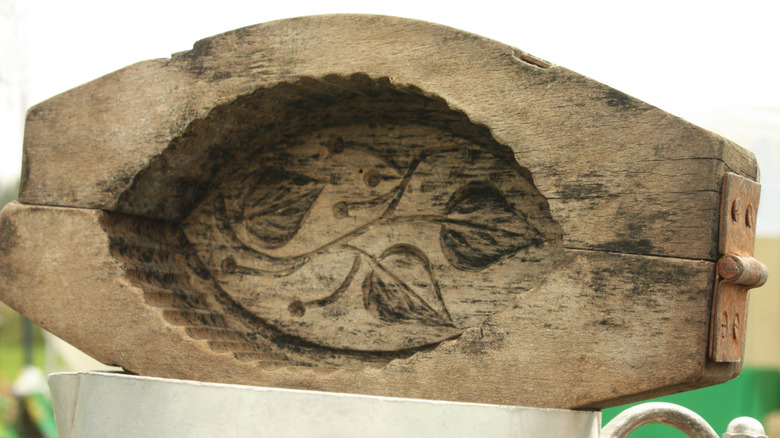
Cooking is something of an art form, and so is setting a beautiful table. So, it stands to reason that butter molds can really elevate the dining experience much in the same way celery was once used as a status symbol at the table of wealthy families. If you want to bring some of this old-fashioned class to your table, it's easier than you think, and you can use wood molds, molds made with modern food-safe materials like silicone, or use vintage molds you inherited from your ancestors or bought at an estate sale.
If you plan to use a wooden mold, you'll want to make sure it has been properly seasoned. When you're ready, soak the mold in ice water for a few minutes so the butter won't stick. When it comes to the butter, you can go with your favorite brand, use salted or unsalted, or even make your own. The key is to let the butter soften (but don't melt it!) before trying to mold it. Once the butter is soft and your mold is sufficiently soaked, pack the mold with butter until it is full. Smooth out the surface, freeze it for half an hour, and it is ready to be removed from the mold.
Silicone molds are even easier to use because they don't require the soaking step of the process. Unlike their wooden counterparts, they are flexible and nonstick, which makes releasing the molded butter easy. And you can pop them in the dishwasher to clean them once you're done. But unlike their wooden counterparts, they won't add a decorative vintage touch to your kitchen decor.