

The Common Bologna Myth You Should Put To Rest For Good
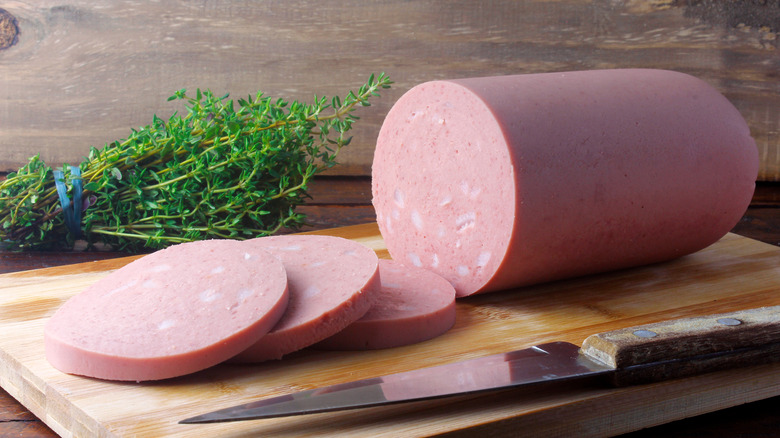
Bologna may date back as far as ancient Rome, but the modern American version didn't become a staple in U.S. kitchens until the 20th century. For those who've never tried it, its reputation for containing animal parts like organ meats and bones may leave them wondering what type of meat bologna is. At its most basic, bologna is a cooked sausage that's made from finely ground poultry, pork, or beef. It's a common belief, that all bologna contains organ meats and other animal byproducts, and while some bologna does contain these ingredients, they're standard in all bologna recipes.
These "variety meats" (also known as offal), include organ meats and other nonstandard edible parts, such as tripe, lips, tongue, feet, snout, and intestines. These meats are generally more economical than more familiar cuts. While Americans don't eat much offal, many other cultures do, including the United Kingdom, Australia, Mexico, and India, where offal has been enjoying a culinary comeback. However, in most of the United States (offal is enjoyed in some parts of the South), it's still typically just an ingredient that helps keep the costs of bologna down.
Under U.S. regulations, bologna containing offal must be labeled as "with variety meats" or "with byproducts" and must contain at least 15% skeletal muscle. Producers must identify each byproduct individually on the label. In other words, organ meats are never a hidden bologna ingredient, and they are certainly not included in every version of the product. It's even a misconception that all bologna is just a cheap deli meat made from scraps.
Why bologna isn't always made from scraps
Some inexpensive bologna, like Oscar Mayer, is made of lower-cost ingredients, including mechanically separated chicken. During the mechanical separation process, meat is forced through a sieve-like contraption that forces the meat through tiny holes, keeping the bones in the sieve and creating a meat paste on the other side. Because of the machinery's high pressure, tiny bone particles may fracture off and end up in the paste. But there are regulations limiting bone content to no more than 1%. Though any bone content is both minuscule and incidental, this likely led to the belief that bologna is made from ground-up bones.
Higher-quality bologna is a different story. It's made with real cuts of beef or pork instead of mechanically separated meat. Some producers even make bologna with venison or other game meats. Others focus on how the animals are raised — making 100% grass-fed beef versus regular bologna, for example. If that still doesn't convince you that bologna is more than a budget deli meat, consider mortadella, the Italian pork sausage that inspired American bologna. There's more than one difference between bologna and mortadella, but the latter is considered a gourmet bologna. Or you could opt for Troyer's Genuine Trail Bologna, an all-beef brand made in Ohio since 1912. Another alternative is Boar's Head 33% Lower Sodium Bologna, which has no fillers, MSG, or artificial colors.
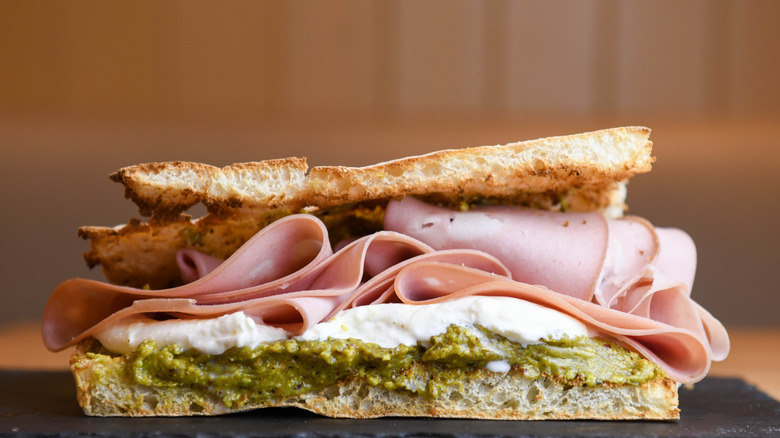
So if you've always avoided bologna because you thought it was all made from offal or ground-up bones, it's worth taking a second look. And if you're a fan no matter how it's made, pair it with ricotta and pistachios between slices of warm focaccia bread for a gourmet experience. Pan-fry it until crispy to turn it into a classic Southern bologna sandwich. Or try it Canadian-style and let it simmer into a rich, soul-soothing bologna stew.