

The Korean Condiment Marcus Samuelsson Uses To Give BBQ Ribs 10x More Flavor

Big flavor is what matters with barbecue. Okay, so a few other things are important too, but flavor is a huge part of it. When it comes to big barbecue flavor, chef and restaurateur Marcus Samuelsson is something of an expert. With multiple restaurant and book credits under his belt and years of creating delicious food, he was the obvious choice for input on the subject. Chowhound spoke with Samuelsson at the fifth anniversary celebration of Marcus Fish + Chop House and the grand opening of Vibe BBQ by Marcus Samuelsson at Grand Hyatt Baha Mar in the Bahamas. He imparted some valuable insight to help you put 10 times more flavor into your next batch of barbecued ribs. His secret weapon is the Korean chili paste known as gochujang, a powerhouse of flavor that isn't known for a singular taste but rather a combination of sweet and salty, with a sriracha-like heat and a miso-like pungency. In other words, an umami blast.
"For me, the biggest thing we're going for is that we want people to start licking their fingers afterward," says Samuelsson. The next thing he wants is for people to instantly want to go back for more of that delicious flavor. Gochujang helps him create ribs that elicit this response. He's going for tender meat that falls right off the bone and a sauce that is just the right amount of sticky on your fingers. "It's a movement that is closer to 'picnic' than actual 'traditional restaurant,'" he says, and that is exactly what a flavor-packed, perfectly cooked plate of ribs should remind you of — a relaxing picnic full of good food and good times. And getting this effect in your own kitchen is easier than you might think.
Fermentation and Korean cuisine have created a powerhouse ingredient
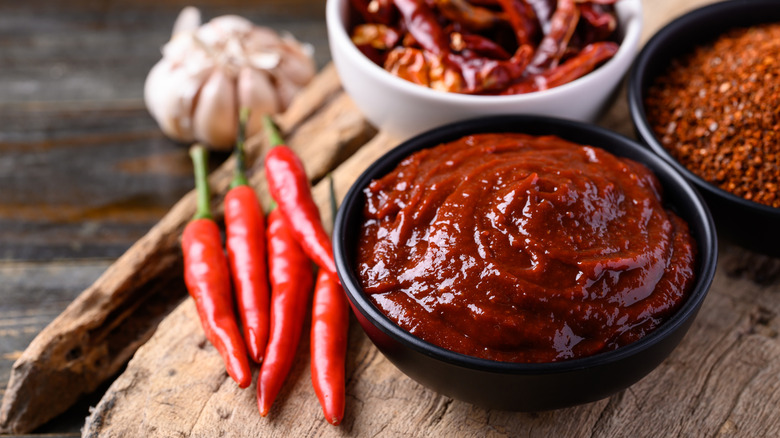
Gochujang has become popular in the United States thanks in part to its versatility; it goes well in all sorts of foods like eggs, rice, and seafood — it even works great as a glaze for vegetables or as a condiment on burgers. Its rise in the U.S. tracked with the growing availability and popularity of Korean restaurants, cuisine, and culture that followed the large migration of Koreans to America in the '70s and '80s. Marcus Samuelsson noted this shift, saying, "I cooked in Korea. Now, it was a long time ago, but I think Korean culture has had such an impact on the American food scene over the last 20 years." Fermentation, which is used in creating many Korean foods, is key to the process of making gochujang because it helps tone down the sharp heat of the chilis, creating a balanced flavor. It's also part of what Samuelsson credits for creating the deep flavor you want from barbecue without going too spicy.
As Samuelsson points out, it's an excellent pairing for pork ribs. Pork and gochujang are a popular duo in Korean cuisine (just think of a classic pork bulgogi) because the sweet spiciness of the sauce and the versatility and savory flavor of the pork marry perfectly. For barbecue, it's as easy as incorporating the gochujang into the sauce for tender sweet and spicy gochujang pork riblets, baby backs, or any other cut. Simply parbake the ribs (a dry rub is optional,) then brush them on both sides with the gochujang barbecue sauce and continue baking. The sauce will caramelize as the meat cooks for a perfectly sticky, tasty rack of ribs.