

The Telltale Sign The Steakhouse You're At Is About To Serve You A High-Quality Meal
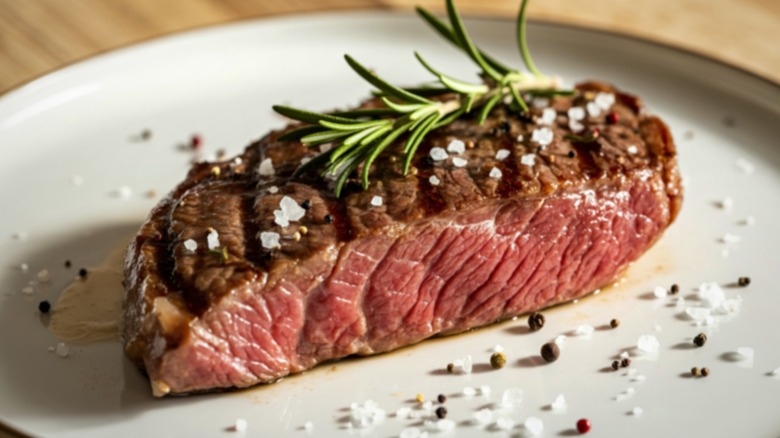
That last steak you ordered may have tasted good, but did you actually get a quality meal? I used to think the pricier a steak was, the better it was. But that was before I spent several years working at an upscale Colorado resort known for its fine dining, and specifically its wagyu beef. This place was the real deal — the steak dishes were like none I'd ever experienced, both in cut quality and preparation. While there are tricks to making a cheap steak taste more expensive, my former workplace made me realize just how important it is to get your money's worth when you're spending it at a steakhouse. Especially if you're paying upscale prices, you deserve high quality. That's why it's always a good sign when a steakhouse doesn't try to mask a steak's flavor.
When ordering steak, the beef should always be the clear star of the plate. Simplicity in presentation matters; there should be little to no sauce, and any garnishes are best kept on the basic side. More often than not, the less the kitchen feels the need to dress up the beef itself, the better quality your steak is likely to be. This doesn't mean every steak sauce is pointless. Classic accompaniments have their place, and many diners enjoy them. A little au jus on the side, a pat of cowboy butter, or even a peppercorn sauce offered separately allows you to enhance each bite without overwhelming the meat. If your steak arrives smothered in a thick glaze or other intensely flavored topping, you can't fully taste the meat underneath.
The other ingredients on your plate offer as many important clues as the steak itself
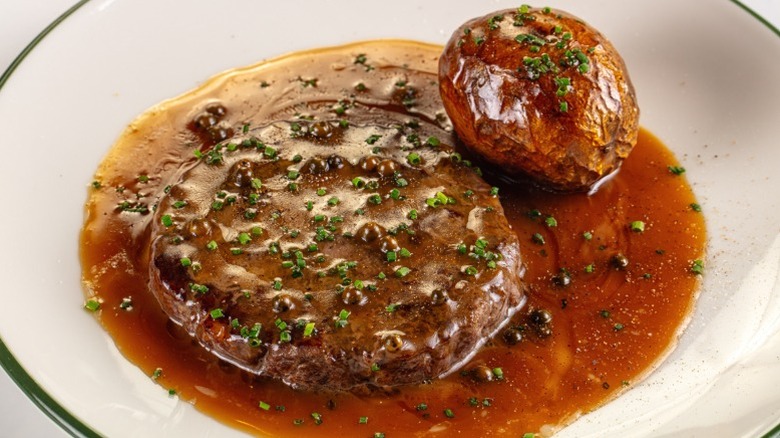
The rest of the plate also provides clues about where the restaurant wants your attention. Side dishes should be high quality at a good steakhouse, while also playing a supporting role to the meat. A straightforward, non-flashy side like mashed potatoes, grilled asparagus, or sauteed mushrooms complements the beef without competing with it. Baked potatoes are a popular choice, too, but they should be kept pretty simple (a loaded baked potato with all the fixings could be a bad sign).
On the other hand, if your entree arrives with towering onion rings, overly seasoned fries, or sauced-up vegetable medleys packed with strong flavors, you might consider what's up with the need for adding such heavy seasoning to the plate. While these dishes might be delicious on their own, they can dominate your palate and take away from the steak itself. But if the cut and/or preparation is lower quality, that could be precisely the point.
Of course, presentation alone doesn't absolutely guarantee you're getting a solid meal. Plenty of excellent restaurants serve creative, expressive steak dishes, and many diners genuinely enjoy flavorful toppings. Still, the extra flavors are best kept to a minimum and should always be complementary rather than distracting. Remember: A restaurant that's proud of its beef quality likely doesn't feel the need to hide it.