

10 Tips For Creating Delicious Lettuce-Free Salads, According To Pro Chefs
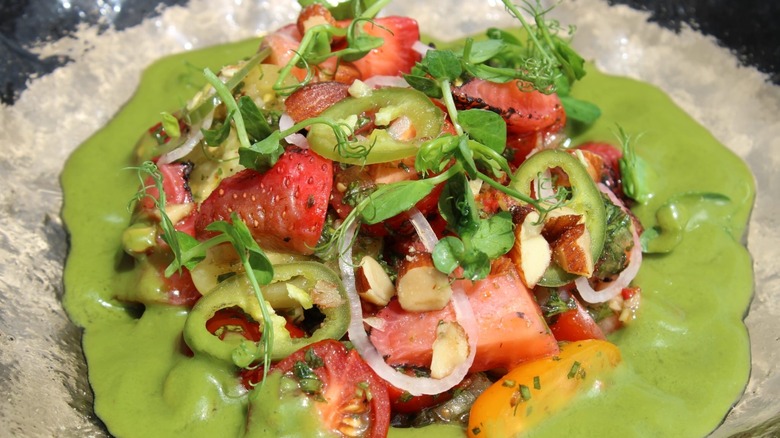
Many home cooks feel that lettuce is essential, or even definitional, to the making of a salad. But professional chefs have long countered that salads can come in a variety of colors, flavors, and textures — with or without the leafy greens.
"I would define a salad as a unique combination of fresh fruits, vegetables and garnish," says Keona Hogan, alumna of Fox's "Hell's Kitchen" and the founder of Baltimore hospitality group Life Support Foods. "To me, a salad has to have a bright flavor, lots of texture, and be a nice counter to whatever it's accompanying."
If you're looking to ditch the greens in your salad and mix things up at lunchtime, this guide is for you. We spoke to chefs, cooking show alumni, and critically acclaimed restaurateurs for their best tips for creating the most flavorful lettuce-free salads.
1. Add whole grains
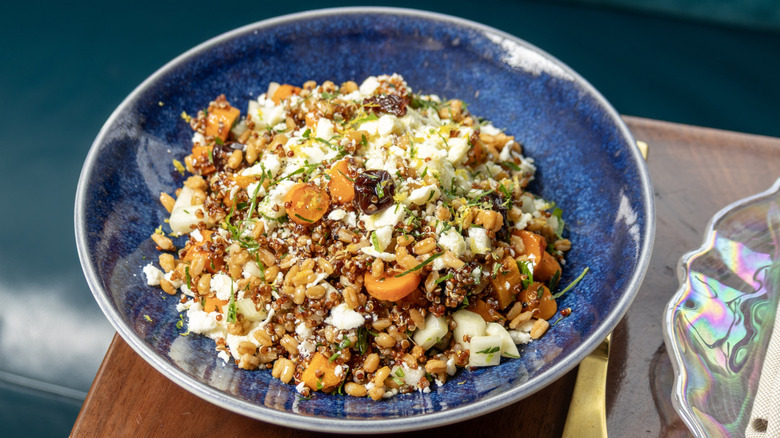
If you're searching for a lettuce-less base for your next salad, look no further than a hearty whole grain. From toothsome wild rice to delicate quinoa, whole grains add substance and welcome texture to salads of hydrating fruits and vegetables.
"Whole grains are great because they absorb a vinaigrette beautifully, keep their texture and make the salad feel substantial without being heavy," says David Deshaies, a James Beard Award semifinalist and chef at Michelin Bib Gourmand Italian restaurant L'Ardente in Washington, D.C. "They also taste even better after sitting for a little while, which is obviously not true for lettuce."
Wondering where to start? Deshaies recommends farro, which he mixes into a salad with carrots, dried cherries, pine nuts, feta, and mint at L'Ardente. This ancient grain in particular, available pearled, semi-pearled, and whole, offers "a wonderful chewy texture and a nutty flavor."
For those whose usual qualm with salads is that they are too delicate and not filling, replacing lettuce with whole grains can be the solution. They "can bulk up the salad but also provide protein, fiber and will help you feel full when they hit your stomach," says Anthony Jones, an alumnus of Bravo's "Top Chef," a James Beard Award semifinalist, and the current executive chef of modern American restaurant Marcus DC.
2. Try out new, seasonal ingredients
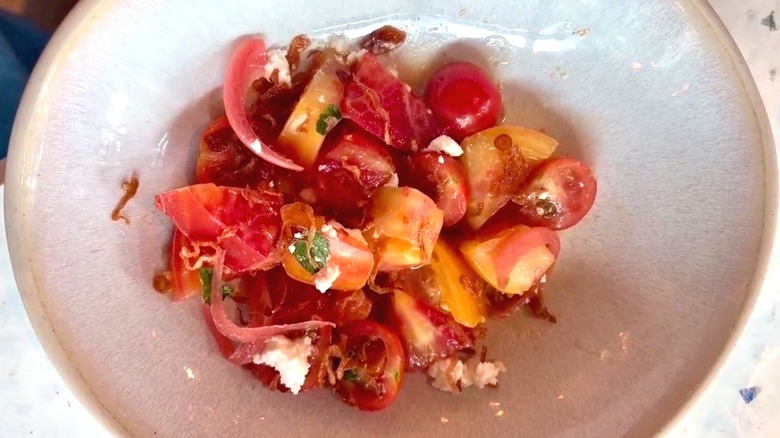
It is no secret that seasonal ingredients taste better — and for good reason. Produce grown in season is harvested at peak ripeness, meaning you are getting the sweetest and juiciest bites possible. When building a salad without lettuce, it will be your fruits and vegetables that do all of the heavy lifting. Why not choose the freshest options possible?
"Go to your local farmers market and see what they have in stock," says Jones. "Whether it might be a root vegetable or summer-heavy veg from the farm," you're bound to find something for your lettuce-free salad.
Looking for some inspiration for summer salads? Ria Montes, StarChefs Rising Star Chef and chef of Washington, D.C. seafood restaurant Fish Shop, has some ideas. On her summer menu at Fish Shop, she features an heirloom tomato salad tossed in a pomegranate-sumac vinaigrette and completes it with feta, crispy shallots, and pickled onions. For further inspiration, try other summer produce staples, such as green beans, bell peppers, beets, okra, blackberries, and apricots.
3. Experiment with fresh fruit
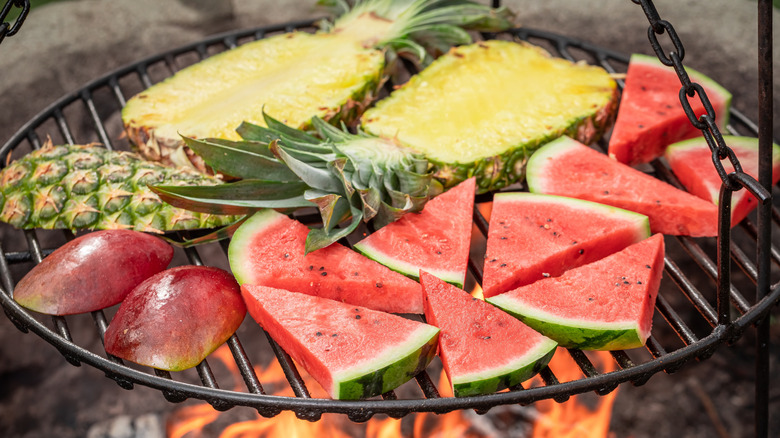
Salads, especially those without lettuce, are under no obligation to be entirely savory. Adding fruit to your salad, whether as a base or an accenting ingredient, can contribute a burst of hydration, as well as a dimensional sweetness, to the dish.
"Don't be afraid of adding fruits to your salad," Montes says. One of her favorite salad mix-ins is watermelon, which she will grill and salt before building her bowl. "Grilling your fruit and adding salt to fruit makes it so much better when you're thinking about using it for a salad."
If you are looking for some more fruity mix-ins, try grapes for a burst of tart juiciness in a broccoli salad or stir cantaloupe chunks into a mixture of olives and mint. You could even take a page out of Montes' book by using grilled peaches as a base for burrata cheese and a balsamic reduction, and topping with honey like Emeril Lagasse. No matter what fruit you choose, you are in for a refreshing and complex addition to your lettuce-free salad.
4. Ditch the bowl
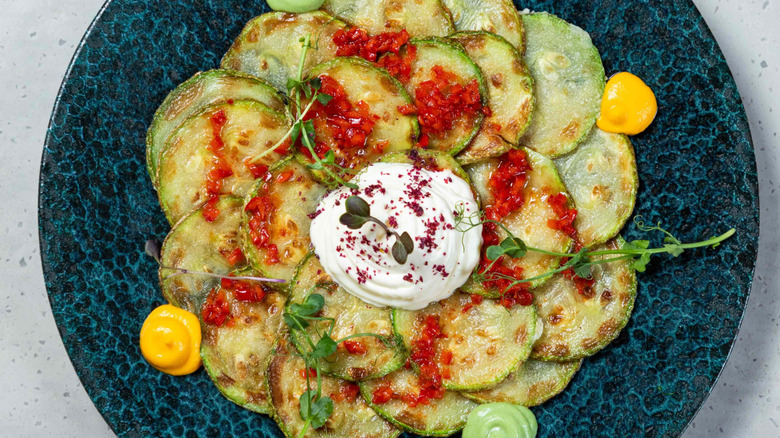
While it is undoubtedly tempting to throw all of your fresh produce into a bowl and call it a salad, it is worth trying your hand at creative plating. Composing your salad on a plate allows you to creatively lay out and showcase your produce — and to turn a simple salad into a knife-and-fork entrée.
"Zucchini can be treated as carpaccio," says Tony Foreman, the critically acclaimed chef and restaurateur behind Baltimore restaurant group Tony Foreman + Co. "Slice very fresh small zucchini with a peeler and dress with salt xvoo [extra virgin olive oil], Parmigiano, and lots [of] fresh basil and lemon juice. Calabrian chili oil is an easy accent."
Once you ditch the bowl, you will be surprised by how quickly your definition of a salad expands. Professional chefs encourage home cooks to think outside the box (or the bowl).
5. Don't be afraid to warm things up
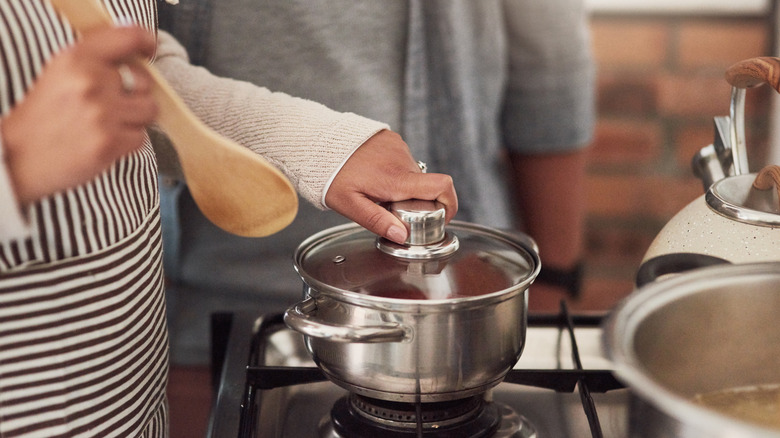
When you are struggling to create flavor and texture variety in your lettuce-free salad, look to contrasts in temperature to help keep things interesting. While many salads are delicious when served either entirely warm or exclusively cold, professional chefs recommend having both hot and cold elements in a lettuce-free salad.
Although it might be tempting, "avoid serving everything right out of the fridge," says Deshaies. "When you combine warm grains, cool vegetables, crunchy nuts, creamy cheese, and fresh herbs, you're setting yourself up for a bowlful of perfect bites."
Regardless of your base and mix-ins, there are several ways to pull this off: If you choose to base your salad in whole grains, try warming up your farro, bulgur, buckwheat, or quinoa before adding in fresh produce. Warmth can also come from roasting your root vegetables before tossing them with cold, creamy cheese.
This tip does not necessarily mean that all salad ingredients need to be served piping hot — many pro chefs advise against underestimating the power of room temperature mix-ins. Deshaies serves his Farro salad at room temperature to "make sure the flavors aren't dulled by being too cold."
6. Marinate your produce
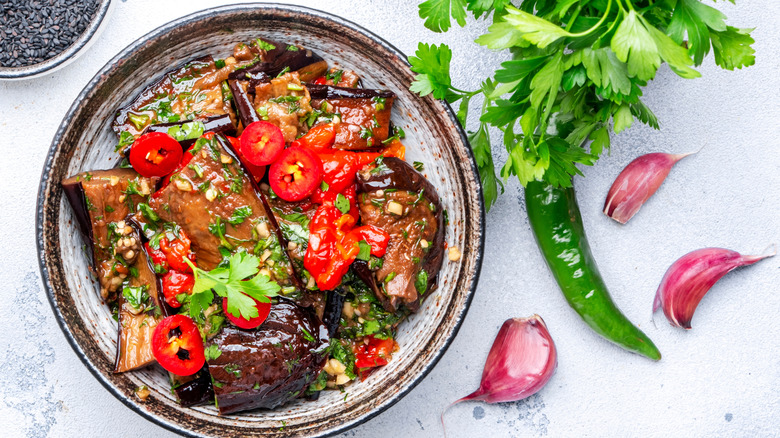
When you are crafting a salad without lettuce, you will want your base fruits and vegetables to pack as much flavor as possible. What better way to accomplish this than by bathing them in marinade until you are ready to plate? If you are looking for a fresh ingredient that easily soaks up a marinade, Foreman recommends the eggplant.
After selecting the perfect eggplant at the grocery store, "marinate [it] in xvoo [extra virgin olive oil], salt, pepper, and a little garlic and lemon peel," he says. "The eggplant gives a bitter element that makes it more interesting and begs for a fatty and umami element like fresh chèvre or maybe feta."
If you don't have time to marinate your produce overnight, even a 5-minute soak in the right sauces and seasonings can bring your salad ingredients over the edge. A simple dressing or quick marinade, Hogan says, is easier than most home cooks think. "The combination of a nice quality oil, a bright and fresh acid, something sweet, something spicy, and a simple salt and pepper seasoning go a long way," she says.
7. Throw in seeds for some crunch
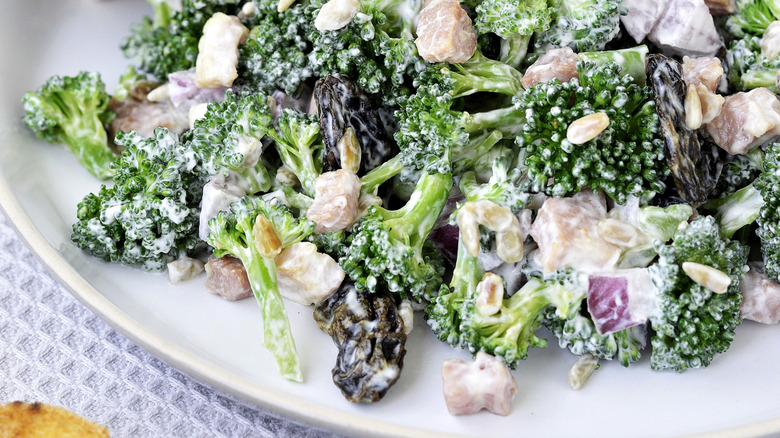
While they can't function as a base the way fresh fruit, seasonal vegetables, or whole grains might, seeds are an often-overlooked addition to a lettuce-free salad. "While your other produce might be characteristically juicy or soft, a handful of crunchy seeds "add[s] texture and more fulfilment to the salad," says Jones.
When working with seeds, you have many popular (and tasty) options. Earthy and sweet pumpkin seeds are a natural complement to fruit-based salads, sesame seeds add a sharp nutty flavor to cucumber, and chia seeds, while not a game-changer in the flavor department, can give your lettuce-free salad a boost in critical omega-3 fatty acids, calcium, and magnesium.
"I particularly love sunflower seeds, especially because you can toast them up and add different kinds of spices to them," Montes says. "It just gives a different texture, but also more flavor to a salad."
8. Go heavy on the herbs
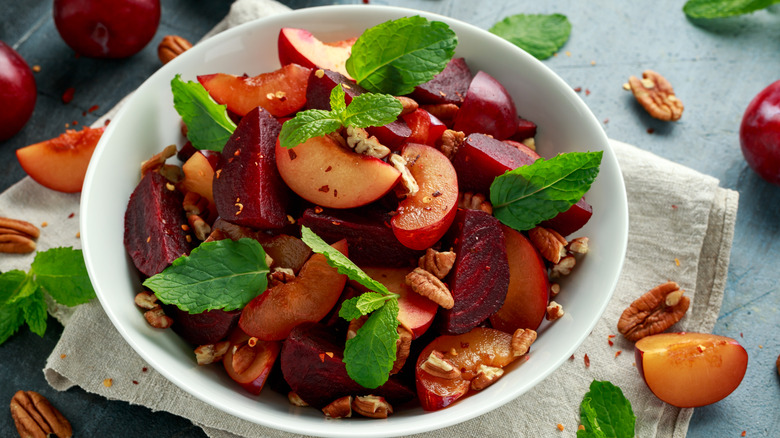
If you find yourself missing the leafy and vegetal qualities of lettuce, there are few better substitutes (or, dare I say, upgrades) than fresh herbs. "People often think of herbs as a garnish, but I like to use them almost like another vegetable," says Deshaies. "A generous amount of mint, parsley or dill completely changes a salad." You can slice them into ribbons and incorporate them into the salad mix, or tear off whole leaves and sprinkle them on top of your final bowl.
There is no shortage of herbs to choose from when you are building your salad, and most of them are notably fragrant and potent, so choose wisely. The lightly sweet notes of basil make it a secret ingredient for a delicious watermelon salad; the pepperiness of parsley allows it to stand up against the heartier flavors of whole-grain salads; and the citrusy aroma of dill is harmonious with creamy and fatty salad ingredients, such as Greek yogurt or potatoes. When in doubt, don't be afraid to use several to produce the right balance of flavors.
9. Mix in some legumes
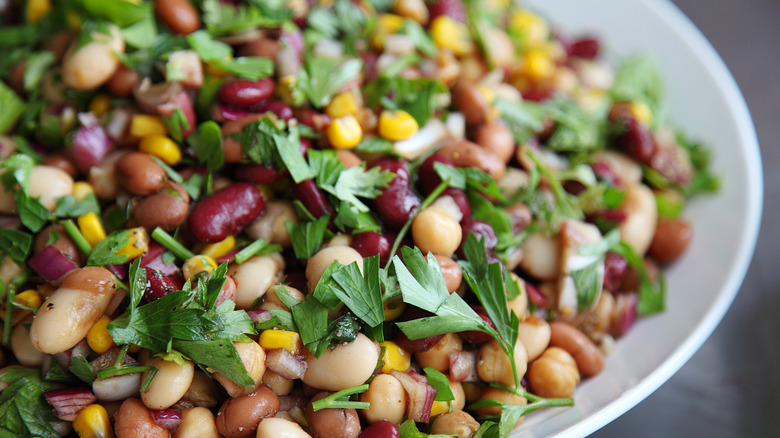
"I love beans. I love legumes. I love chickpeas, cannellini beans, lentils," Montes says. "I feel like they add a lot of substance and help make you feel fuller."
Few ingredients on this list are more versatile than the humble legume. Fiber-rich and full of plant-based protein, they can serve as a mix-in for a lettuce-free salad, or comprise the entirety of the salad's base. While a salad based in lettuce might leave you hungry for more, a salad based in beans is sure to satisfy.
When building a salad with legumes, experiment with multiple types. For example, Dolly Parton's 3-Bean Salad couldn't be simpler to throw together — and, when it is combined with a dressing full of fat and acidity, the salad takes on even more flavor as it marinates in the fridge.
10. Add dried fruit
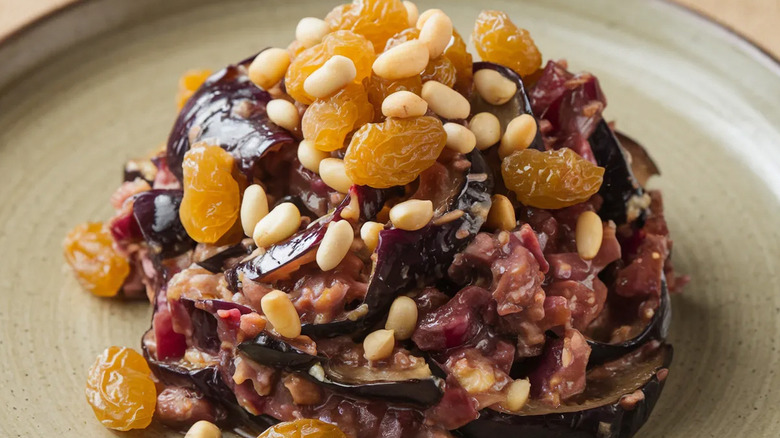
Most of the time, a lettuce-free salad will call for a pop of sweetness — but if the salad's other ingredients already yield a high water content, adding more fresh fruit runs the risk of turning the dish into a watery mess. That's where dried fruit comes in: The drying process concentrates a fruit's sugars, providing a deeply sweet and slightly rich dimension to an otherwise bright salad.
When it comes to adding dried fruit to your salad, your possibilities are nearly limitless. Foreman recommends adorning a marinated eggplant salad with a handful of golden raisins "for sweet punctuation," while Deshaies says that dried cherries "round out" the flavors in his Farro salad with tartness and an almost jammy quality.
"I love combining dried fruit with toasted nuts and a sharp cheese," Deshaies adds. "Getting sweet, salty, crunchy and creamy elements all in one bite creates something much more special."