

What's The Best Time To Buy Blueberries? Here's When They're In Season
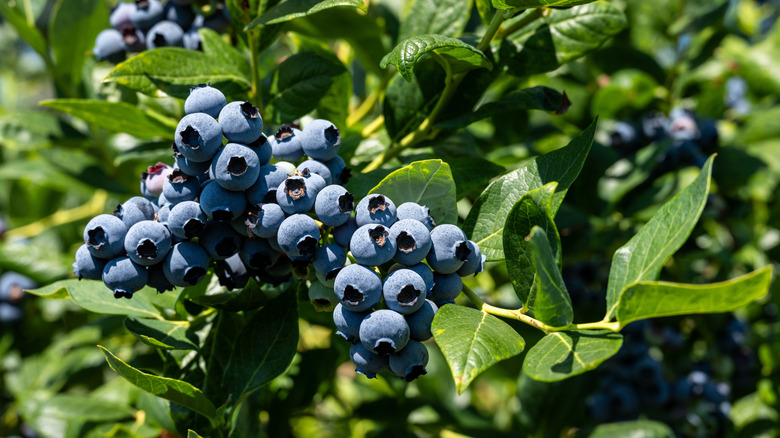
It's tough to beat a pint of fresh blueberries. Whether you enjoy them plain, sprinkle them on top of oatmeal, or use them for a batch of muffins, they're the perfect combination of sweet and sour. In-season blueberries tend to be especially delicious, but when they are in season depends pretty heavily on where you live. In the Northeast, Midwest, and Northwest, blueberry season runs from July to September. In the Southeast, blueberry season is super short, spanning just the months of April and May. In the Southwest, blueberry season runs from April to June, and in California, it runs from March to June.
When you're shopping for in-season blueberries, it's smart to get them from a local farm (or from your backyard, if that's your thing — you don't even need a garden to grow plump blueberries). When you head to a local blueberry farm to pick up a pint of berries (or to pluck your own from their bushes, if they have a you-pick option), you're getting the freshest, most nutrient-rich berries possible. While there's nothing wrong with snagging a pint of berries at the store, many of the items in the produce section have had quite a journey from where they were grown, and nutrients can become depleted throughout the shipping process. If they aren't in season in your area and you're looking for the most nutrient-dense option available, you're better off buying frozen blueberries over fresh. If you happen to be lucky enough to be in the midst of blueberry season in your area right now, we've got some tips to help you make the most of your good fortune.
What to look for when you're buying in-season blueberries (and how to store them)
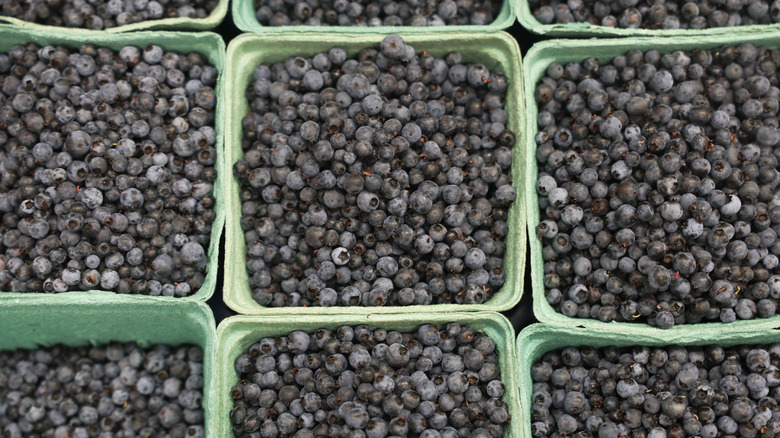
Even when you're buying them at the right time, there are still a few things you'll want to look out for to help you choose the tastiest pint of blueberries. If you're shopping at a grocery store, take a look at where the berries came from to make sure they haven't undergone a lengthy journey before they made themselves at home on a shelf in the produce section (you can check the packing date on the package to see how long it's been since they were picked and packed). You'll also want to keep an eye out for color — your blueberries should be totally blue, not green or purple. Both green and purple coloring indicate that the berries aren't quite ripe. You might also notice a powdery or waxy white coating, known as bloom — this is totally normal and isn't mold.
After you've picked up a pristine pint of blueberries, you'll want to do all that you can to make sure they hold up for awhile in your kitchen, and thankfully, it won't cost you any extra time. Open up the container and remove any moldy berries right away, put the good ones in the fridge, and rinse (and dry) them right before you eat or otherwise use them. It's really that simple to ensure get every bit of goodness out of your in-season blueberries.