

Not Quartz, Not Granite: This Eco-Friendly Kitchen Countertop Is Affordable And Stylish

Choosing which type of stone to use for your kitchen countertops can be as hard as picking your favorite baked treat. But if what you're looking for is an eco-friendly option, you might appreciate opting for a metal material like recycled aluminum. Visually, some could mistake it for quartz, with its subtle flecks that add visual interest to your whole space, but if you look closer, you can see the difference in texture. Though it leans toward a more affordable price point, it doesn't look cheap. Instead, it introduces a polished touch and a modern edge to any kitchen.
Recycled aluminum is made with a combination of aluminum flakes, solid surface scrap, and recycled acrylic. Because this material contains at least 88% recycled materials, which can usually even be recycled again, it is considered better for the planet. It also takes around 95% less energy to produce than pure aluminum. Its well-known counterparts, like quartz and granite, have some eco-friendly properties, as they last for a long time and can be recycled afterward. But both stones typically require heavy energy consumption to retrieve, handle, and transport, and harvesting them can even interfere with native habitats, giving recycled aluminum the edge when it comes to its environmental footprint. That said, is it the right material for your counters? There are some other things to know before making the decision so that you don't end up with countertops that are a mismatch for your needs.
Should you revamp your countertops with recycled aluminum?
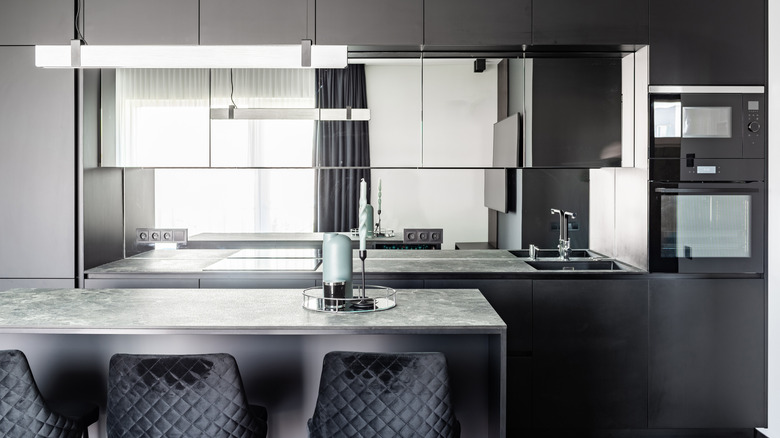
One of the best things about recycled aluminum, or just aluminum in general, is that it's easy to clean. This is especially helpful in places like the kitchen, which require routine sanitation. Its affordability is another major draw, setting you back somewhere between $30 and $80 per square foot. This is significantly cheaper than quartz and granite, which cost between $50 to $200 and $40 to $100 per square foot, respectively.
Recycled aluminum is pretty durable too, but it can easily show signs of wear and tear, as it's prone to scratch marks. If you're someone who likes cutting ingredients directly on the countertop, you'll need to change your routine or steer clear of the material entirely. It also has the tendency to dent from hard blows, so be careful when handling heavy appliances around the material. Alternatively, you can mix and match the materials of your countertops, assigning specific areas for heavy use and light-duty tasks.
While the recycled aluminum has its obvious disadvantages, it's far from being one of the worst design choices you can make in your kitchen. However, because it can be challenging to manufacture, it might be harder to find compared to more popular options like marble, laminate, and porcelain. But if you manage to get ahold of a reliable supplier, it's a great eco-friendly alternative that looks stylish in the kitchen and feels good on the wallet.