

You Could Be Accidentally Bringing Fruit Flies Into Your Kitchen If You Do This
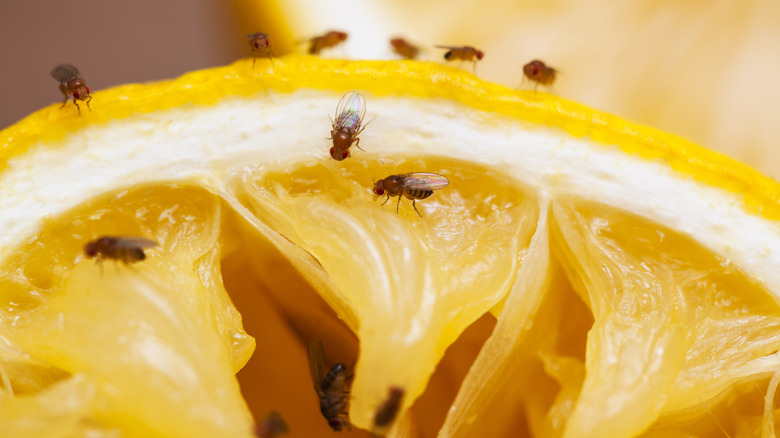
You wipe up after every spill, don't leave dirty dishes piled up for days in the sink, and just generally put in effort to keep a clean kitchen. So, why on Earth do all these little flies keep showing up? The truth is, you could be doing something quite common that is secretly causing you to have a recurring fruit fly problem. If you enjoy keeping a bowl of fresh fruit on the counter or in a hanging basket, you could be inviting these pests straight into your kitchen as the produce becomes overripe.
Yes, having fruit out may certainly look inviting, but it can be like a beacon for drosophila melanogaster, or as they're much more commonly known, fruit flies. A major misconception is that they eat fruit, but the reality is that they actually eat the yeast and bacteria on fruit as it ferments. They then lay their eggs in the fruit itself, which the larvae will then eat once they hatch (isn't nature just so fun?). As a result, these tiny insects are naturally drawn to ripening produce, and even a small amount of exposed fruit can give them everything they need to feed, reproduce, and quickly take over your kitchen. The good news is that there are few different things you can do to prevent fruit flies from doing exactly that, and the same also applies for tackling any existing fruit fly problem.
Tips to ditch the fruit flies
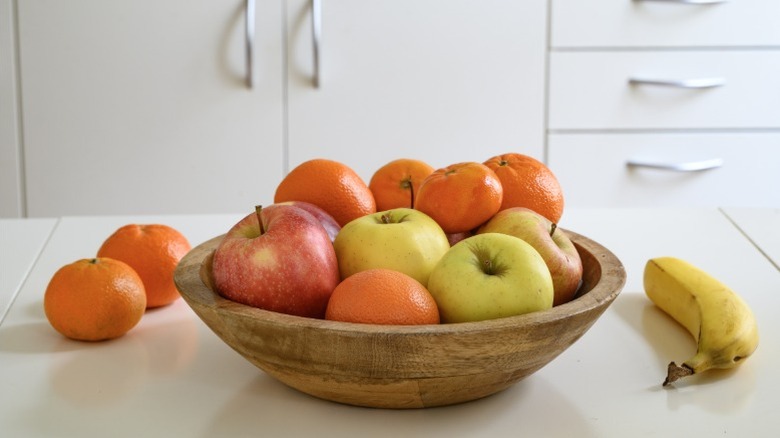
If you only leave fruit out for a day, you'll probably be just fine. But as fruit starts to ferment and get overripe, it emits ethanol, which is what attracts fruit flies in the first place. One of the best things you can do is to therefore not keep it out at all. Instead, keep fruit in the fridge, slowing the ripening process and limiting its exposure.
Of course, it pays to know which fresh fruits spoil the fastest, as well as which ones are more susceptible to damage from temperature fluctuations. It's also worth choosing your produce carefully at the grocery store — if fruit is already overripe at the time of purchase, it will not only draw flies faster, but it could already be carrying eggs depending on how protected it was at the store! With this in mind, avoid any fruit with soft or mushy spots, and always rinse fruit with water before storing at home.
In the meantime, you can get rid of active fruit flies by using things you already have in your kitchen, such as apple cider vinegar or laying out a trap with dish soap. However, it's also time to take a look around and identify potential breeding grounds. This means tossing all exposed fruit, wiping up sticky spots and spills, and just doing a thorough inspection and deep clean of your kitchen. Only once you get rid of the things that attract them (like that bowl of overripening fruit) will you actually be able to say goodbye to fruit flies for good.