

4 Common Frustrating Problems With Crock-Pots
We may receive a commission on purchases made from links.
From creating fantastic dips for parties to cooking super-tender meals while you're away, Crock-Pots are often the pinnacle of convenience. While Crock-Pots can certainly make life in the kitchen much easier, they can also be a bit frustrating. Certain issues — like undercooked food or stuck-on bits that seem nearly impossible to scrub off — tend to be pretty common among Crock-Pot users.
Here, we'll take a look at some of the most common frustrations we hear (and experience) when it comes to using Crock-Pots in the kitchen. We'll also explore the tips and tricks you can put to good use to make these slow cooker complaints a thing of the past. Ready? Grab your favorite Crock-Pot recipe (if you haven't tried our slow cooker Texas pulled pork sandwich recipe, this is the perfect time to give it a go), read through the common frustrations below, and put our fix-it tips to good use so you can enjoy a frustration-free Crock-Pot cooking experience.
Undercooked food
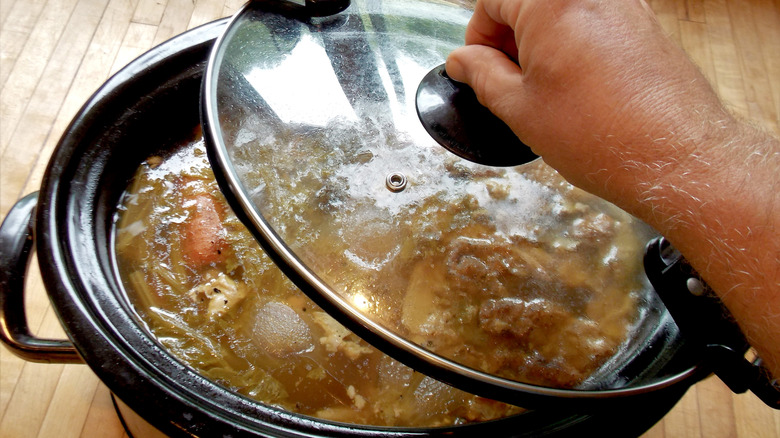
Struggling with undercooked food in your Crock-Pot? You're not alone. Whether you're finding that a roast is still raw in the middle, or you're sticking a fork into chicken you've had cooking for awhile to learn that it doesn't have a tender texture yet, there are a few reasons why your Crock-Pot recipes might be coming out a bit underdone. One possible cause: you're too excited about what you're cooking, and you keep lifting the lid to check on your recipe. While it certainly can be tempting to see the magic of the slow cooker close-up, lifting the lid lets heat escape, which can leave you with undercooked food. Resist the urge to peek and leave the lid closed while your food is cooking.
You'll also want to make sure that your slow cooker isn't too full. It's recommended that you fill your Crock-Pot at least halfway (you can add some extra liquid, like broth, if you need to fill some space) while cooking. Don't go too crazy though — try to keep at least the top third of the crock empty to make sure you don't end up with undercooked food.
Food cooking too quickly
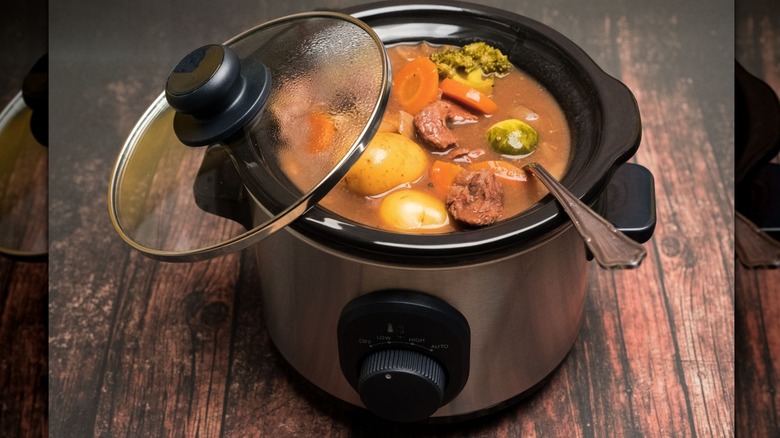
While many of us have experienced undercooked food in the Crock-Pot, some of us have also experienced the opposite issue. Sometimes, a Crock-Pot's contents seem to cook too quickly, leading to overdone meats or mushy vegetables. If you find that your food is cooking far too fast, you may simply be using the wrong size Crock-Pot for your recipe. Large slow cookers tend to cook faster than smaller models, so if you're cooking an individual meal or a smaller recipe in a large Crock-Pot, you may need to cut down on cooking time, add more liquid to boost the volume of your recipe, or lower the temperature.
Some people say they've noticed that newer slow cookers cook food faster than older models. If you've been using a decades-old Crock-Pot and upgrade to a newer model, you may need to keep an eye on it the first few times you use it to see if you need to make any adjustments. While it may seem like a good idea to lower the temperature setting to warm or leave the lid cracked while cooking if your food is heating up too quickly, both of these options are a bad idea when it comes to food safety. Once you know how your new model performs, you can simply lower the cooking time of your recipes.
Scorched food stuck to the bottom of your Crock-Pot
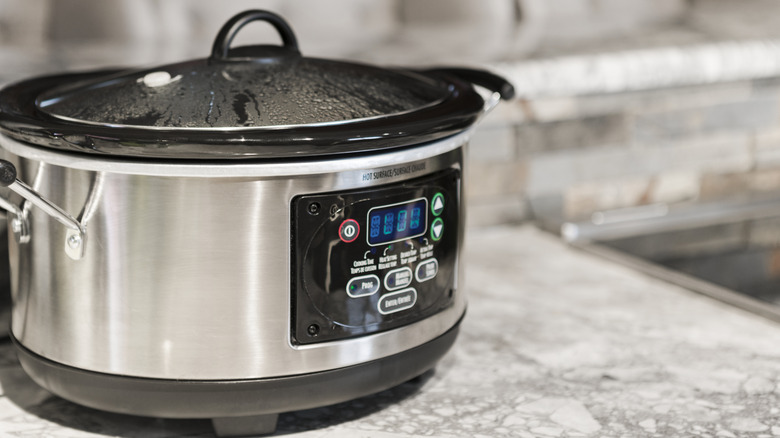
Whether you let a Crock-Pot meal cook for a bit too long or you simply forget to turn your slow cooker off when you started scooping out the goods, many of us have experienced food stuck to the bottom of the slow cooker after we've emptied it out. You may also want to use a slow cooker liner to stop your food from touching the crock at all, making cleanup a breeze. Just snag a box of Reynolds Kitchens disposable slow cooker liners on Amazon for less than $15.
If you're not comfortable with the idea of using a slow cooker liner (we get it — slow cooker liners are considered safe, but the idea of cooking in plastic feels iffy to some), you can also try coating the inside of your Crock-Pot with a bit of cooking spray before you add your ingredients. Controlling the heat level on your Crock-Pot correctly during the cooking process can also stop you from having to deal with a stuck-on mess. After your food is done cooking, be sure to turn the Crock-Pot setting to warm so you're not scorching the food on the bottom of the crock.
Letting your Crock-Pot soak in warm water with a few drops of dish soap may loosen the gunk over time (you can also pop the crock back onto the heat on low for awhile to help move the process along). If standard dish soap isn't doing the trick, you may want to head to the laundry room to get stubborn, stuck-on food out of your Crock-Pot. Believe it or not, adding some OxiClean to your water and dish soap mixture can help burnt-on food loosen as your slow cooker soaks.
Tough-to-remove stains
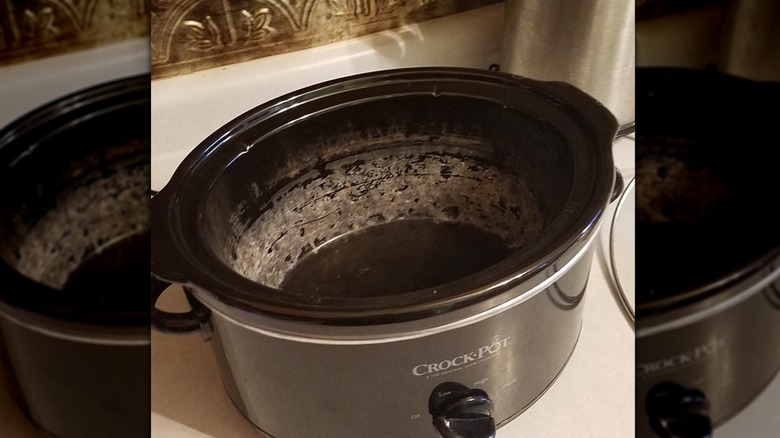
No matter how well you clean your Crock-Pot, you may notice that the crock itself develops stains over time. This is common, and it doesn't mean that you're failing to clean your slow cooker properly. Pigment from ingredients in your Crock-Pot recipes or mineral deposits from water can both cause unsightly, tough-to-scrub-away stains out of the ceramic material.
Thankfully, the answer is typically as simple as opening your pantry. Create a paste of baking soda and water to scrub stains away. If that doesn't quite do the trick, you can also try adding a bit of vinegar to the mix. Just like we mentioned with stuck on food, you may need to let your Crock-Pot "cook" the mixture to get it to work its magic. Place the ceramic piece back onto its base, turn it on low for a few hours, and watch as the stains fade away. Repeat as necessary, especially after using an ingredient that you know tends to stain the ceramic of your slow cooker.