

The Viral Test For Checking The Quality Of Soy Sauce: Does Shaking The Bottle Actually Work?
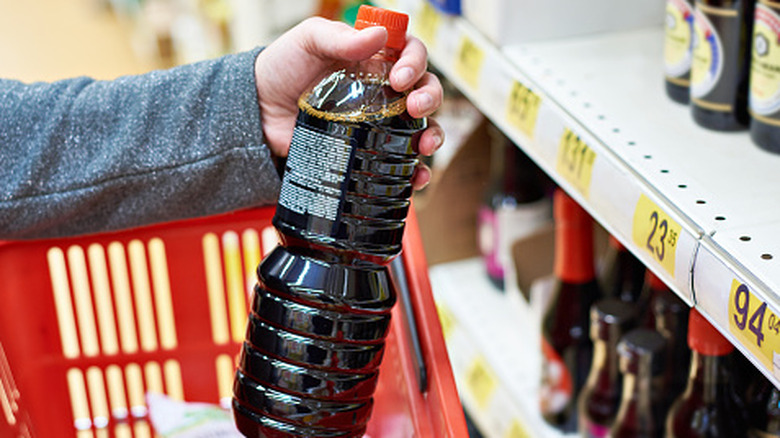
Social media is absolutely jammed with kitchen and food hacks that promise to change your life, and soy sauce hasn't escaped the fervor. The premise of the latest buzzy hack is simple: You can test the quality of a bottle of soy sauce before buying it by shaking the bottle and watching to see how many bubbles appear at the top. According to viral videos, if a layer of tiny bubbles forms, then that's a sign it's a high-quality soy sauce, whereas if the foam doesn't develop, then it suggests the manufacturers took shortcuts to avoid the long process of real fermentation. It's a cool idea, so you can imagine why the videos have gained traction. Although there is some vague logic to the idea — fermentation causes bubbles, so a well-fermented soy sauce should be bubbly — under closer inspection, the hack just doesn't hold up.
First, fermentation in soy sauce doesn't create carbonation in the finished product the way it does in products like beer or kombucha. Additionally, although a 2021 study published in the International Journal of Food Science and Technology confirms that soy proteins can act as foaming agents in food, this likely doesn't really matter, considering how soy sauce is made. Traditionally, Japanese-style soy sauce is fermented over several months, a process in which the proteins from the soybeans and wheat are broken down, which means they aren't present in the end result and the research on these isolated soy proteins may not reflect how finished soy sauce behaves.
Ultimately, the bubbles in soy sauce can be affected by numerous other factors, including how vigorously a bottle is shaken; there just isn't scientific evidence confirming that the presence of bubbles is a reliable measure of how soy sauce was brewed. Thankfully, there are other (easier) ways to check if soy sauce is well-made.
A better way to spot quality soy sauce
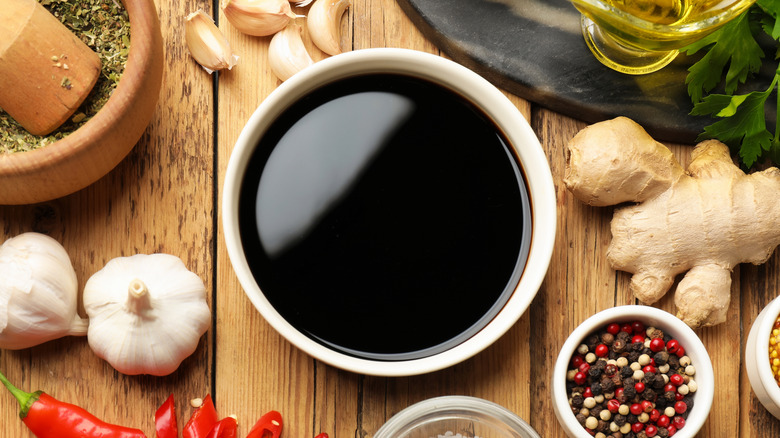
If you're genuinely trying to buy the best bottle of soy sauce available, there's a far easier (and less conspicuous) method than standing in the grocery store shaking all the different bottles: Just read the label.
For the best flavor and aroma, you want to choose a soy sauce that has been naturally brewed. Soy sauce is made through a slow, monthslong brewing process, and it's during this period that all the different flavors and aroma compounds (up to 300!) develop. To speed up the process, some manufacturers use a method called acid hydrolysis, a process that uses acid to break soy proteins into flavor-producing amino acids instead of naturally fermenting them over time. But there really is no substitute for time; soy sauce produced with acid hydrolysis may not develop the same complex flavors and aromas, so those are the ones to avoid.
Unfortunately, the bottle won't say whether the soy sauce was produced through acid hydrolysis, but the ingredient lists can help you make an educated guess. Soy sauce is made from soybeans (yes, the same plant as edamame), wheat, salt, water, and a fermentation starter known as koji. Some traditionally brewed soy sauces will only contain those core ingredients, but some do include additives like sugar, alcohol, or sodium benzoate. But you want to watch out for hydrolyzed soy protein or hydrolyzed vegetable protein in the ingredients list. These ingredients are a byproduct of acid hydrolysis and are the strongest clue that a soy sauce was processed that way. So while the viral shake test has some logic to it, it isn't scientifically validated; the label and ingredients can tell you far more.