

Don't Buy Stew Meat Before You Ask Your Butcher This
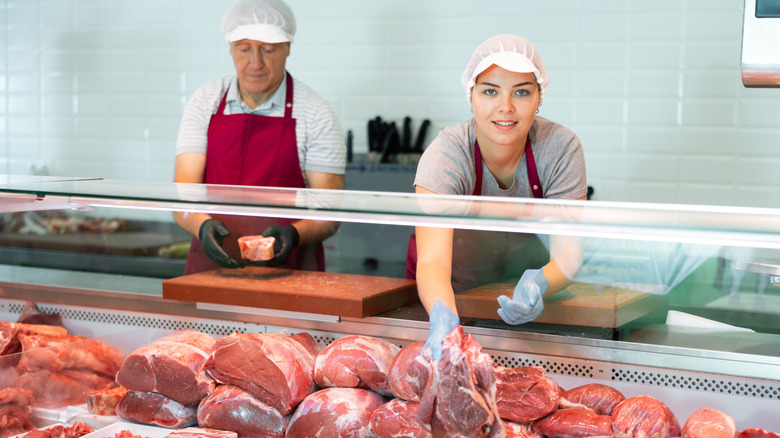
Buying meat can be a head-scratching process due to a dozen different cuts for a multitude of dishes. If you're cooking beef stew, it would be a big mistake not to ask your butcher, "Can you cut meat specifically for stewing?" More often than not, it's a simple request that butchers don't mind fulfilling. If the butcher is willing to perform a custom cut for your stew, you can expect to get a tough cut, which is perfect for a slow-cooked dish since the lengthy process can turn collagen into gelatin. It's why tough cuts become tender after giving them some time on the stovetop.
The type of meat typically used is chuck or brisket, which the butcher usually slices into morsels, ensuring uniform cooking. You don't have to give clear instructions to your butcher if you don't know which cut to choose, but it helps to tell them what you're whipping up so they can suggest the best piece to use. This includes having an idea of what type of meat you'd like to cook, how you're going to cook it, and how many people will be eating.
Whether you're in a grocery store or at a fresh market, the butcher can most likely do simple customized tasks without any fees. However, if you leave a small tip when appropriate, they're usually delighted to accept it, and it can even help you develop a friendly relationship with your butcher.
Your butcher is here to help you
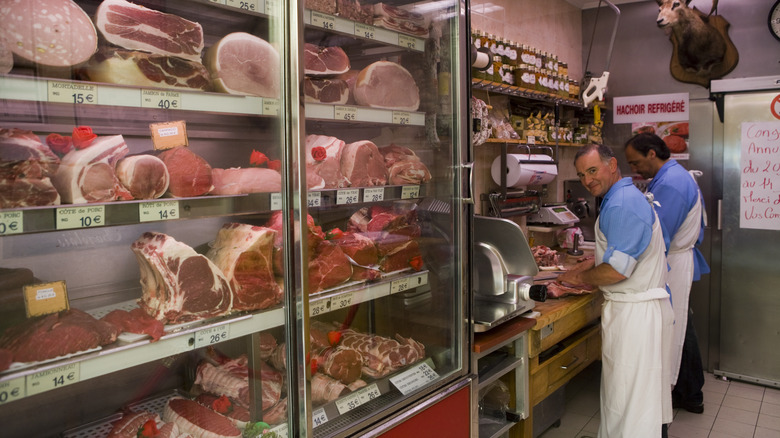
Asking for a custom cut has its fair share of benefits, including having the perfect piece of meat for your dish that might be hard to come by in prepackaged options. It also limits food waste because you can ask for what you specifically need — nothing more, nothing less, which can save you a few bucks, too. So, whenever possible, always ask your grocery store for custom cuts.
It helps to ask for a favor during less busy hours since they have less on their plate. This is also important if you don't want to wait long for them to fulfill your request. Alternatively, you can call ahead so you can just swing by for the meat when it's ready. Of course, ensure your request is reasonable, especially if you want to maintain a good relationship with your butcher. Simple tasks you can easily do, such as slicing boneless chicken breasts, might be asking too much.
Being on friendly terms with your butcher has other benefits, including potentially having access to trade secrets; getting updates on new, fresh deliveries; and being able to ask for custom requests with ease. So, get on their good side by building rapport, and avoiding things you should never say to your butcher, including requesting specific weights.