

This Retro GE Refrigerator Was Low-Key Genius, Why Don't We Make Them Like This Anymore?
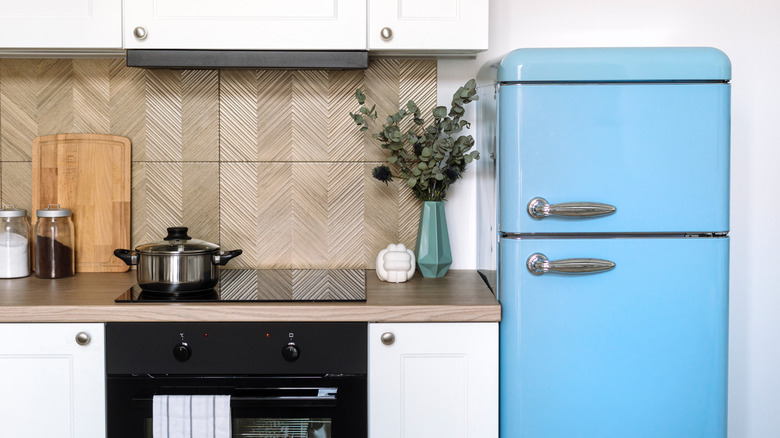
Today's modern refrigerators are useful and familiar, but looking back in time a little can make them feel slightly unimaginative. And no appliance does that more than GE's Model LW11P, a wall-mounted refrigerator-freezer from the 1950s. These fridges didn't look like appliances; instead they looked like a series of upper kitchen cabinets with the refrigerator and freezer compartments separated into individual compartments. Using one of these would have meant no bending down to find your food and no bulky refrigerator dominating the kitchen. It was marketed as a way to save both space and effort, an old-school fridge that was possibly more reliable than what we use today.
The idea itself was simple — both the refrigerator and freezer were a series of individual cabinet-like compartments, with the compressor mounted above the unit (like the soffits people use to disguise upper cabinets that don't go all the way to the ceiling). That allowed the whole thing to be suspended from the wall like any other kitchen cabinet. It sounds kind of strange that we ever strayed from a design that seemed to put convenience first, but it turns out that there may have been good reason for it.
A few possible reasons this innovative fridge didn't stick around
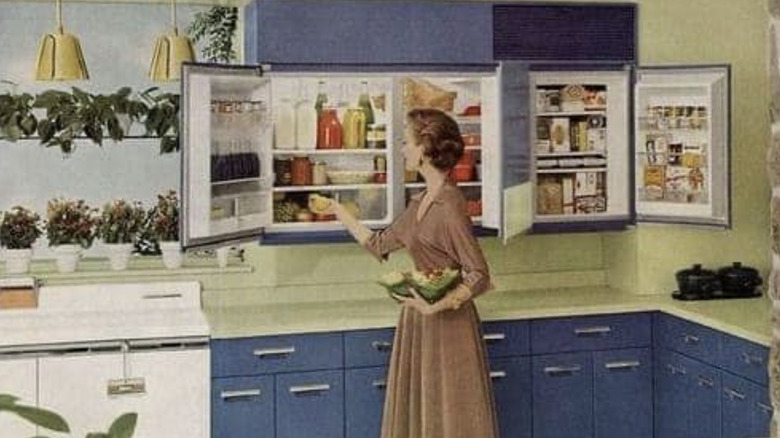
While it definitely looked convenient, there were a few practical drawbacks that may have prevented it from gaining as much popularity as stand-alone units. Servicing the unit could have been a bit more difficult, for one, as it was mounted to the wall using a steel bar rather than simply standing on the floor. There's anecdotal evidence you had to remove it from the wall to repair and that it wasn't the most reliable unit. While there's no specific info online explaining why GE discontinued the model, by the 1960s, it had largely disappeared, as the amount of money required to install a freestanding fridge is significantly lower, plus they're easier to install, repair, replace, or move as people's kitchens change.
There are still some built-in and integrated appliances that apply the same philosophy of blending into various cabinet styles rather than bulky boxes that announce themselves. But none are quite as memorable as GE's 1955 design, which earned itself a lasting place in design history, featured in Industrial Design magazine that same year as one of GE's major design innovations. It was quite an ingenious idea for the '50s, but sometimes even great ideas are replaced as our lifestyles and expectations shift.