

Were Old-School Refrigerators Actually More Reliable?

Refrigeration has come a long way from the vintage iceboxes of the 1800s that you never see anymore. Nowadays, refrigerators may include state-of-the-art touchscreen displays, WiFi access, and even built-in Keurigs. But is there a tradeoff for these technological innovations in terms of your appliance's longevity? Chowhound asked Ian Palmer-Smith, appliance repair expert at Domestic & General, whether refrigerators made before the 1970s were built to be more reliable than modern models.
"Older refrigerators are typically more durable than more modern ones because they were built with fewer complex electronic components, making them easier and cheaper to repair," he says. While modern refrigerators make use of molded plastic, sealed computerized systems, and glue, old-school models used your basic nuts, bolts, and screws. This made it both easier to disassemble and reassemble the fridge as needed for repairs and to replace broken parts. And if you were hoping to fix your fancy new fridge yourself? Forget it. "[Replacing broken parts] is limited in newer units due to the use of sealed systems and proprietary electronics which restrict straightforward or DIY repairs," says Palmer-Smith.
In general, he says, "Modern refrigerators typically last around seven to ten years, with older, simpler ones sometimes lasting more than twenty." Taking both newer and older models into account, presumably, the average lifespan of a refrigerator is about 12 years, according to the U.S. Department of Energy.
Look at the larger picture
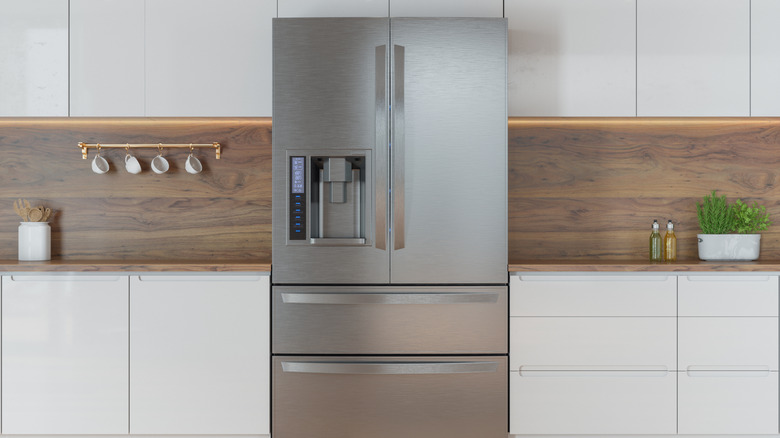
However, while this may seem like an argument to go out and buy an old refrigerator, it isn't necessarily. Yes, older models are easier and can be cheaper to repair, and were built to last — but that's not the only consideration. There are other things to take into account when comparing modern fridges with vintage ones.
"Energy consumption plays a large role, and while older models can be more durable, they typically cost significantly more to operate," says Ian Palmer-Smith. In other words, newer refrigerators can be both more budget-friendly in the long run, and typically more environmentally friendly. And don't discount those modern features, either. "Modern fridges feature newer technologies, like frost-free technology, icemakers, and better water filtration," Palmer-Smith continues. "They also usually have more flexible storage compared to older models with simple shelving." Remember the touchscreen displays mentioned earlier? Some are even connected to cameras that allow you to peek inside your fridge without having to open the door — another energy-saving feature.
Additionally, potential buyers should also keep in mind that older models have a history behind them; even if they last longer on average, the lifespan of a specific used appliance can vary greatly depending on how it was maintained and used over time. So, if your current refrigerator is giving you some red flags you can't ignore that mean you'll need to replace it soon, take time to weigh the pros and cons of newer and more vintage models.