

Spare Vs Baby Back Ribs: Which Ones Should You Choose?

The decision making has only begun once you've decided between beef or pork ribs for your next cookout. Those on team swine must next debate the merits of specific selections like spare and baby back ribs. The good news is that both can be great, particularly with the properly pork rib-optimized herbs and spices. The bad news is that their equal tastiness can make it hard to choose. But knowing how much time to make them can better narrow the field.
True to their name, baby back ribs are smaller than spares. They are sourced from the finer-boned section of the upper rib cage toward the animal's spine. Baby back ribs' smaller size makes them cook up quicker than the spare ribs that you may have guessed by now are a little larger. Spare ribs come from lower down on the rib cage where the bones are bigger. Bigger bones make for a bigger slab which — you guessed it! — will just take longer to get to temp. Their higher presence of fat also helps put the "slow" in spare ribs' ideal low and slow preparation: that fat takes time to render, while the relative leanness of the baby backs helps expedite their cooking time. Recipes will vary wildly, but you can find baby back rib instructions that call for less than an hour of cook time, and spare rib steps that require considerably longer. So go with baby backs whenever you're on a tight rib deadline. Stick with spares when there's more time to linger.
Which rib you choose depends on your taste buds and how much time you have
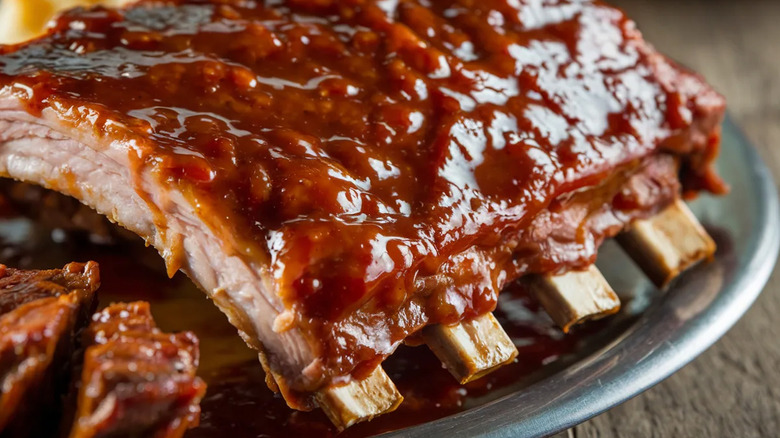
You can make both spare and baby back ribs on the grill or in the oven, and anyone who insists that one is categorically superior to the other (usually the grill, to be honest) should just go ahead and make them that way. You needn't be limited by a lack of an outdoor cooking space. But, unadorned by rub or sauce, spare and baby back ribs' flavors and textures are a bit more divergent.
Plenty of palates will register baby back ribs as more tender and a little sweeter than the spares. The spare ribs' extra fat gives them a quality that most people will clock as richer than baby back ribs. That quality might make the spare ribs taste "meatier" to some people, too, and they actually are in terms of literal protein quantity per bone. So spare ribs are ideal when you're feeling particularly carnivorous, while baby back ribs are somewhat on the lighter side, at least as light as the classically decadent meat can be. An equally decadent way to choose between spare and baby back ribs is to sample them side by side. Then you can wade into the wild world of outliers like country-style "ribs."