

Beef Vs Pork Ribs: Which Are Right For Your Cookout?
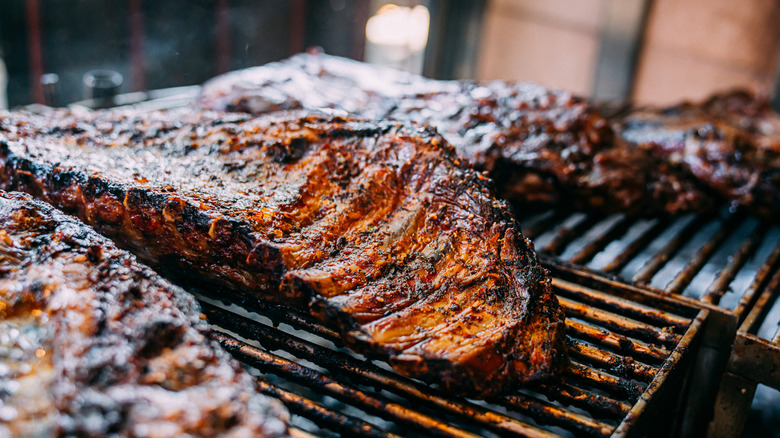
"Ribs" is a general term for cuts of meat that come from the rib cage of various animals. Pork and beef are two common rib types, but within those categories, things get even more complicated — there are multiple types of each. When planning to make fall-off-the-bone ribs for your next cookout, you'll have to choose one or the other, so consider everything from time consumption, ease of preparation, and cost of the meat to decide which cut is best to serve at your barbecue.
There are a few general differences between beef and pork ribs before things get broken down further. Most importantly, of course, they come from different animals — pork from a pig and beef from a cow. Beyond that, they have different cooking times, with beef ribs usually taking longer to cook than pork ribs. Beef ribs also tend to be more expensive, though fewer ribs can feed more people because beef ribs are larger and meatier. Ultimately, either type of rib could work for your next cookout, but there are a few reasons why one might be better than the other for your specific party.
All about pork ribs
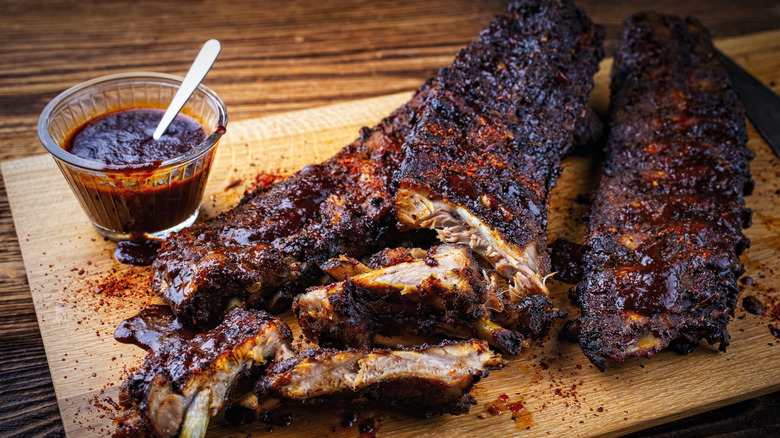
If the main criteria for your cookout is serving meat that's more affordable, takes less time to cook than beef ribs, and is still tender, then let's get this out of the way now: you're going to want to make pork ribs. Beef ribs are fine for certain occasions, but pork ribs are pretty much always a good option.
There are three main types of pork ribs: baby back ribs, spare ribs, and St. Louis spare ribs. The only real difference between the latter two is that St. Louis spare ribs have been trimmed. They lack those "extra" pieces like cartilage and rib tips, so they are much easier to eat than standard spare ribs due to the trimming. Spare ribs come from the pig's underside; they tend to have more fat and rich flavor than baby back ribs. They also carry a lower price tag compared to baby backs because they're in lesser demand and, unless you bought St. Louis ribs, require a bit more prep work.
Baby back ribs come from the more prized back and loin area of the pig. They're smaller and meatier but leaner, so they typically don't weigh as much but cost more per pound. Baby back ribs usually take between four and five hours to cook, depending on their thickness, making them a quicker meal than spare ribs, which take around five to seven hours. Both baby back and St. Louis spare ribs are great choices for a cookout, and the one you buy depends on your budget, time, and how much fat you want on the meat.
All about beef ribs
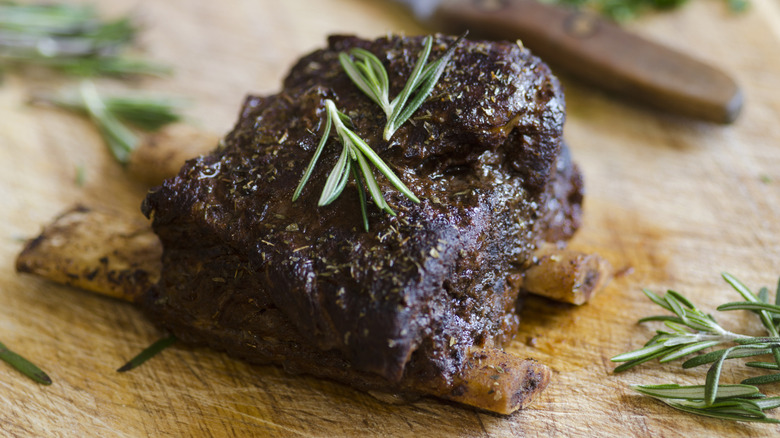
There are a handful of different beef ribs, but the most common ones are plate ribs, chuck ribs, and back ribs. Plate ribs are massive, meaty ribs that are sometimes referred to as dino ribs. They're the largest type of rib and can also be quite expensive, running as much as $15 or more per pound. Plate ribs can take up to 10 hours to cook. Due to their high price tag and long cook time, they probably aren't the best choice for feeding a crowd at a cookout (but they're worth cooking on your own time).
Chuck ribs, a popular type of short rib, are not as expensive or large as dino ribs but are still a pricy option. They can have up to 2 inches of meat above the bone, making them a seriously meaty pick, and the best-quality version comes from the shoulder area of the cow (hence the name "chuck"). You can serve barbecued beef short ribs if you're not feeding a crowd as the price is more reasonable than dino ribs. But for a ton of people, they're not the best choice.
Beef back ribs are the most budget-friendly type of beef rib. They're visually similar to pork ribs, but they're larger and meatier than these. They come from the underside of the rib roast — the upper back of the cow. Compared to other beef ribs, you'll see less meat on top (most of it goes to ribeye steaks during butchering) and more concentrated between the bones. These ribs usually take around three to four hours to cook, so if you want beef ribs at your cookout, these are probably the best choice as you can feed a crowd more quickly and economically.