

The Refreshing Yet Spicy Chutney That You'll Want To Slather Over Food For The Rest Of Summer
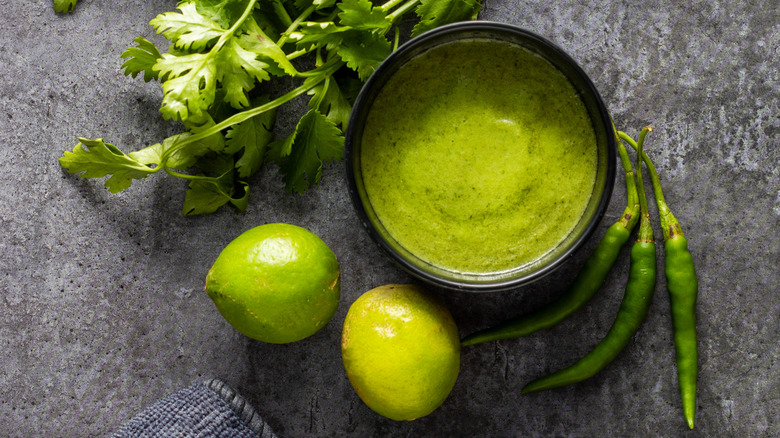
When you first glance at the list of ingredients, you'd be forgiven to assume green chutney is overwhelmingly spicy. We are, after all, talking about 5 or 6 fresh, hot, green chiles per batch. Rest assured, though, that this bright green sauce is built on balance — it's also loaded with fresh and cooling cilantro and mint as well as lots of citrus to brighten it up. There's even a little sugar in there, softening out its spicier edges without making it sweet in any way. And some recipes for green chutney also include tomatoes, which also lend a little sweetness.
Like many beloved condiments, green chutney is very adaptable and you can play around to make it suit your palate. If you are looking for a bigger kick of spice, add more chiles — or leave in more of the chile's fleshy inner white parts. If spice isn't your thing, take a few peppers out or swap in a milder variety. And adjust the herbs too, more mint makes it cooler whilst more cilantro leans into a more herbaceous and full-bodied taste. This chutney is a staple in India for a reason, eaten alongside many street foods from samosas and chaat to being layered onto popular Indian sandwiches, where its bright and punchy taste cuts through other, richer flavors with ease.
Don't save it just for Indian food

The best thing about green chutney, though, is that once you try it, it won't stay confined to just one dish. There are all the traditional ways to serve it, but once you have a bowl of it in your fridge, it may just become as commonly used as the ketchup and mayonnaise it is sitting alongside. Just a spoonful can transform a meal — you can mix it through yogurt for a dip for pizza, throw a few spoonfuls on your scrambled eggs or omelet in the morning, drizzle it over a salad or grain bowl, or use it as a rub for both veggie and grilled chicken skewers.
And while it sounds a little unusual to recommend a spicy chutney in the summer, you actually should be eating spicy food on hot days. Or should we say, there's a science to the recommendation. The compound that gives chiles their heat — capsaicin — encourages your body to sweat, which inadvertently creates a natural cooling effect. This is one of the reasons why spicy foods are such a big part of the cuisine in the areas of the world that are the hottest.