

Where Do Costco's Blueberries Come From?
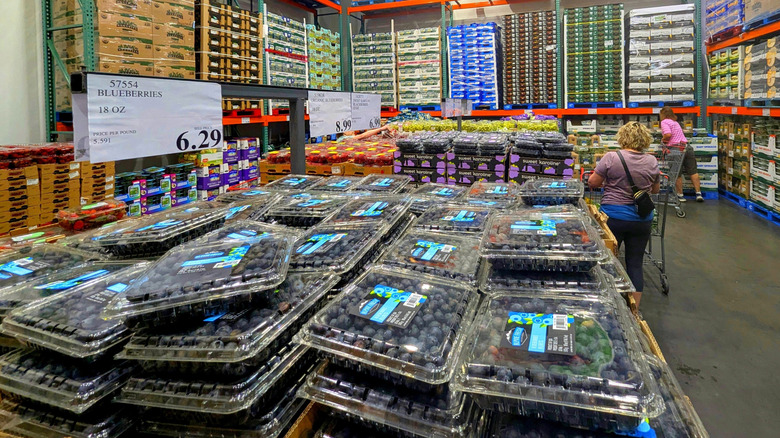
I love adding fresh wild or cultivated blueberries to my oatmeal, cereal, or Greek yogurt in the morning. It's so satisfying to bite into crisp, sweet, juicy fruit — but sadly, they don't always meet that standard, and I've had more than a few blueberries that fell short of peak ripeness. Blueberries are quite sensitive to environmental conditions, such as wet or heavy soil and shade, so it's harder than you might think to grow a stellar batch. That's why Costco sources its fresh wild and cultivated blueberries from various farms across seven countries: the United States, Canada, Mexico, Chile, Peru, Argentina, and Uruguay. This enables the company to take advantage of multiple growing seasons throughout the year.
Since 2016, Costco has obtained fresh blueberries from GoodFarms, a company owned by Andrew & Williamson Fresh Produce that has multiple Equitable Food Initiative-certified farms, including largely organic operations in Oxnard, California; San Quintin and Vizcaino, Baja California, in Mexico; and two locations in mainland Mexico. Since its opening in San Diego in 1986, GoodFarms has claimed a focus on sustainability and environmental protection, employing crop rotation, drip irrigation, composting, and other practices to utilize resources as efficiently as possible. Costco also sells GoodFarms' fresh blueberries under the Limited Edition brand name.
Additionally, the wholesaler offers blueberries from companies such as Bleuet Royal in Quebec, Canada, a division of Norbleu, which has decades of experience in the game. Canada is a global leader in fresh blueberry production, especially in Quebec, exporting over $600 million worth of the fruit annually. While the United States also produces a significant amount of fresh blueberries, it is actually a net importer of the fruit, meaning that it imports more than it exports.
Costco gets plenty of blueberries from south of the border
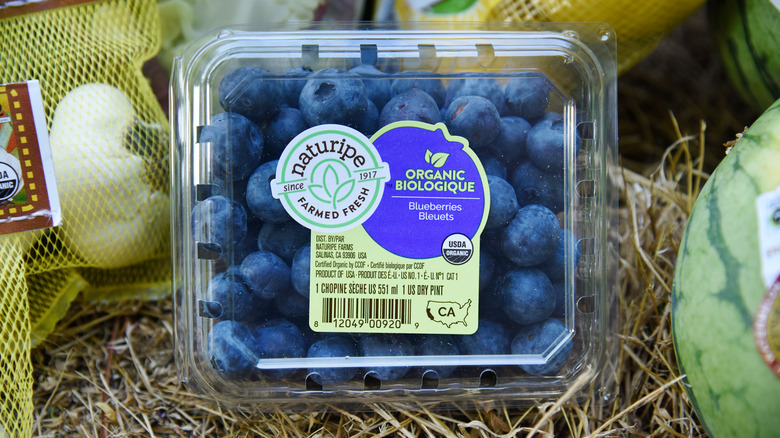
Many of Costco's South American blueberries come from a company called Camposol in Peru, the country that's actually the largest global exporter of blueberries, shipping nearly $7 billion worth of the fruit worldwide. Chile, too, is among the biggest blueberry exporters on the planet, producing a lot of the fruit for Naturipe Farms and Hortifrut, two more of Costco's suppliers.
Naturipe, which has been growing berries since 1917 and harvests blueberries year-round, also sources the fruit from farms in Argentina, Peru, Mexico, and California. Hortifrut, founded in 1980, also operates in Peru and Mexico, and works in partnership with Naturipe in the US and Canada as well. Rounding out Costco's South American blueberry producers is The Fruit Farm Group in Uruguay, a much younger organization established in 2014.
All of these companies describe themselves as proponents of regenerative agriculture and other environmentally conscious harvesting practices. In addition to protecting the planet's resources, these production methods enhance the mineral, fiber, and antioxidant content of the fresh blueberries, making them more nutritious.
If it's the frozen variety of blueberries you're after, Costco's Kirkland Signature product is sourced from American farms in California, Oregon, and Washington. To keep them as fresh as possible, they are subjected to a process known as individual quick freezing, or IQF, no later than 12 hours after being picked.