

How To Properly Clean A Vintage Tea Kettle
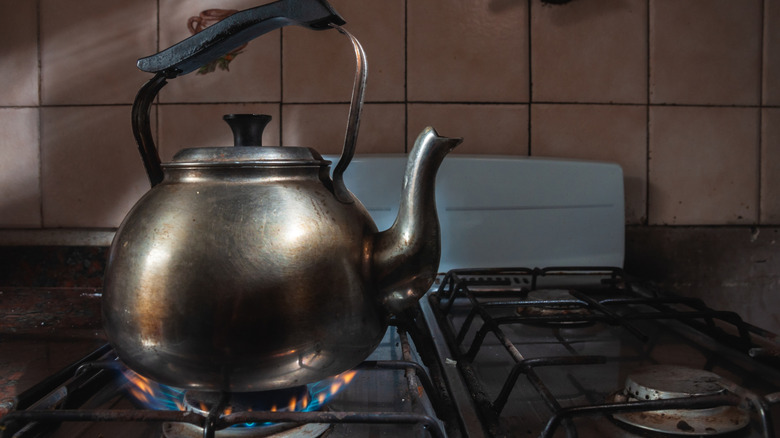
Figuring out how to clean your tea kettle doesn't have to be rocket science, but cleaning a vintage one is a whole different ball game, as it requires extra care and attention. The exact cleaning steps you'll need to take will depend on the materials your kettle is made of, but there are a few rules that apply across the board. For starters, if you don't know the value of your vintage find, a great rule of thumb is to treat as if it's a $1,000 collectible — just in case — so you might think twice about putting vintage dishware in your dishwasher. And just like when cleaning anything vintage and fragile, be cautious about abrasive cleaners unless you're sure the kettle can handle it.
If you have one of the most common types of vintage kettles, copper, vinegar can be the answer to your cleaning prayers. To clean the inside of a copper kettle, you'll want to fill it up with equal parts white vinegar (which can be used in many ways to keep your kitchen fresh and clean) and equal parts water. Then, heat the kettle like you normally would, and the copper kettle should be squeaky clean inside. That's it — you don't even have to break out any elbow grease. To polish the outside of the copper kettle, you wipe it down with vinegar, salt, and a bit of flour to get it shiny again.
Other than copper, there are a few other materials you'll usually see in vintage tea kettles, including steel and porcelain. Here's what to know when cleaning them.
Cleaning other types of vintage tea kettles
For steel tea kettles, dishwashing soap and a soft sponge should do the trick on light grime. This method can be great as a daily cleaning routine. (This method also works for modern-day steel kettles, but again, make sure you're handling your vintage with extra care.) Stubborn water stains and deposits on steel require more effort and attention: You'll need to return to the copper-cleaning trick of boiling a solution of equal parts white vinegar and water.
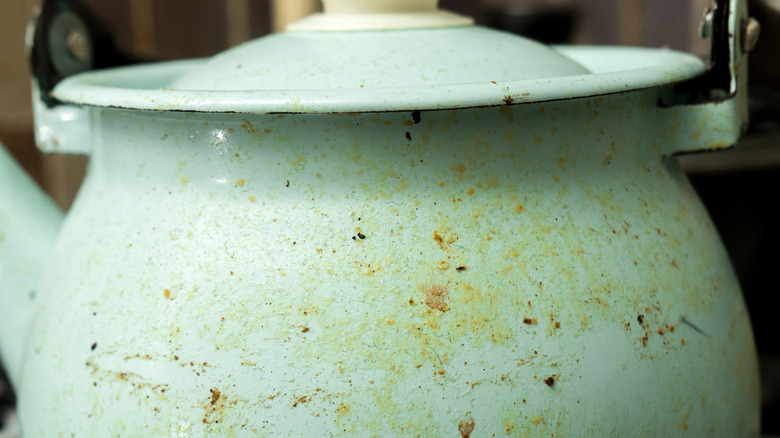
Porcelain kettles have a tendency to develop stains over time, but there's nothing a good cleaning can't usually fix. Again, keep your cleaning approach gentle, just like you would when trying to clean vintage dishes without wrecking them. While porcelain looks fragile, it's actually a relatively tough material — just be careful not to drop it. If it's bone china with a smooth glaze over it, you can clean it with warm water and soap, but be extremely careful so as not to damage any intricate designs. Porcelain kettles can also develop thermal shock if you suddenly pour cold water into them soon after using them to boil, so note the water temperature when cleaning them. If you have a porcelain kettle on display, it might collect dust, so give it a good wipe with a gentle cleaning cloth from time to time.
Overall, it shouldn't be that hard to clean your vintage tea kettles. Some issues and materials might require more patience than others, but fortunately, it's almost never a lost cause.