

What To Know Before Putting That Vintage Dishware In Your Dishwasher
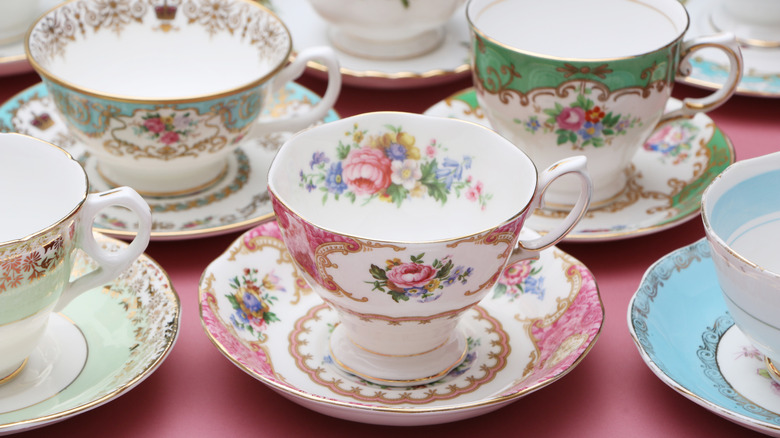
There's something about vintage dishware that adds warmth and character to a kitchen. Whether it's delicate china, English transferware, or even 19th-century European porcelain, it makes even the most basic spaces look a tad more stylish. However, vintage dishware is old, which is why it doesn't always handle modern cleaning methods. So, following the tips for carefully cleaning vintage dishes without wrecking them is essential.
More often than not, that means skipping the dishwasher. Although, you might be surprised to learn that some pieces can actually handle a cycle or two. Sure, hand washing is the safest option since dishwashers expose vintage dishware to harsh detergents, strong water pressure, and high heat. Hence, they can cause lasting damage, and lead to cracks and chipping (especially when it comes to glass or ceramics).
However, Peony Lane Designs owner Stacy Verdick Case noted in an exclusive conversation that age alone isn't the deciding factor whether an item can go in the dishwasher. "There are a lot of pieces from the '70s and '80s that are dishwasher-safe since that's when dishwashers were becoming more common in homes," Case told Chowhound. However, she added that delicate vintage items should always stay out of wash cycles. "Anything that is hand-painted should only be hand-washed," Case said. "If there are any metallic accents, paint over the glaze, or even the 1970s and '80s transfers on glass (they feel raised), don't put them in the dishwasher. Over time, the pressure and heat will wear these away."
When a piece is valuable, don't risk it — avoid the dishwasher
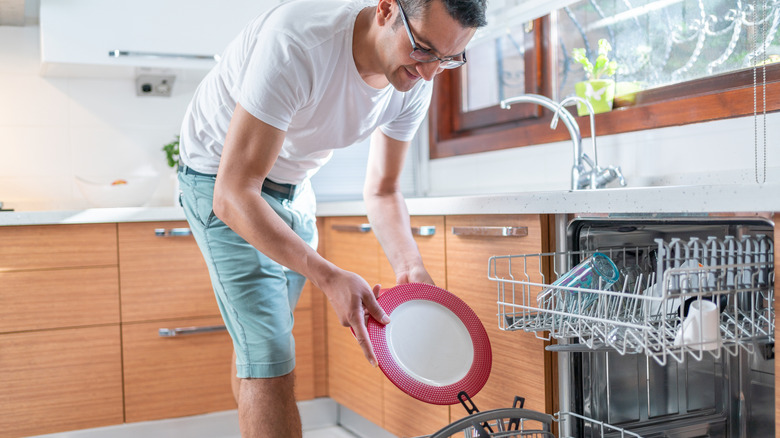
Over time, frequent dishwasher cleaning can take its toll on vintage dishware and cause visible wear, even when labeled as dishwasher-safe. This wear usually shows up as faded patterns, loss of gold or silver gilding, glaze crazing, as well as cloudy or etched glass. Stacy Verdick Case emphasized that etched glasses cannot be washed away or restored to their original state, and that this kind of wear is permanent.
"It looks like a haze on the glass," Case said. "A lot of people mistake this for soap residue." Soaking cloudy glasses in white vinegar for about 15 minutes and rinsing them afterward can help restore the shine. However, if this doesn't work, it means the item has likely been etched. "Etching can't be washed away," Case continued. "It will look okay when the surface is wet, but as soon as the glass dries, the haze is back."
On how to be certain whether a vintage item can go in the dishwasher, Case recommended checking the label, especially on dishware from the '70s or '80s. In addition, older bone china usually handles the dishwasher if the glaze is intact. "You can try a light wash cycle if you think your piece will hold up (no high-heat or heated dry)," she suggested. And if you're not certain if that old candy dish your grandma owned could be worth hundreds, it's better not to risk it. Instead, find out if your vintage china is actually valuable first. "If the piece is sentimental or valuable, err on the side of caution and hand-wash the piece," Case concluded.