

The Classic Snack Cowboys Ate On The Trail That You Can Still Buy Today
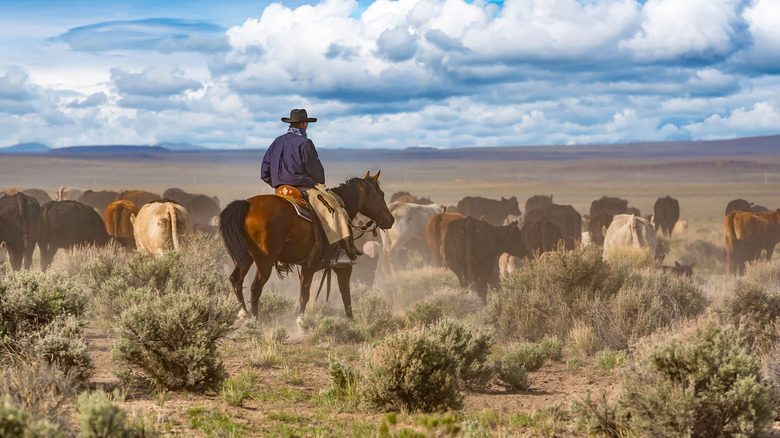
The lifestyle of cowboys was quite different from the often romanticized potrayal on screen, involving heroic or villainous gunslingers and shootouts outside saloons. In reality, they were typically laborers who worked long and hard for low pay as ranch hands or cattle drivers, beginning with the Mexican vaqueros in the 1700s and continuing with American cowboys in the 1850s and '60s. Their lives were tough, and so was one of the primary foods they ate: jerky. And not just beef jerky, but also rabbit, deer, elk, and perhaps other animals — whatever was available.
With so much of their time spent traveling, cowboys needed meals that were ready to eat, easily portable, and nonperishable, so they would last longer and wouldn't need to be kept cold. Jerky, or tasajo, as the vaqueros called it, checked all these boxes, and cowboys would make it by smoking, salting, or sun-drying meat. They would often hang strips of salted meat out to allow the hot sun to dehydrate and cure it; then, they'd either eat it just like that or pound and shred it to make a stew. Cowboys would frequently eat the jerky with bread that they made from a water and flour mixture that was dried in the sun, kneaded, and baked in ovens fashioned from clay.
Jerky then and now
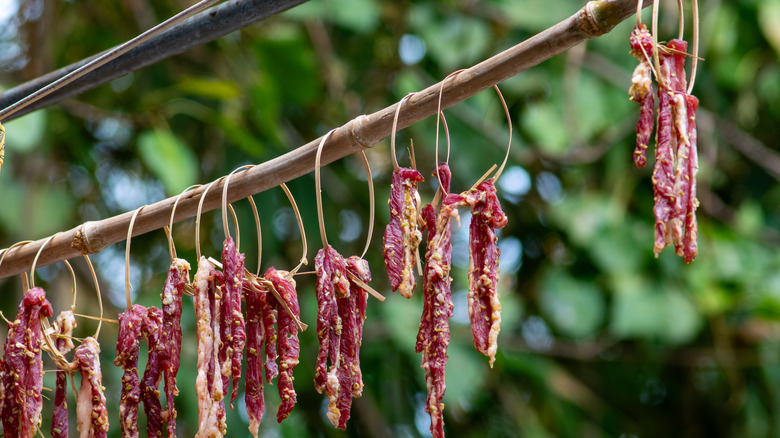
How does modern-day jerky differ from the original cowboy snack? For starters, it's softer and sweeter, or in some cases, spicier. Today's manufacturers have access to various seasonings, marinades, and tenderizers — like cane sugar, brown sugar, honey, vinegar (which gives jerky a tangy depth of flavor), teriyaki sauce, and ground chile peppers — that cowboys didn't have on the trail. So, contemporary jerky is more flavorful and comes in many different varieties. By contrast, the jerky of the 1700s and 1800s was typically seasoned only with salt and not marinated, which gave it a plainer taste and tough, brittle texture. That may be why cowboys added it to stews so much of the time — to enhance the flavor and soften it up.
Modern jerky is also usually cut differently from the snack the vaqueros and their American counterparts ate: The meat is sliced against (or across) the grain, or fibers of the meat, which makes it easier to break apart by chewing. The original trail jerky was typically sliced with the grain, which is the primary reason why it was so tough — cowboys had to really gnaw and pull on it hard to break apart those fibers.
Additionally, modern jerky also differs in terms of the particularity of where the protein comes from. So, just like regular cuts of meat, contemporary jerky comes from different sources, including grass-fed, corn- or grain-fed, grass-finished (fed a 100% grass diet for life), and organic beef. And if you need help deciding just which one to buy, check out our list of nine store-bought beef jerky brands ranked worst to best.