

6 Tips For Better Steaks On The Grill
We may receive a commission on purchases made from links.
A successful backyard hangout consists of nice weather, good company, and most importantly, delicious food. Coming up with easy side dishes to bring to the barbecue is great, but mastering the main event (the meat!) is a sure way to keep people raving about your outdoor gatherings for years to come.
Some home chefs may not be confident in their grilling skills. It's a fact that restaurant steaks often trick your tastebuds, which may lead you to believe that cooking an equally delicious one at home is unachievable. However, it's very possible to craft a delectable steak on your own back porch by utilizing a few different methods.
To help you impress everyone with your grilled steaks, we looked to the experts. After chatting with Joey Sergentakis, Michelin-starred chef and part-owner of restaurants such as Allendale Social and Revell Hall, Executive Chef Dagan Lynn of Beef. It's What's For Dinner and formerly National Cattlemen's Beef Association, Chef Brian Walter of 87 Sussex, and Chef Kyle Biddy of Little Betty Steak Bar, we've learned a few tips for better grilled steaks we want to pass along.
1. Use a meat thermometer
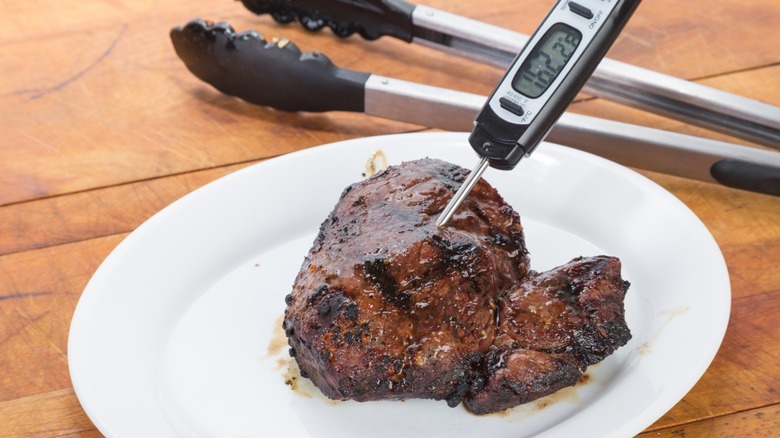
To ensure your steak is cooked to your desired doneness, our experts recommend using a meat thermometer. This handy device is key for ensuring you've reached the right temperature for rare, medium, or well-done steaks, and taking any uncertainty out of the equation.
"Don't guess when your beef is ready. Use an instant read thermometer to check for doneness," says Dagan Lynn. Joey Sergentakis seconds this, asserting that it's especially important with bigger steaks. "Invest in a proper thermometer, especially when working with large cuts of meat." Larger slabs of beef should be checked in multiple places to confirm it is evenly cooked through and safe to eat.
Another reason Sergentakis endorses a thermometer is because simply estimating how long the meat should take to cook isn't as accurate as seeing the temperature instantly as it grills. "Cook by temperature, not by time," he says.
It's also very important to factor in rest time when using the meat thermometer. "Keep in mind the temperature will continue to rise for a few minutes after coming off the grill," Lynn warns. If you cook to the exact temperature you want while the steak is still on the heat, you may end up with a little more doneness than you'd hoped.
2. Allow your steak to rest after cooking
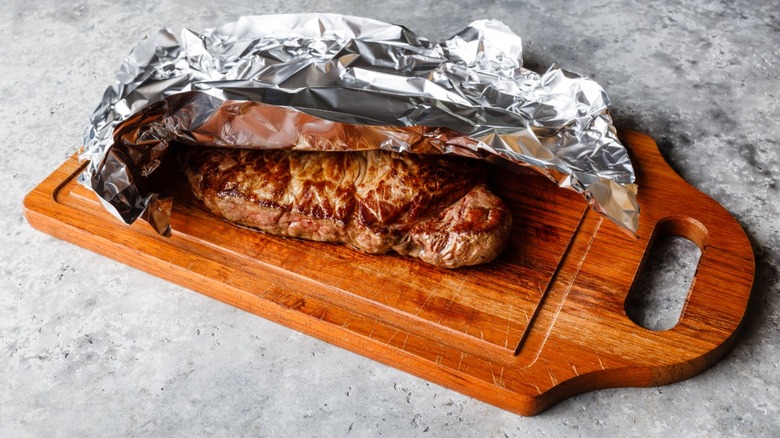
When you pull your steaks off of the grill and your guests are ready to dig in, it's tempting to serve it up immediately. However, our experts unanimously agree that it's a huge mistake to cut into your meat right away. In order to retain the delectable juices and flavors inside the steaks, you should set them aside to rest before plating. Brian Walter says, "Do not cut into it right away. That is one of the easiest ways to ruin a good steak."
It's a shared belief amongst the experts that steaks should generally rest for five to 10 minutes, and certain cuts should have a little bit of extra time. "Larger steaks like tomahawks may benefit from [resting for] 10 to 15 minutes," says Joey Sergentakis.
While you want to let the steak settle, you don't have to lose the sear you've just perfected. Walter offers this tip: "Rest it on a warm plate or a wire rack, loosely covered. Do not wrap it tight like leftovers. You are letting the juices settle back into the meat, not steaming the crust and grill marks you just worked to build." Whether you're going for blue rare or well-done steak, Kyle Biddy asserts that "no matter what temperature you're aiming for, rest it on a sheet tray with a rack on it to allow air to circulate, and you're good to go."
3. Keep the seasoning simple
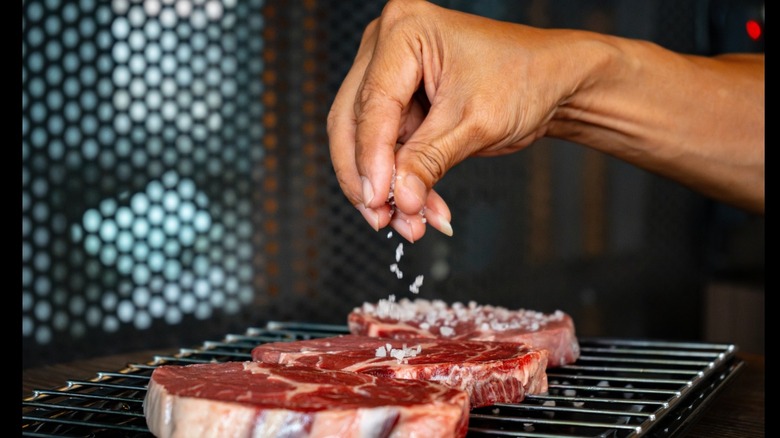
While the dozens of steak seasonings on the shelf at the grocery store may seem enticing, they're not necessary to craft a delicious steak. A simple blend of salt and pepper is usually the only thing you need to create excellent flavor. "Salt and pepper = king," says Kyle Biddy. "Let the meat flavor shine and don't skimp on the salt. Most people don't use enough salt on their steaks."
"You want to find the right balance with seasoning," says Dagan Lynn. "Over-seasoning can mask the natural flavors of beef and under-seasoning can result in bland meat." Cooks should definitely season to taste; however, there is a happy medium that can either make or break a meal. It's best to cater the amount of seasoning to the volume of meat that's being grilled in order to ensure even flavor throughout. "You may need to season more heavily than you think is necessary to ensure the seasoning penetrates beyond the surface," Lynn adds, regarding larger cuts of steak. Conversely, the same goes for smaller steaks –- don't overdo it.
Once you've pulled the steaks off of the grill, you can add a few more basic flavors to elevate your meal even more. "You can finish with good butter, a little flaky salt, or brush it lightly with garlic oil using a rosemary 'witch's broom,'" says Brian Walter. A witch's broom is a bundle of herbs tied together with twine.
4. Use a good cut of steak
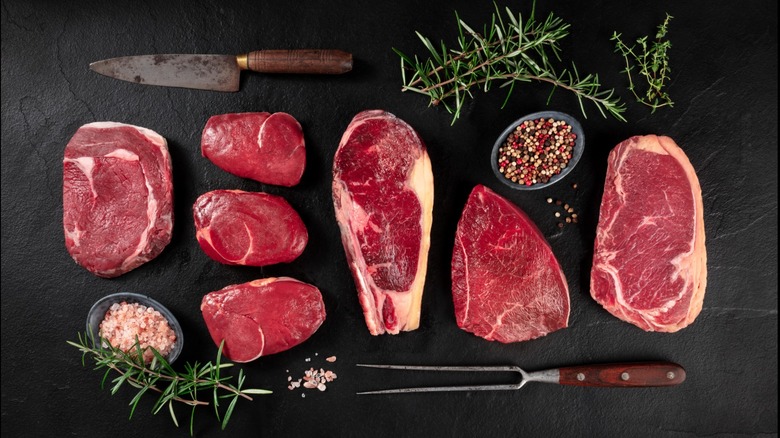
While you're prepping for your big backyard barbecue, standing at the butcher counter and deciding which cuts of steak to buy and which to avoid can be a bit overwhelming. There are a few factors for home cooks to consider in order to achieve that delicious main course.
Dagan Lynn stresses the importance of marbling, which refers to the lines of fat that are visible on the steak. It's a huge contribution to the flavor and texture of the meat. "When choosing your steak, you want to look for good marbling. The fat will melt during cooking, adding flavor and moisture to the beef," he says, which creates a more melt-in-your-mouth feel. Joey Sergentakis recommends a ribeye for "exceptional marbling and flavor," and Lynn suggests a Denver cut.
When it comes to the size of the cut, Brian Walter advises: "A thick steak is much easier to cook properly on the grill. It lets you build a serious crust while still controlling the internal temperature." Thickness is good for aesthetics as well, as he adds, "It also looks better on the plate."
So which cuts are the absolute best options for your summer get-together? The shared favorites amongst our experts are ribeye, New York strip, and porterhouse.
5. Choose gas or propane depending on your needs

Grilling enthusiasts tend to hold very strong opinions on whether a gas or propane grill is the best option. Joey Sergentakis is enthusiastic with his opinion. "Charcoal wins for sure!" he says. "The live fire, smoke, and radiant heat create a complexity that's difficult to replicate with gas."
One big upside to this grilling technique is the burst of smoky flavor it adds to the steak, "...which gives beef a distinct flavor," Dagan Lynn notes. Using charcoal does require a little more work and time to pull off an excellent steak, though our chefs insist that the end result is completely worth it. Kyle Biddy recommends using "a chimney starter and a nice briquette-style charcoal." You can order a chimney starter online, like this one from Kingsford, as well as some Kingsford briquette charcoal in various bag sizes.
Although they generally prefer charcoal, our experts affirm that propane also has positive attributes. "Propane heats up quickly and is typically easier to control, so it's a better option for beginners," Lynn says. In addition to this, the process is overall cleaner and yields more uniform results, per Brian Walter. Basically, if you value convenience, propane is a good choice.
In short, every cook has their preference when it comes to propane vs gas. Sergentakis ultimately offers this insight: "If I had to choose just one, I'd choose charcoal every time for a special steak dinner because the flavor payoff is worth the extra effort."
6. Only marinate certain cuts
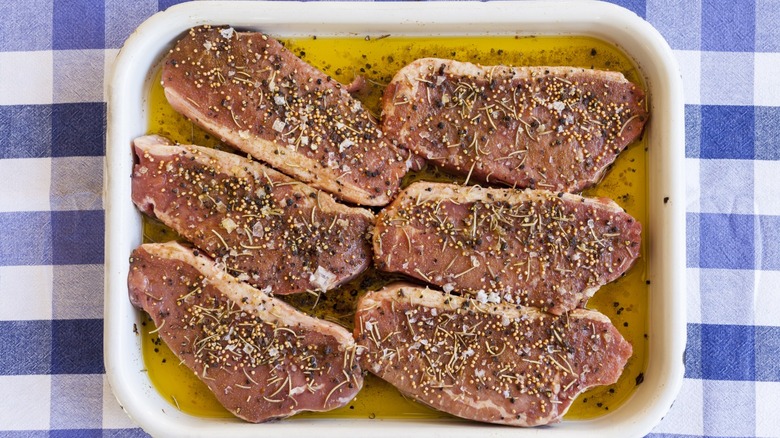
While planning your steak dinner, one thing you'll need to decide is whether you should skip the marinade. A decadent concoction of flavorful ingredients and seasonings usually sounds enticing. However, it's not the best option for every cut.
Dagan Lynn suggests that marinades should be reserved for cheaper steaks. "Marinating depends on what cut of steak you are using. If you are using a more budget-friendly steak cut (like flank steak or strip steak), a simple marinade can go a long way," he says. Brian Walter seconds this, recommending marinades mainly for "tougher" cuts of meat. "Those cuts can benefit from acid, oil, herbs, and time," he adds. If you do opt for a marinade, Kyle Biddy offers this advice: "Don't forget to wipe off all the excess marinade and pat your steaks as dry as possible to allow them to get a good crust."
So why do our experts insist on reserving marinades for specific types of steak? "A good steak doesn't need to be hidden behind strong flavors," Joey Sergentakis says. "The biggest mistake I see home cooks make is overcomplicating the process." When cooked well, steaks should only need simple seasonings that allow their natural taste to shine through. Regarding this, Walter adds: "If I spent money on a beautiful USDA Prime ribeye or strip steak, the last thing I want to do is cover up the flavor I paid for."