

How Old Is The Canned Food On Store Shelves?
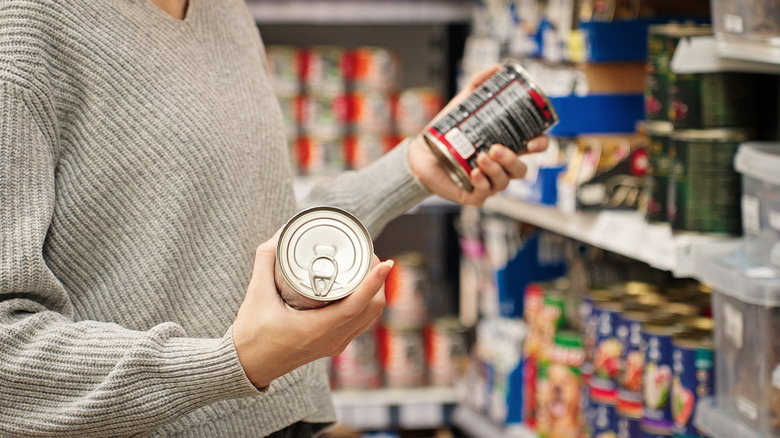
Ever since canning was developed in 1809 (at the request of Napoleon Bonaparte, who was looking for a convenient way to feed his army — seriously), it's been a mainstay of the culinary world. From Beefaroni to sardines (one of the 14 canned meats you should keep stocked in your pantry), canning has made life in the kitchen infinitely more convenient. Have you ever wondered, however, exactly how old the canned food is on the shelf of your grocery store? Sure, there's a "best by" date, but how can you tell exactly how long the food has been in the can before it makes its way to your plate?
It's tough to nail down exactly how long food has been sitting in a can, but you can do a bit of backwards math to try to figure it out. You'll notice two date-related items on canned foods. The term "open dating" refers to the "best by" date, while "closed dating" refers to a manufacturer's code that allows the company to pinpoint the day the food was canned. While you typically can't decipher the closed code, which is a series of letters and numbers stamped on the can, you can subtract the amount of time the canned food in question generally lasts from the "best by" date to get an idea of when it was canned. High-acid foods, such as tomatoes, generally last up to 18 months in cans, while low-acid foods can last up to five years, making the calculation a rough — but far from exact — guide.
Signs that a can in your pantry is past its prime
Since it's not possible to know with certainty how long a can has been sitting on the shelf at the grocery store, it's smart to keep an eye out for signs that canned food has gone bad, even if it hasn't passed the "best by" stamped on the can. You can start by looking for signs that your food has gone bad before you even open the can. If you notice that anything is leaking, or if the can's shape doesn't look quite right (it's bulging, or it has severe dents), throw it out. There are certain factors that make canned food less likely to be safe, like being exposed to high temperatures if you accidentally left a can of food in the car on a hot day.
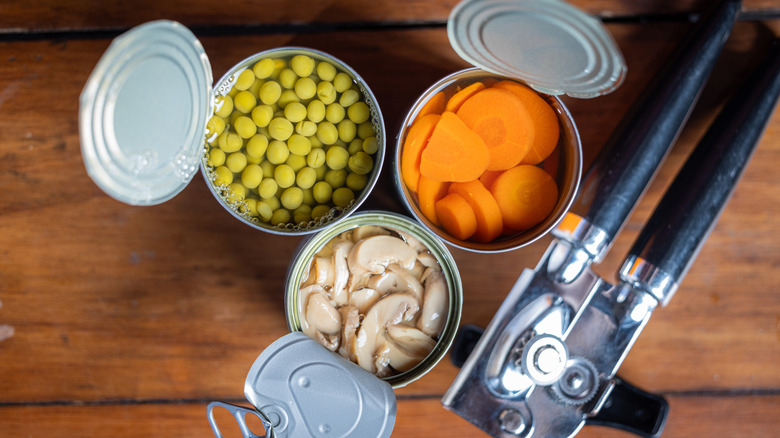
Once you open the can, you can also take a look for signs that it's past its prime. Nothing should spray out of the can when you open it — if it does (or if anything inside the can looks foamy), toss it, as these are telltale signs that canned goods have spoiled. If you see any strange colors or mold, or if the food looks milky when it shouldn't, it also needs to go. While "best by" dates and general shelf-life guidelines can be helpful, it's still important to use common sense when pulling a can't-remember-when-you-bought-it can from the back of your cabinet.