

Make Salmon Taste 10x Better With This Simple Cooking Technique
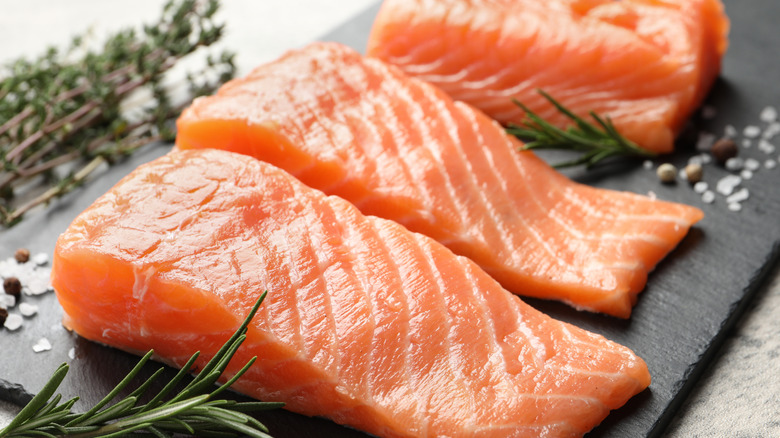
Salmon is more versatile than we give it credit for. Perhaps because high-quality cuts can be a bit expensive, many home cooks tend to treat salmon with kid gloves. Some of us are so certain the parchment paper packet method will produce perfectly cooked fish, and we don't want to risk those beautiful bright orange fillets going to waste. However, preparing salmon the same way every time can get boring, which is just one of many reasons why you should consider cooking it in the deep fryer.
Almost everyone loves deep-fried food because that bath in hot oil creates a crisp, golden crust while adding richness from the frying oil. Add to this the delicious meaty richness of salmon coated in one of the many batters perfect for frying fish, and you've just discovered your new favorite seafood main dish. Made correctly, deep-fried salmon is not only deeply flavorful, it's also a wonderful combination of textures — crisp on the outside, succulent inside.
The most important thing to keep in mind when using this method is that deep-fried salmon cooks extremely quickly. It only requires about three minutes in the oil to crisp it to perfection. If you fry it for any longer than that, you risk burning the outside and creating a rubbery interior, which is one of the worst deep frying mistakes you can make.
Achieving perfectly deep-fried salmon nearly every time
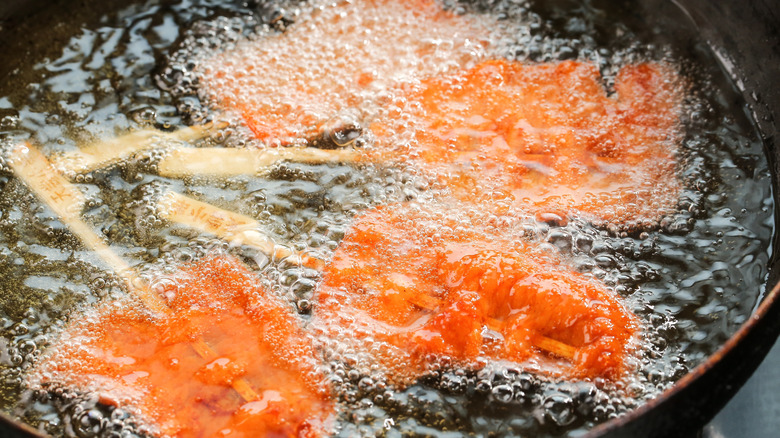
The most important details of properly deep-fried salmon include coating it correctly, choosing the right oil, and maintaining the correct temperature. As mentioned, there are lots of tasty ways to coat fish, but whether you choose to use a wet batter or a drier breading, the first step is patting the salmon dry. Excess moisture on the surface creates a barrier between the salmon and the breading, which will create a pocket of steam during cooking that may cause the breading to fall apart.
Breading your salmon correctly also includes proper seasoning. You can season the salmon directly with tangy BBQ seasoning, or season your coating mixture generously so the flavors can cut through the rich taste of the crunchy breading. Highlighting these flavors is just one reason why you should choose a neutral frying oil for this recipe, such as avocado or canola oil. These oils have a fairly high smoke point to ensure they'll hold temperature, and won't overshadow the seasonings and the taste of the salmon itself.
Keeping your oil at the correct temperature is the difference between deep-fried salmon that's perfectly tender and fillets that are either dried out or soaked in oil. Using an oil thermometer will help you keep your oil at the perfect temperature — around 350 degrees Fahrenheit, in this case.