

What Is The Average Shelf Life Of Dried Beans?
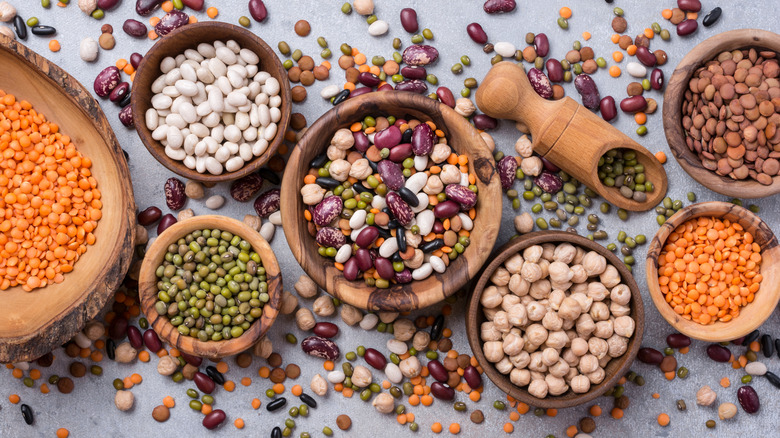
Dried beans are an underrated pantry staple. Sure, they take a little more prep than canned varieties, but it's easy to bypass the soaking time by tossing your dried beans into a pressure cooker, or turning dried beans into velvety baked beans in your Crock-Pot. If you're shopping on a budget (most of us are these days), dried beans are also typically cheaper than canned by up to 30 cents per serving. Dried beans are also higher in water soluble nutrients such as thiamin, folic acid, vitamin B6, and riboflavin, in addition to containing hefty doses of protein and fiber.
Stored correctly, dried beans also have fairly good longevity, staying fresh for at least a year (sometimes two) under the right circumstances. That means it's perfectly safe to keep a batch of dried beans in the back of your cabinet for emergency circumstances, or for whipping up some cozy stovetop calico beans when you haven't had time to go grocery shopping. Just keep them in a cool, dark, dry place in an airtight container, and you should be good to go.
Though dried beans don't technically go bad per se, after the two year mark they begin to lose their nutritional value, with near total nutrient loss after about five years. While they're still safe to eat and don't really need an expiration date, you should still label them with the date of storage to ensure you use them up before they lose their nutrient-packed goodness.
Proper care and storage of your dried bean collection
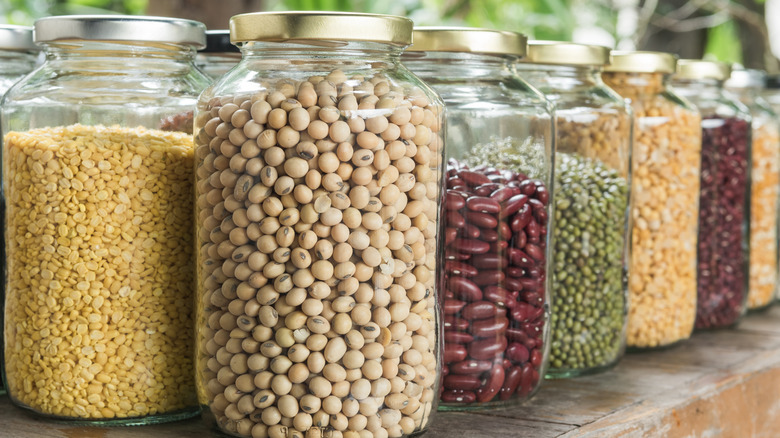
The first step in properly storing dried beans is to transfer them out of the plastic bags they came in. Mason jars work well, or tall plastic pantry storage canisters with hinged lids equipped with silicone flanges, or plastic clasps that snap tightly into place. These ensure a tight seal that protects your beans from moisture, dust, bugs, and spores.
Also, tuck the beans into a dark, cool shelf in your pantry. They may look pretty lined up on the windowsill above your sink, but the combination of sunlight, variable temperatures, and a humid microclimate could cause them to spoil. Though dried beans aren't as readily susceptible to spoilage as fresh legumes are, they can still fall prey to infestations of insects or become rotten and moldy if their containers aren't properly sealed, or the container they're stored in isn't fully clean and dry. If you're measuring out dried beans and notice an unpleasant smell, insects, mold, or a soft, slimy texture, it's time to throw out the whole batch.
Remember: Drying beans is a way to preserve them for longer, not forever. Even dried legumes still contain oils that can go rancid or spoil in the ways previously described. If you find a hidden stash of dried beans that's more than a year old, it's time to throw together some high-protein Tex-Mex soup or grind them into flour for fortified pastries.