

Pinot Grigio Vs Pinot Gris: The Key Difference Between The Wines
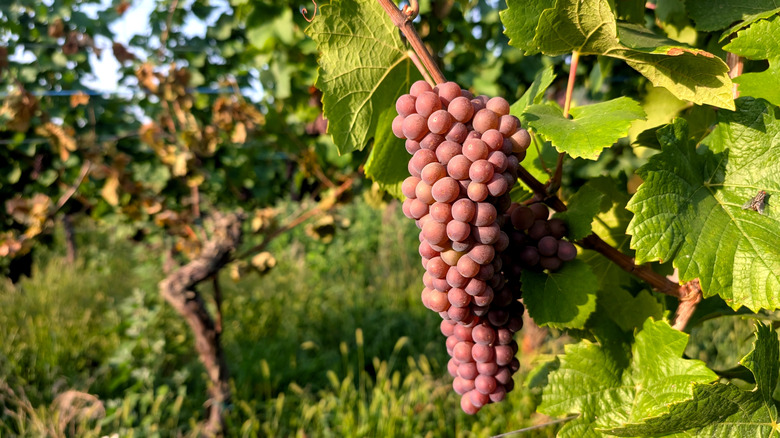
The world of wine is anything but banal. You can go to your local grocery store or wine purveyor and find varietals beyond your wildest dreams (or, you can just grab Trader Joe's $5 wine and call it a day). From riesling to chardonnay, and gamay to syrah (or shiraz), there are many different grape varieties and preparations to try from. But sometimes all of that variety can cause confusion and inquiry. Like, why are there both red and white varieties of pinot noir? But that's a question for another time. Today, we're looking into pinot grigio and pinot gris, two wines with really very similar names.
You might be wondering if there is a difference between the two wine varieties, and the answer is — yes, but also no. Pinot gris and pinot grigio are both made from the same grape varietal, which is itself a mutation of the lovely and iconic pinot noir grape. Pinot gris is French for gray pinecone, a name it owes to its pale, slightly gray color. Both pinot gris and pinot grigio (grigio is gray in Italian) are produced from the same French-originating grape. Pinot gris has historically been produced in France, and grigio is Italian. In terms of flavor, pinot gris tends to have a richer taste and a more full bodied feel, with notes of spice to boot, while pinot grigio wine tends to have notes of almonds and a crisp salinity that makes it super refreshing to sip.
What a difference a climate makes
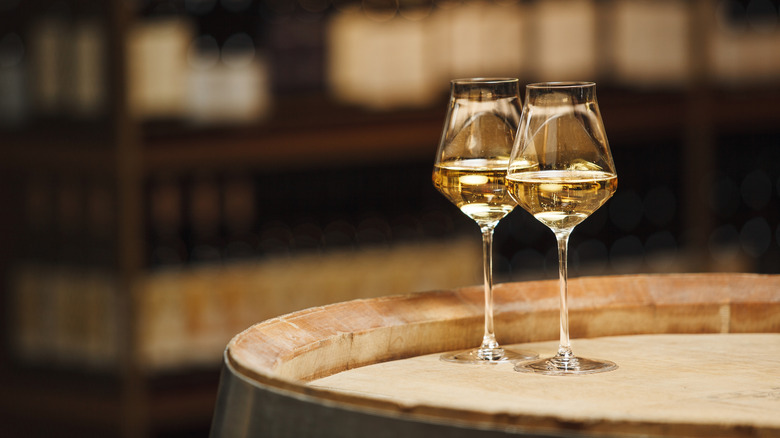
One big reason for these wines' contrasting flavors has to do with the terroir of each varietal. Italian pinot grigio is grown in Northern Italy, which has a cool climate. Because of this, pinot grigio grapes are often picked before full ripeness, giving the wine a sharper flavor profile. French pinot gris, on the other hand, is typically grown in the Alsace region of France, where the climate is warm and grapes are more apt to ripen. The resulting wine has a fruity, richer flavor.
Pinot gris is also often aged in oak, especially if it is made in the Alsace style. Aging in oak gives this wine more richness in flavor. Pinot grigio, on the other hand, typically isn't oaked, which helps contribute to its clean, crisp flavor. There are no hard and fast rules regarding labeling of these wines, so winemakers often label their wine under the name that fits its flavor profile (so more oaky varieties might be labeled pinot gris, while crisp varieties might be called pinot grigio).
Now, there is some variance in taste and texture in both pinot gris and pinot grigio in bottles produced outside of Italy and France. For example, a California pinot grigio is typically more fruit-forward than its Italian counterpart (thanks to the warmer growing climate), and an Oregon pinot gris typically has a bit more dry than its French counterpart. It's safe to say that this gray-blue little grape has some serious and expansive flavor possibilities. So take it one bottle at a time, perhaps with a few slices of jalapeño. Or, you can use this people pleasing grape in your next batch of sangria.