

The Average Cost Of Chicken In The '70s Vs 2026
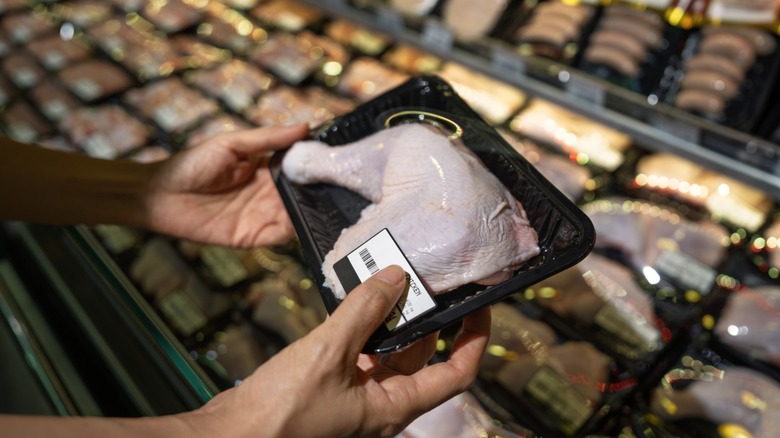
For as common a protein as it is in modern diets, chicken was actually considered a luxury for much of American history. That changed after World War II thanks to a combination of updated butchering practices and marketing campaigns. Both demand and supply skyrocketed over the ensuing decades (many of our favorite old-school chicken recipes are from this time period), and, since the mid-1970s, the industry has been pretty much what it is today. What has changed since the '70s, however, is pricing.
Despite prices for broilers and other whole meat chickens hovering around $1 or less for most of the mid- and late 1970s (per Federal Reserve data), the same birds go for well above $3 in 2026. The difference appears even starker when looking at actual cuts of chicken. Although not much information on 1970s prices is available in this area, Federal Reserve data starting in 1980 shows that the cost of bone-in chicken breast then was $1.30 per pound. In 2026, chicken breast (boneless) goes for just over $4 a pound. (Federal Reserve data for bone-in breasts cuts off in 2011 at $2.38 per pound.) So, though chicken is still among the most budget-friendly proteins around, you're still paying roughly twice what shoppers in the 1970s and early 1980s did.
Of course, that was 50 years ago — are you really paying all that more? According to the Bureau of Labor Statistics, a dollar in 1976 would have the same buying power as about $6 in 2026. That's just inflation for you. Since chicken prices appear to be below what they should be per inflation rates, you can consider it a modern bargain.
Why chicken is actually more affordable now than in the 1970s
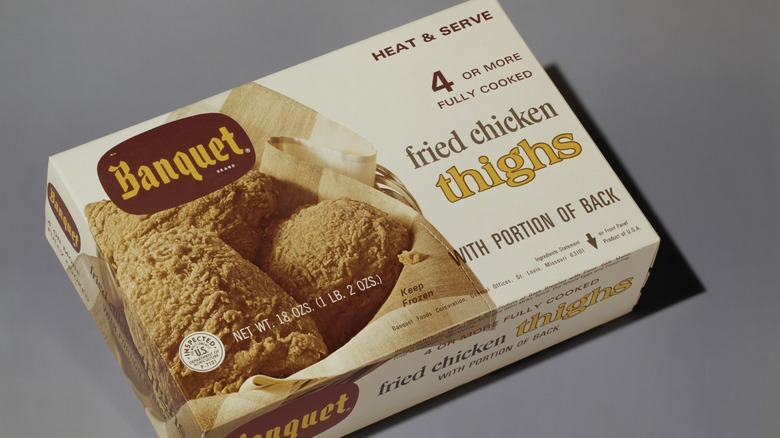
Unlike other common grocery items that have exploded in cost in the 2020s beyond normal inflation, chicken is still generally affordable in 2026. But how? For one thing, the chicken industry underwent significant changes in the '70s. Consumers began gravitating toward pre-cut chicken portions (instead of whole chickens) in this decade and broadly preferred them by the time the 1980s rolled around. And, by the mid-1990s, chicken surpassed both beef and pork in protein popularity. Due to this rising demand, broiler sales rose more than 100% between 1969 and 1992. Thanks to supply lagging behind, consumer prices increased 74% between 1970 and 1980 alone. For comparison, chicken prices only went up 69% between all of 1990 and 2025 and just 24% between 2015 and 2025.
This wasn't just because of chicken going mainstream among American consumers, either (though popular recipes like fried chicken were around long before that). Advancements in chicken processing and flock pathogen reduction took place in the late 1990s, streamlining the industry further and helping to provide meatier chickens at more affordable prices. And, as per USDA data, chicken availability sharply rose in the 1970s and has more than doubled over the decades since, going from under 30 pounds per person in 1970 to nearly 70 pounds per person by 2020. With consumption projected to continue going up, it's possible that chicken could be even more relatively affordable in the future than it already it is.