

Why Do Strawberries Seem To Mold Faster Than Other Fruits?
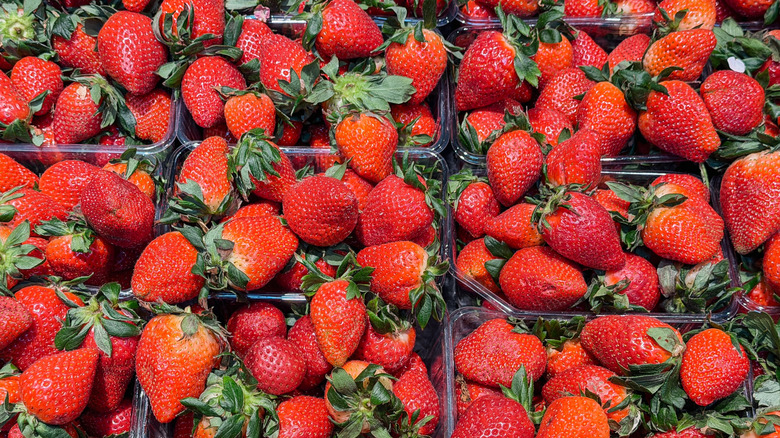
You've probably experienced it: You buy some fresh strawberries and leave them overnight. The next day, a couple of them are fuzzy, spreading it to their neighbors, forcing you to ditch the whole punnet.
Strawberries are one of the fastest-rotting fruits, and the main culprit is a type of fungus called botrytis cinerea, or gray mold. It gets into strawberry plants when they're flowering, but it stays dormant inside the fruit until it ripens. So, your berries are often carrying it without your knowledge. The fungus gets activated by ethylene, the hormone that is released as fruit ripens, and then it starts getting to work on the flesh of your berries.
Although botrytis is not in every single berry, it's very common in nature and can survive a long time, including in temperatures down to almost freezing (hence why refrigerating the berries doesn't help). So, all it takes is just one infected berry for the spores to spread to others around it, which is why the whole container seems to get moldy so fast. (You shouldn't eat berries that touched moldy ones, either.)
On top of that, strawberries "breathe" at a relatively high rate, which generates extra heat, creating an environment more conducive to botrytis. Compare this to, say, oranges, which respirate slower and also have a peel as protection, and it's evident why strawberries get hit so hard.
Some other factors play a role
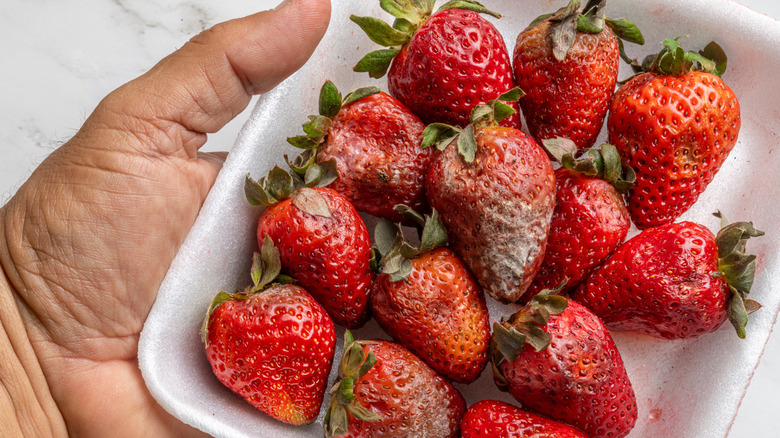
Even if you're lucky enough to get strawberries without any trace of gray mold spores (and that's considered uncommon, as strawberries can't really be guaranteed as gray mold-free when they're picked and sold), there are good chances your berries will fall victim to some other damage or disease. Firstly, they have a thin, porous skin, so they can get damaged quite easily while they're being processed for packaging or shipping. They can bruise quickly, and then other organisms that cause them to rot can also get in when that happens.
Strawberries are also among the fruits with the highest water content (around 91% water according to the USDA), and this is another environment in which mold thrives. The same goes for sugar: Strawberries have lots of it, and it also helps prop up mold growth.
Finally is the fact that strawberries don't ripen after they're harvested. This means that they have to be picked more or less when they're totally ripe, giving them a limited shelf life compared to fruits that keep on ripening after they're picked. (And don't forget that ethylene, the ripening hormone, activates that mold.) All of this together creates the perfect storm for gray mold or other problems. However, there are methods to stretch out their shelf life: One easy idea is to wash them in hot water (the berries actually hold up quite well here). Otherwise, just eat them quickly.