

The Retro Southern Canned Pear Salad That Still Divides Dinner Tables
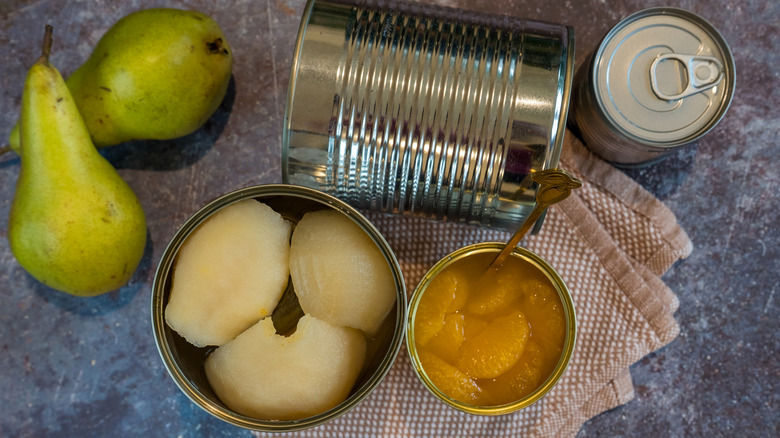
I remember my first pear salad. I was around 8 or 9 years old, and drowsily moping around a funeral, or maybe a birthday. It's hard to tell as both were celebrated in much the same way. Speeches were given, and food was served potluck style in someone or another's house. Anyway, what I remember isn't the funeral or the party, as it were. I remember the pear salad.
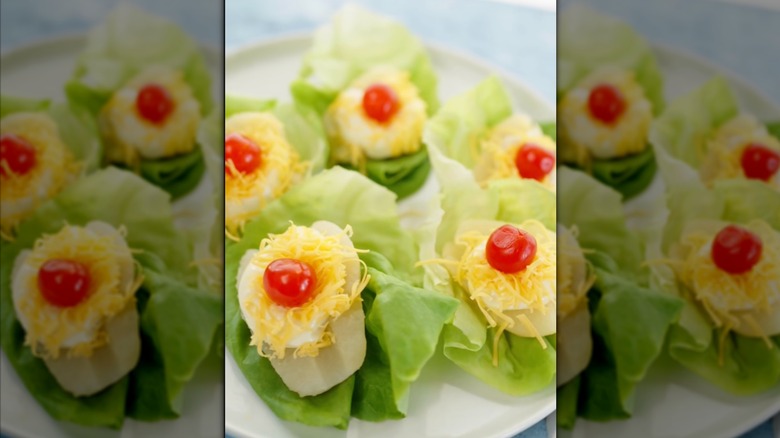
It was nestled somewhere between the deviled eggs and some sort of ham spread: a platter of halved pears, each on one its own lettuce leaf, topped with glossy mayonnaise, shredded cheddar, and a single, neon maraschino cherry. I plucked a single pear, along with its lettuce companion, and placed it on my deviled eggs-ridden plate. It was a gag, a novelty that I took almost as a dare to myself. I was surprised, however, when I took a bite from this canned fruit and mayo salad, to find that it was delicious: zingy, sweet but not cloying, and perfectly offset with that savory sprinkling of cheese.
This, of course, is not a universally held opinion among diners. Though pear salad is a staple at many gatherings in the South, it is still pretty divisive. The combination of canned fruit, mayo, cheese, and a single cherry is odd to say the least. Some find the disparate flavors to be jarring, and the presentation to be all too retro. Even so, it remains a staple of many a grandma's recipe repertoire thanks to its easy, no fuss preparation, and its roots in midcentury culinary culture. However, even though its has been a Southern staple for decades, its exact origins remain foggy at best.
The history of the pear salad
There is no exact myth, or recipe, for pear salad to mark a single point of origin. However, a few sources have pointed to its progress along the long stretch of culinary history. The first example of a potential pear salad ancestor can be found in an 1899 recipe book called "The American Salad Book," written by Maximillian de Loup. The recipe called for fresh pears to be halved and covered in sugar and a maraschino syrup. It was served with a side of cream sauce. This, of course, is not at all similar to the current iteration of the dish. So how did that evolve?
As the century rolled on, canned food became more prominent, especially during the World War I, when fresh fruits and veggies were hard to come by. Canned foods grew in popularity. In 1917, another recipe for pear salad was published, this time in a Vicksburg newspaper. This recipe is more similar to the current version, and consists of halved, canned pears placed onto lettuce and filled with cream cheese or walnut meat. It would then be served with a mayonnaise sauce. From there, the recipe proliferated, and by the 1950s, had evolved into its current mayonnaise, cheese, and maraschino cherry-topped version. The dish was the perfect candidate for midcentury success, thanks to its mostly prepackaged ingredients list. These components also made it ideal for success in Southern kitchens. After all, other mayo and canned food-heavy dishes, such as pimento cheese, and pineapple and mayonnaise sandwiches, were also particularly popular in the South.
Make it your own
As with many beloved Southern foods, such as deviled ham or fried chicken livers, pear salad is inherently divisive. Some people simply cannot get over the stark contrast between the canned pears, cherries, cheese, and, perhaps most off-putting of all, that dollop of mayonnaise. And while I would suggest trying it before you knock it, there are plenty of ways to make this dish your own while maintaining its spirit, so to speak. After all, food, like language, is a fluid and ever-changing thing.
So, if you want to try this dish, but don't want a mouth full of mayo, there are a few alternatives you can try. For starters, you can swap that mayo out for another creamy ingredient, such as cream cheese, sour cream, or cottage cheese. Each would bring that needed tang without the vinegar taste of mayo. To call back to a previous iteration of the dish, you can even add in some walnuts to your filling. This would work particularly well with cream cheese, adding a warm, nutty flavor that will work well with the pears.
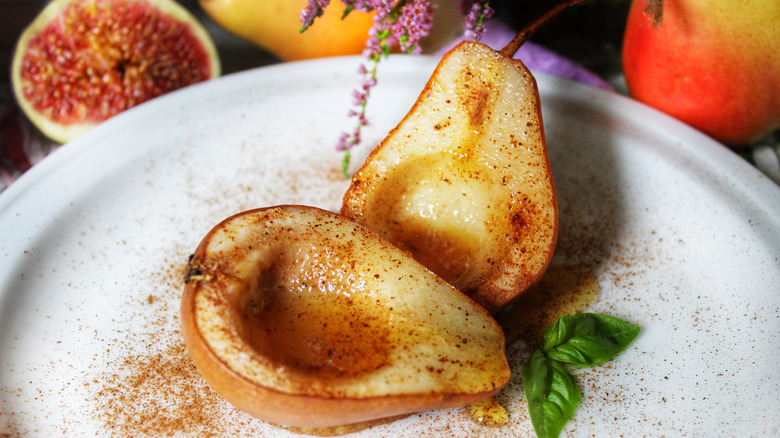
As for cheese, it's best to stick with cheddar, but you can use either mild or sharp, depending on your preferences. The cherry is optional, and if you're not feeling up to maraschinos, you can use Luxardo cherries, which are much richer in flavor. As for the pears? While canned are the most traditional, you can absolutely use poached or roasted pears. And while these pears won't produce a true-to-form pear salad, it might just be the next step in this salad's evolution.