

What Happens To Returned Or Unsold Groceries At Whole Foods?
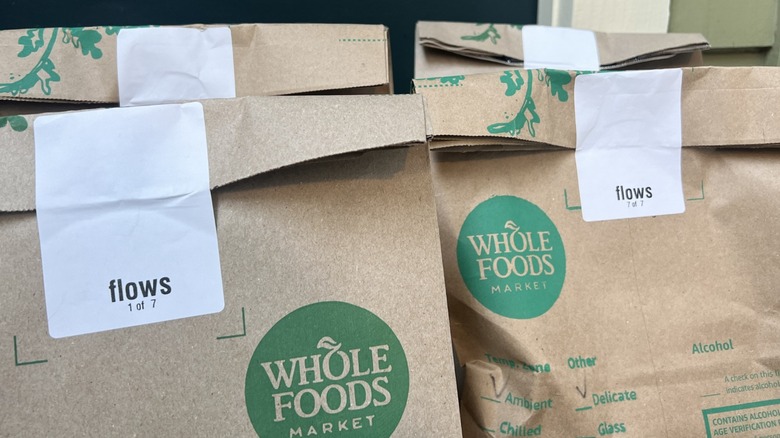
Whole Foods stores have become key dropoff points for Amazon returns over the last several years, but the returns that don't get enough attention are those for Whole Foods itself. The higher-end grocery chain has a better return policy than you think, operating on a 100% guarantee standard that requires stores to take back anything (with some exceptions) customers are not completely satisfied with for a full refund. But, if you return groceries to Whole Foods and expect them to go straight back out on store shelves, think again. Whole Foods' internal policy for dealing with returned goods is pretty much as simple as it gets: just dispose of them.
Sure, this standard of practice doesn't exactly jive with the store's publicized food waste initiative, nor Amazon's sustainability goals (the online retail giant took over ownership in 2017). Nevertheless, it's what multiple employees have affirmed across social media over the years. As Redditor Crafty-Ad-2822 and self-claimed Whole Foods employee put it, "They [just] throw it away. If it left the building for just a second it gets immediately thrown out." As if employee accounts aren't enough to go on, there are also videos of dumpster divers outside Whole Foods stores that further back up these statements.
Whole Foods' policy for throwing out returned or unsold groceries isn't uncommon
As surprising as it may be, Whole Foods' practice of throwing away returns is far from uncommon. Despite the U.S. Department of Agriculture estimating food waste to account for 30% to 40% of the nation's food supply, more grocery stores participating in donation programs for unsold goods, and Whole Foods repurposing unsold bakery items for another shot at selling, disposing of returns is routine across the country. Even highly popular stores do it; there are reports of Trader Joe's throwing away returned goods, and Aldi doing the same. Although there have also been some reports of canned foods and sealed nonperishables being returned to shelves, there does not appear to be any broad standard — at Whole Foods or elsewhere — to support this claim.
The reason behind the waste is pretty simple: liability. It comes down to what the food safety industry calls the "chain of custody." The store is responsible for a product's safety while in the hands of its staff, but once that product leaves the store with a customer, this chain is broken. Store staff cannot know for sure if frozen food was left out, raw meat was stored improperly, packaging was damaged, etc. — even if the item in question was just out of the store briefly. The uncertainty creates too much risk for resale or donation. The lesson here? If you shop at Whole Foods, try to only buy what you know you'll use.