

How To Properly Cook Spinach To Preserve Its Nutritional Value
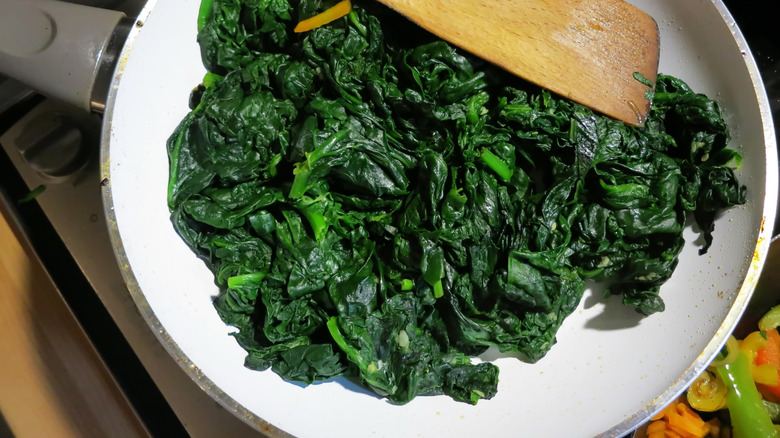
As Popeye was always trying to tell us, spinach is one of the healthiest greens you can eat. But, since he was always eating his spinach straight out of the can, you might wonder if the way you cook spinach has an effect on the amount of nutrients you end up consuming. The answer varies. Generally speaking, steaming is considered one of the healthiest ways to prepare any vegetable, and spinach is no exception to this rule because the leaves are exposed to less heat than when boiling or sauteing.
In the case of spinach, that detail is important because its nutrients are quite sensitive to both heat and water. Vitamin C, for example, can decline during cooking while other water-soluble nutrients may leach into the cooking water if you're boiling it. You then pour all those nutrients down the drain. Because steaming cooks spinach without submerging it, less nutrients are lost, and it also does a good job of keeping spinach vibrant and green. This is not to say that other cooking methods have no benefits of their own. In fact, the differences between common cooking methods may be smaller than you think.
The best cooking method depends on which nutrients you prioritize
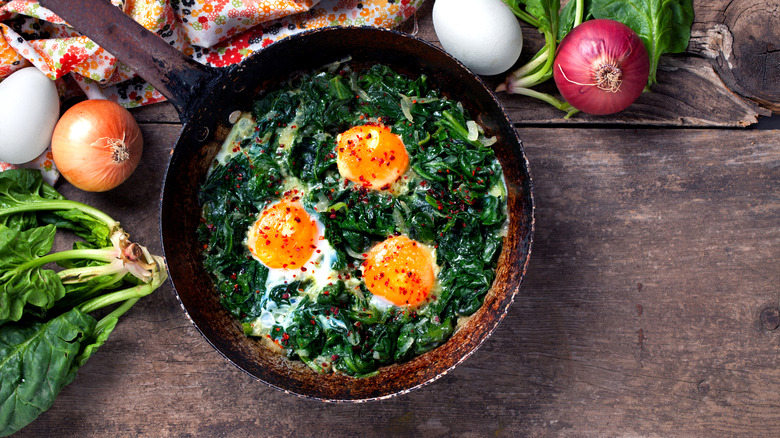
While steaming is great, there isn't necessarily a "perfect" way to cook spinach because every method involves some trade-offs. Steaming is great at preserving many of the leafy green's vitamins, but if you prefer to lightly saute spinach quickly over moderate heat, that's still a nutritious choice. In fact, adding a little oil and a squeeze of lemon can help your body absorb some of the compounds found in spinach in the first place. So, if dishes such as sauteed spinach with toasted nuts are your favorite, these can offer as many nutritional benefits as they do flavor.
Boiling is another choice. While boiling can reduce some water-soluble vitamins more dramatically, it can also lower oxalate levels further than gentler cooking methods (oxalates being a compound that prevents you from absorbing other nutrients). Really, the "healthiest" choice depends on what you're trying to achieve, as well as what you're most likely to eat.
The bottom line is that spinach stays quite nutritious regardless of how it's prepared. If you're trying to eat more spinach (which also contains more protein than you think), it's a case of preparing it how you best enjoy it. Steam it, saute it, eat it raw, or throw it in a soup; no matter what, you're still getting a vegetable that's rich in vitamins, minerals, and antioxidants.