

What Happens When You Eat Raw Meat?
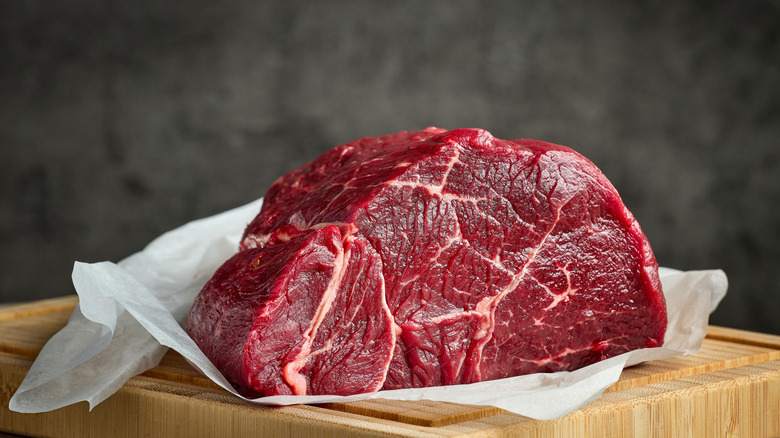
We go to great lengths to ensure our meat is served perfectly cooked, even using a meat thermometer to achieve the perfect outcome. But what really happens when you consume it raw? It's not always pretty. You can get common types of food poisoning, such as salmonella and E. coli. If you happen to develop symptoms, including diarrhea and vomiting, after consuming raw meat, it means you've eaten something bad. Getting ill from raw meat means what you ate was tainted with pathogens, which usually happens during slaughter. Sometimes, butchers unintentionally cut an animal's intestines, which results in the introduction of bacteria to other parts of the meat we consume. Usually that's fine since we cook meat anyway, and an internal temperature of 160 degrees Fahrenheit is enough to get rid of the bacteria.
Some groups of people are more vulnerable, so passing on raw meat shouldn't be a question. This includes children under 5 years old, certain adults older than 70, and pregnant individuals. While there are traditional dishes — including Ethiopia's kitfo or the Netherlands' ossenworst — where raw meat is the highlight, they still come with risks. That said, traditional methods are usually more reliable in handling raw meat, which is why it's okay to eat these dishes even without giving them airtime on the stovetop.
Why is it okay to eat some meat dishes raw?
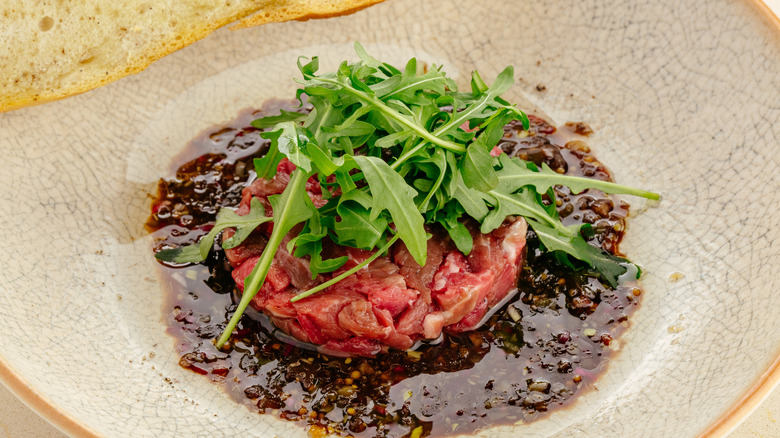
Although it's not generally recommended by the USDA to consume raw meat, it's possible, but there are strict guidelines to avoid contracting bacteria that cause food poisoning. For one, the meat should be as fresh as you can get it. The best practice is to buy it from a butcher who just finished cutting the meat from a recent slaughter, and they should also have a heads up that it's going to be served raw. The quality of the meat should be top tier, too.
Of course, what comes after is just as important. You should handle and store meat properly. Definitely don't leave it outside the fridge for too long; it's a meat food safety mistake you should always avoid. If you can bring an insulated cooler so the meat stays at a desired temperature during transit, even better. Taking necessary precautions is always better than putting yourself at risk of food poisoning. Even better, err on the side of caution and just cook the meat if you're uncertain about its origin.