

Boost Pot Roast's Flavor With This Pantry Staple And Thank Us Later
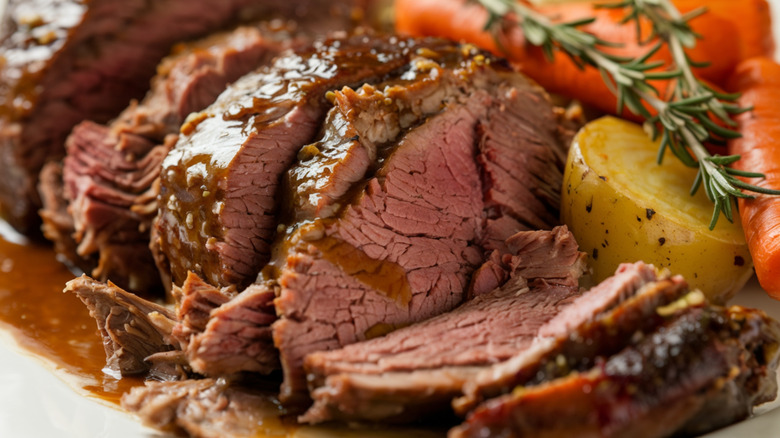
Most pot roast households will already have their recipe down pat. It will start with a good, well-marbled chuck roast, which is joined by your favorite veggies, seasonings, and cooking liquid, all simmered together until the beef becomes as tender as it is flavorful. But a little adjustment here and there can make your pot roast even better. And anchovy paste is just the thing to zhuzh up that classic dish.
Anchovy paste is precisely what it sounds like: tons of the tiny fish pulverized together with a bit of salt and oil and typically packaged into a tube for maximum cooking convenience. It is also the umami-packed secret ingredient in all manner of preparations that you'd never expect. For the uninitiated, no, anchovy paste will not make your pot roast, or anything else for that matter, taste like the sometimes divisive seafood from whence it's derived. Anchovy paste will instead enhance your pot roast's savory richness in a nearly undetectable way that will have your guests wondering exactly what it is. This is, in part, due to the anchovy's naturally occurring monosodium glutamate, or MSG, the powerhouse flavor enhancer that enlivens everything it touches. And pot roast is as excellent a canvas as any to tinker with all the potential applications of this terrific ingredient.
Adding anchovy paste to your pot roast at home
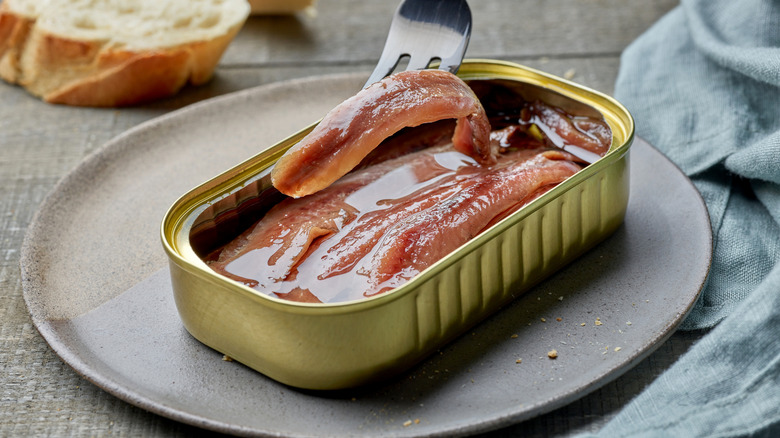
Anchovy paste can seem a little tricky at first, as concentrated as its flavor is. If it helps, one anchovy filet — the kind that you might buy in a jar or a tin — is equivalent to about ½ teaspoon of anchovy paste. If that still doesn't help, you'd find that tasting that same amount unadorned would seem like having a spoonful of especially prickly, briny salt. So, as one might now surmise, a little goes a long way. If you're working with a fairly standard 3-pound hunk of meat, try a couple of teaspoons of anchovy paste to start.
Your only minor anchovy-incorporating challenge is ensuring that it's evenly distributed throughout the rest of your ingredients. This isn't like a dry rub that you can use to coat every surface; it's sticky, compact, and needs a bit more consideration than lighter, powdery compounds. Your best bet is to whisk it together with your stock or broth until it disappears before you even introduce the cooking liquid to the pot. And that tiny adaptation will be plenty evident once your roast is ready to carve.