

The US State Where Lay's Chips Gets Most Of Its Family-Owned Farm Potatoes
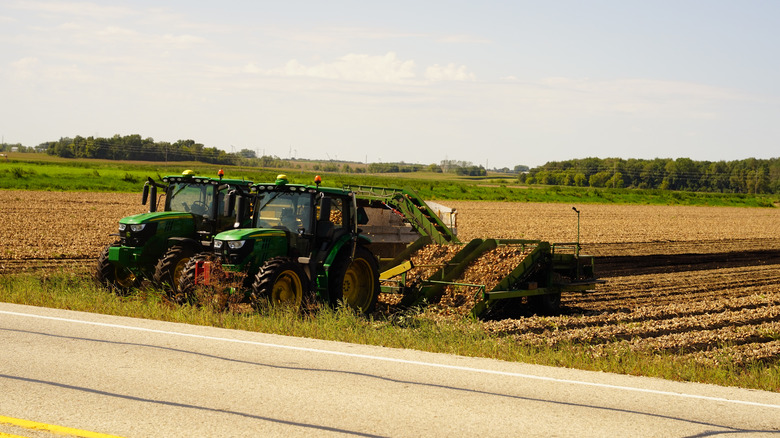
When you think of potatoes, the first U.S. state that comes to mind is probably Idaho. But one of the biggest potato chip brands on the planet, Lay's — ranked third on our list of best salt-and-vinegar chips — gets the majority of its spuds from elsewhere in America: Wisconsin, which is actually the third largest potato producer in the country (via Wisconsin Department of Agriculture). Previously the undisputed global leader in potato chip sales and still among the top brands worldwide, Lay's celebrates family farms and sources the majority of its taters from fifth-generation, family-owned Heartland Farms in the town of Hancock. That's because Heartland is focused on high-quality products and sustainable, regenerative agriculture to improve crop biodiversity and protect the environment — a mission shared by Lay's parent company, PepsiCo.
To pass muster at the farms and be selected for slicing, baking, and bagging as Lay's chips at PepsiCo's facilities, the potatoes must be in prime physical condition: bruise-free and cooler than a specific temperature threshold. All spuds are checked multiple times at Heartland by both machines and human hands to ensure rigorous quality control. As far as sustainability, one of the main practices Lay's looks for in the farms it sources potatoes from (such as Heartland's) is efficient irrigation techniques, which conserve significantly more water than standard methods.
Heartland Farms was founded in 1873 by the Pavelskis, a family of Polish immigrants, and has been family owned and operated ever since. The family still farms the initial 80-acre plot of land that started it all, but that's now just a fraction of Heartland's 27,000 total acres of irrigated farmland. Heartland ships potatoes to chipping facilities and supermarkets for 10 months out of the year.
Wisconsin: A potato production heavyweight
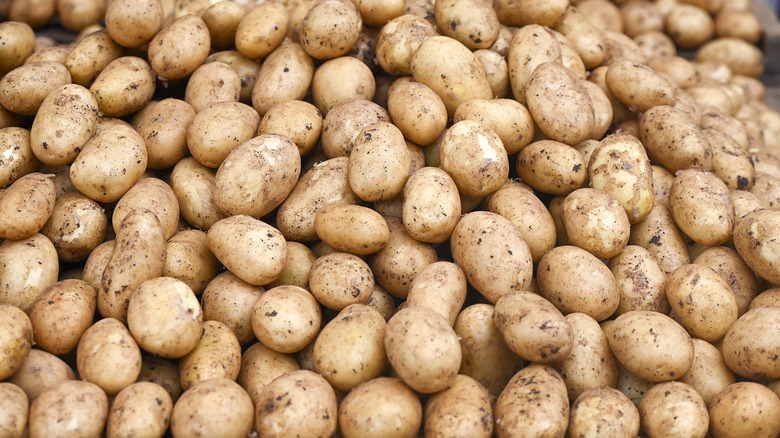
Although primarily known for its massive dairy production, especially cheese, the Badger State produced nearly 3 billion pounds of potatoes in 2024, according to Produce Business. Wisconsin's climate, water, and soil are highly conducive to potato growing. Also, its Midwest location is optimal for buyers in the eastern United States, because they don't have to pay as much or wait as long to have potatoes shipped from there, compared to western states like Idaho. This means they're getting a cheaper and fresher product.
Additionally, Wisconsin grows many different types of potatoes, everything from red, yellow, and white varieties to russets to specialty spuds like blues/purples, little potatoes, and fingerlings, offering the greatest diversity in the crop of any state in the country. It also harvests some potatoes, such as russets, year-round, although other types are only available during certain seasons.
The state really embraced sustainable, organic potato production almost three decades ago, when the Wisconsin Potato & Vegetable Growers Association (WPVGA) joined forces with the World Wildlife Fund and other groups. Together, they formed the Wisconsin Eco-Potato Partnership, which paved the way for the creation of Wisconsin Healthy Grown, an environmentally conscious certification awarded to spuds and growers that pass an additional inspection each year.