

The Humble Cabbage Soup That Once Fed Royalty
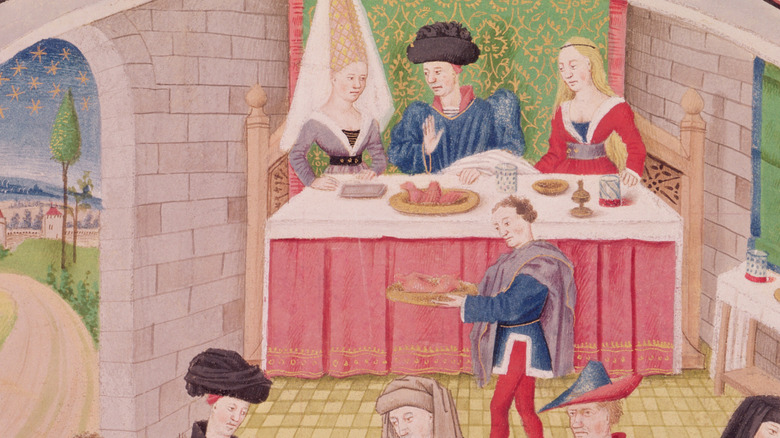
When you think about British royalty and their eating habits, perhaps you picture huge tables filled to overflowing with lots of rich and fabulous dishes. In some cases, that image holds true. King Richard II, who ruled England from 1377 to 1399, once held a Christmas feast for 10,000 guests that included cooking up 2,000 oxen. But even kings during the Late Middle Ages sometimes dined on less extravagant dishes, like cabbage soup.
In the "Forme of Cury," a cookbook put together by Richard II's royal cooks around 1390, there's a recipe for Caboches in Potage. It may sound fancy, but it's a simple cabbage soup made with cabbage, onions, and leeks in broth. While cabbage soup isn't as popular today, and would definitely be considered humble, that wasn't always so. During the Late Middle Ages, this soup was fit for a king due to the recipe's ingredients list, which includes several spices. At the time, having spices on hand was a sure sign of wealth.
This cabbage soup recipe called for saffron, which indicates that it was truly fit for a king. Known as red gold in England, saffron was, and remains, an expensive spice due to its low yield and its production process, which involves removing the stigmas from saffron crocus flowers (Crocus sativus) by hand. Additionally, at that time, much of the saffron came from Spain, which meant the added cost of transporting it to England. And that wasn't the only ingredient that makes this soup worthy of royalty.
King Richard II's expensive bowl of soup

Besides including the exceedingly pricey saffron, King Richard II's bowl of cabbage soup also called for something called powdour douce (aka powder douce), which was a blend of spices like ginger, cloves, cinnamon, and Indian bay leaves. These spices mainly originated from the East, in places like India and Southeast Asia, which meant long, dangerous journeys to get them to England. Another issue involved the routes that were controlled by opposing powers that were often at odds with the West and heavily taxed the trade. All this meant that spices like those found in powder douce would have been super expensive.
After Richard II was captured and held prisoner by his cousin who usurped the crown to become King Henry IV, he likely wished he had some of that cabbage soup. It's believed Richard starved to death around February 14, 1400 while being held prisoner in a room at Pontefract Castle near the bakehouse. If you happen to have leftover cabbage and want to try making this royal cabbage soup, the recipe can be found in this Project Gutenburg e-book. While it may seem humble to us, this soup was indeed the fanciest around back in the day.