

How Chinese Salt And Pepper Spare Ribs Stay Tender Under A Crispy Coating
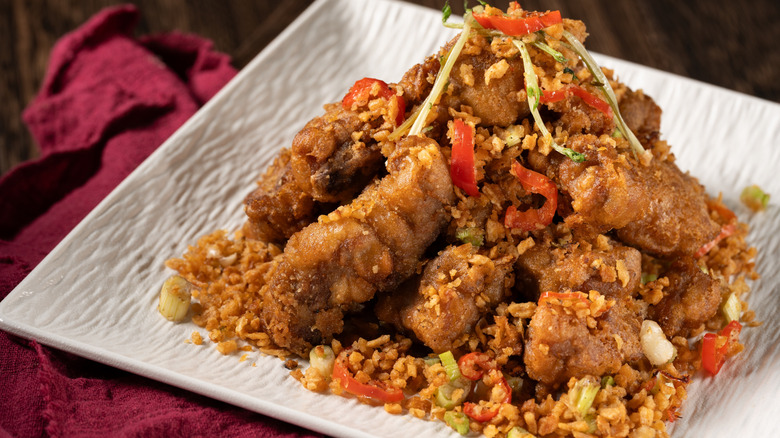
Chinese cuisine is extremely popular, but its techniques can sometimes feel a bit elusive for those unfamiliar with it. Fret not, though: We're here to spill the secret to tender salt and pepper spare ribs — and you might even have the magic ingredient just sitting in your cupboard. Chowhound exclusively spoke with Herman Ng, owner of Xo Brasserie in Charleston, South Carolina, who gave us the lowdown on how to get a succulent bite despite the crispy coating of Chinese salt and pepper spare ribs.
"A trick or secret is cornstarch. It's pretty prevalent in Chinese cooking, especially in Cantonese cuisine," he shared. "I would use a small spoonful of cornstarch on the ribs after they have been marinated to lock in the flavor and juices. It also helps prevent the ribs from becoming dry." Cornstarch usually makes an appearance in Chinese cuisine when velveting, which is the cooking technique used for the most tender stir-fried meat. Typically, cooks use it for a wok-tossing action to make two things happen. One is to boost the meat's tenderness and two is to give the sauce more body.
To really get the best flavor that matches the tenderness of the spare ribs, Ng advises marinating the ribs the night before. While it's not always better to marinate food for longer, a great rule of thumb is to allot at least four hours to let the ribs soak in all that flavor if you can't leave them overnight. Don't let it go past two days, or it will affect the meat's texture.
Tips on making divine salt and pepper spare ribs
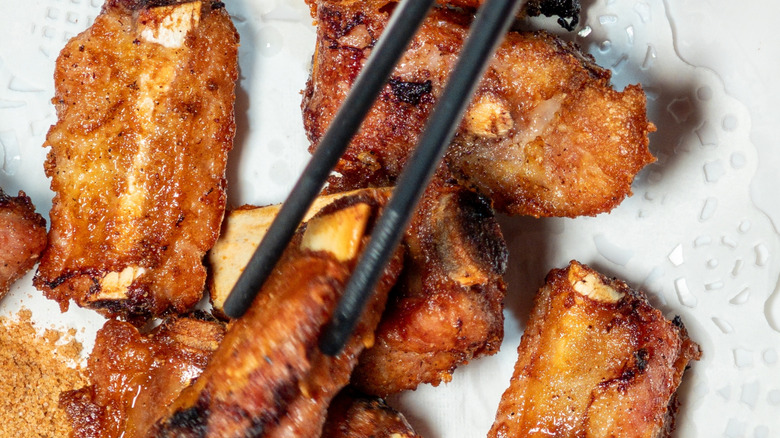
One tablespoon of cornstarch per pound of meat is all you need to make this a success. While Herman Ng says to toss the spare ribs in cornstarch after they've been marinated, you can also add it with other ingredients — like rice wine, black vinegar, egg, and salt and pepper, of course — during the marinating process. Potato starch can be a worthy swap in a pinch to help create a nice, crispy finish, though cornstarch might be more of a pantry staple. And if you want to stay true to how it is typically done in Chinese cuisine, you'll want to stick to cornstarch through and through. You can also dice up the meat into little pieces for the dish.
After leaving the spare ribs overnight to soak up all the exciting flavors, introduce them to the magic of the wok. Experts say it's the secret to a successful stir-fry not just for convenience and ease of use, but also for its ability to lock in heat. But the real key lies behind double-frying to make the meat crispy enough to achieve the same hearty bite you'd get from a Chinese restaurant. Do it at a lower temperature first, then again at high heat. The first fry draws out the moisture which is what makes it crispier the second time around, all without you running the risk of overcooking the ribs.