

Here's What Your Range Hood Actually Does While You Cook
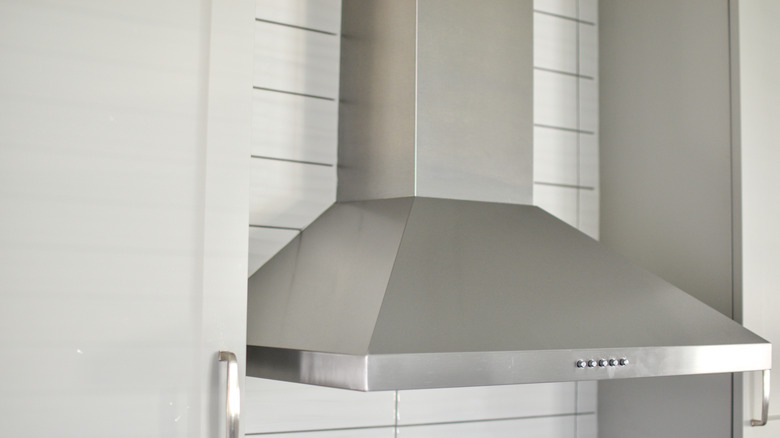
When you cook on the stove, a lot of stuff is released into the air in your kitchen: smoke, grease, moisture, and sometimes, depending on your stove type, gases including carbon monoxide and nitrogen dioxide. This is where a range hood's job kicks in. This appliance uses a built-in fan to suck the air rising from your pots or pans upward. Here, depending on your range hood, the air is either funneled through ducts and expelled outside, or it's pushed through filters inside the range hood, and released back into the room. (If you thought your range hood was just sucking air up and pushing it out the top, chances are that this filtering is what's happening.) Range hoods also grab grease out of the air, catching it in filters so that less buildup settles on counters, cabinets, or whatever else is near your stove.
Although these two types of range hoods do the same basic job, the ducted range hood is considered the more effective option, since it completely removes the hot air from your stove. While easier to install and move around, the other "ductless" or "recirculating" hoods don't actually expel any of that air from your kitchen; they're more like air filters. This means it's okay for trapping grease and eliminating smoke and odors, thanks to a combination of (typically) charcoal and mesh filters. As a result, it handles smoke and odors decently but can't do much about heat, so it won't keep your kitchen cool.
What else to know about range hoods
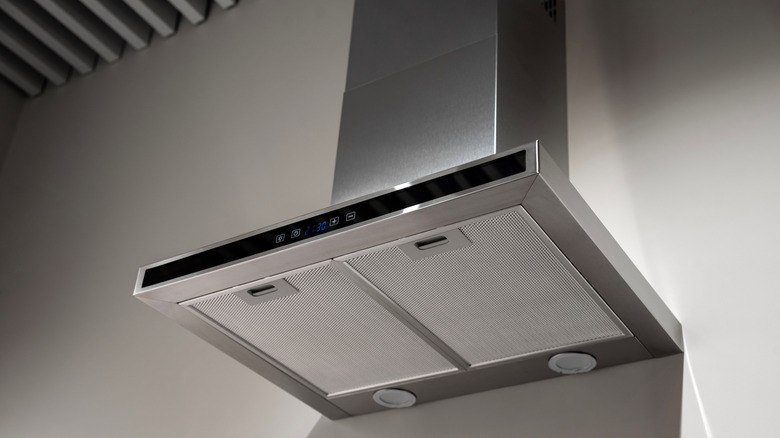
Range hoods' main job is dealing with the emissions from your stove. When it comes to your oven, they may help catch some of the hot air that comes out of oven vents, or steam and smoke when you open the oven door. However, most built-in ovens have fans that do a lot of the same work.
With all of this in mind, there's one key question: Do you really need to use your range hood? After all, they can be loud and annoying. But it's probably worth putting up with the noise, especially if you have a gas stove. This is because they can emit carbon monoxide, which can lead to reduced oxygen intake, along with nitrogen dioxide and formaldehyde. These latter two are linked to cancer and respiratory damage. So for your own health, using the range hood is a wise idea.
If your stove is electric instead of gas, you won't have to worry about those pollutants, although cooking can still produce fine particles that are generally not good for your respiratory system, so the range hood is still useful for filtering those out. The other benefits are more about convenience and comfort. Grease splatters, hot air, and lingering food smells probably won't harm you, but switching the range hood on may make life a little more comfortable and could help out with cleaning by catching stray grease — just don't forget to clean your range hood filters every once in a while.