

What Happens When Your Range Hood Doesn't Vent Outside (And Why It Matters)
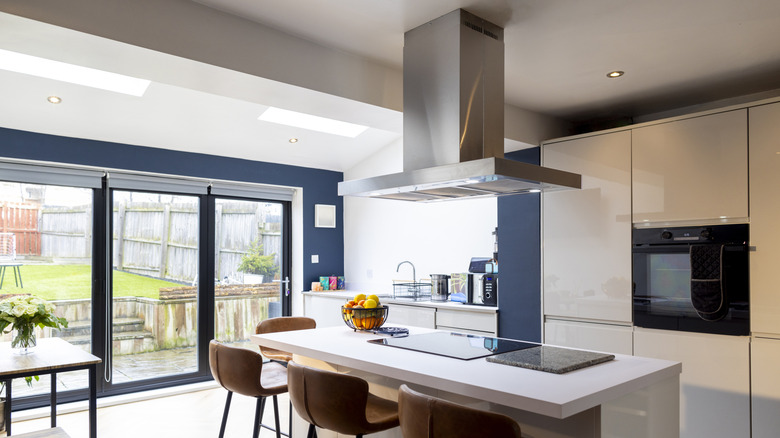
Though it's a fairly easy task to degrease your kitchen cabinets with Dawn dish soap, a decent range hood over your cooktop is the best way to keep your cabinets clean, as well as improve the air quality in your kitchen. The reason your kitchen gets so much dirtier when you forget to flip on your range hood's ventilation fan is that cooking vapors are full of particulate matter. This includes miniscule droplets of fat and cooking oil, tiny bits of charred food, and other debris from cooking food.
When your range hood is properly vented to the outdoors, it carries the majority of these particles outside your home, not only reducing how often you need to wipe your counters, but also reducing your risk of developing respiratory issues. If your range hood isn't working properly, or you simply don't have one, particulate matter can build up inside your kitchen, reducing air quality and increasing your chances of, for example, developing aggravated asthma or an irregular heartbeat. Children and pets are at a higher risk for these conditions since their lungs are smaller than an adult human's.
Since prevention is the best way to remedy this problem, it's crucial to make sure your range hood is the right size for your kitchen and to keep it well-maintained. If your range hood recirculates air through a charcoal filter rather than venting it outside, as in most apartments, you need to change the filter regularly to keep the air in your kitchen clean and safe.
Choosing the right range hood, and maintaining ventilation without one
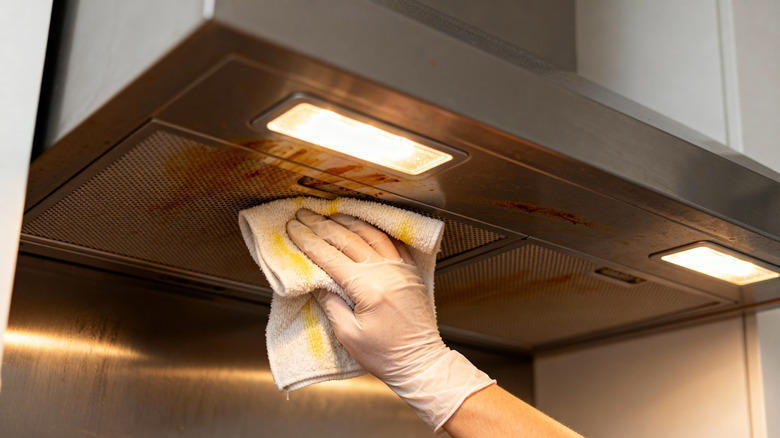
As mentioned, it's extremely important that your range hood is the right size for your cooktop. This helps it keep up with the amount of particulate matter you produce. A range hood that's too small or mounted too high can struggle to keep the air in your kitchen clean, and can wear out sooner. Generally speaking, your range hood should hang no more than 3 feet above your cooktop, and be slightly wider to capture and vent the most contaminated air possible.
It's also generally recommended to choose range hoods with ducts that carry hot, greasy vapors out of your home if at all possible. This keeps the air in your kitchen as clean and cool as possible, though ductless, recirculating range hoods are a close second. The filters inside these hoods are efficient when properly maintained. Ductless hoods may be your only choice in a multi-home building, or if the only space available for a range hood is under a set of cabinets.
If you don't have a range hood or the budget to install one, there are a few ways to ventilate your kitchen without breaking the bank. The cheapest option is to simply open a window, and placing a fan on the sill facing the outdoors makes this option even more efficient. If your kitchen is windowless (or the weather is bad), you can also get a small air purifier to literally clear the air.