

The Science Behind Soft Bread Vs Crusty And Chewy (One Thing Makes All The Difference)
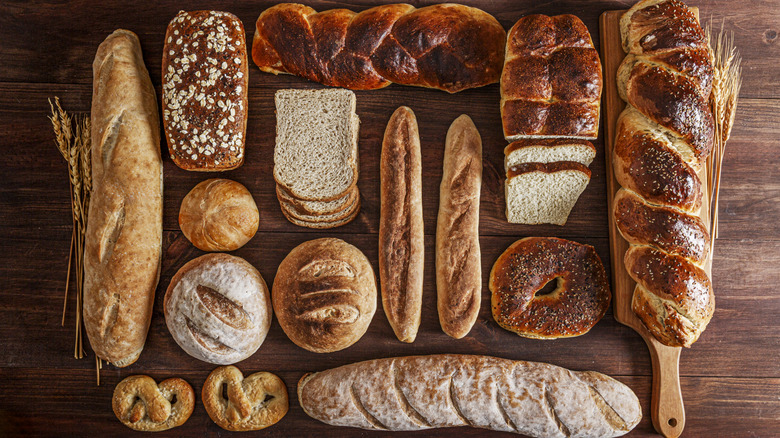
Whether you need a loaf that's soft and tender or crusty and chewy, the key to getting what you want is understanding that the most important factor is hydration. To understand the primary ingredients that affect bread's texture inside and out, we reached out to Allyson Reedy, food writer and author of "30 Breads to Bake Before You Die," and Amy Scherber, founder of Amy's Bread, located at Chelsea Market and other venues across New York City. Both spoke exclusively with Chowhound about the secret to making soft versus chewy bread.
While there are many styles of bread, from soft brioche to crusty baguettes to dense sourdoughs, one ingredient determines each bread's texture. According to Reedy, "Water is the unsung hero of bread. We talk a lot about flour, yeast, and starters, but the amount of water you use — and even the temperature — plays a big role in how your loaf turns out."
Hydration is the ratio of water or water-containing liquids to flour (by weight) in a given recipe. The dough's hydration matters in baking because it impacts how much strength-building gluten forms in the dough. Higher-hydration doughs are stickier and wetter, giving the gluten-forming proteins in these doughs more water to absorb, which allows them more ability to move. This can create more steam, larger air pockets, and a crisp crust. "A high-hydration loaf is associated with the crisp-crusted, almost custardy interior you get at all the fancy bakeries," Reedy says. Lower-hydration doughs tend to be smoother and easier to handle, but less water means gluten hydrates and stretches less, leading to a softer, denser crumb.
How water works with other ingredients and techniques to change bread's texture
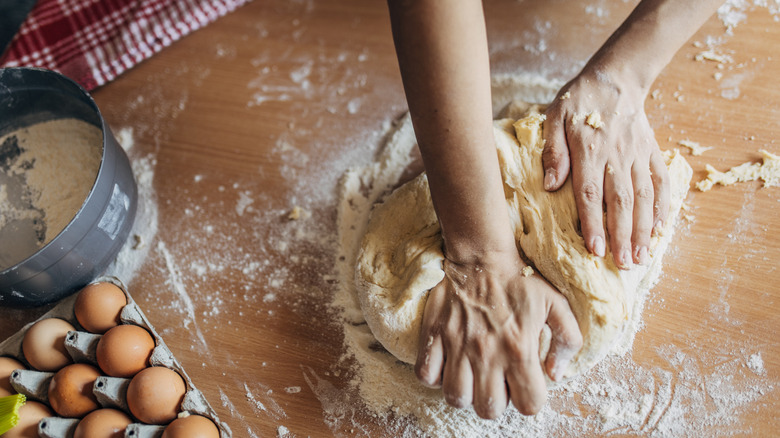
One of the best ways to avoid mistakes when baking bread is to think about the outcome you want when choosing ingredients. For example, the type of flour you use can change the bread texture because of how the proteins in the flour interact with the water. Both experts note that high-protein flours, like bread flour, make a chewier bread because there are more proteins to absorb more water than in lower-protein flours, like all-purpose or cake flour. But the most important decision may come when you're deciding which bread to make: regular or enriched. Enriched bread is just bread with extra fatty ingredients like oil, butter, eggs, and milk.
Fat works alongside the water in a recipe to play a role in developing texture. It works to create softer bread by competing with the water for flour, enrobing it so it can't absorb the water, thereby inhibiting gluten formation. "Fats coat the gluten strands and do not allow the long stretchy strands of gluten, creating a fine, tight, but tender crumb, like brioche or challah, as examples," Amy Scherber explains. That's why some recipes call for adding butter or oil after the kneading process is complete; the fat can then tenderize the dough while still allowing it to form a strong gluten network.
How mixing and temperature contribute to bread's flavor and texture
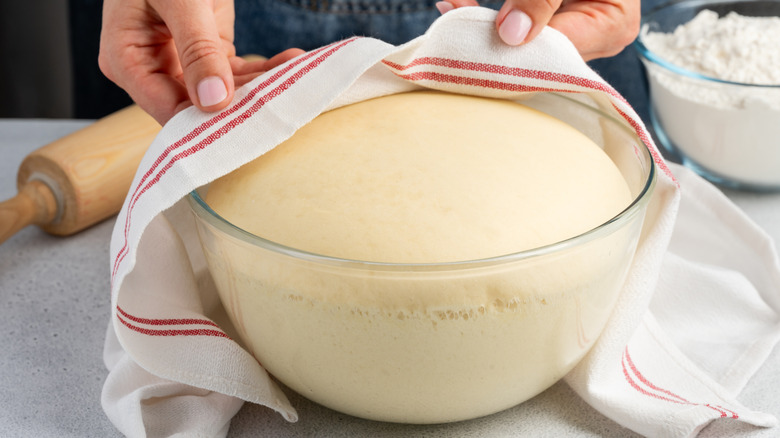
It's a myth that mixing and kneading are the only ways to develop gluten and therefore change the texture. Water does the work by hydrating flour. The purpose of mixing and kneading is to speed and organize that process. But a light mix with a long fermentation will create structure too, though it may require occasional folding to organize it and create a more uniform crumb. How that structure becomes organized is what separates chewier, open-crumb bread from softer, tighter-crumb bread. As Amy Scherber notes, "Mixing, along with the length of time and the temperature of your dough and the place you let it rise in also impact the texture and flavor of your bread."
Another variable is temperature. Dough that's too warm can ferment too quickly, making for a harder-to-manage dough and potentially leading it to overproof, which can cause it to lose structure. That's why the rising step is the hardest step in bread baking. The ambient temperature is important because letting bread come to between 75 and 78 degrees Fahrenheit delivers the best results. But the temperature of your water can impact that too, especially if you have a heavy-duty mixer that might increase the dough's temperature. All these hydration-related variables make the proofing step more challenging than it seems, but they also explain why the same few ingredients can make two totally different loaves of bread.