

How Far Can $100 Stretch At The Grocery Store In 1960 Vs 2026

Considering how much grocery prices increased over the last few years, you may be curious to know how much the cost of food has changed decade after decade since the 1960s. More specifically, you may want to know how $100 worth of groceries today compares to $100 worth of food bought in the year 1960. If you're someone who regularly follows tips for grocery shopping on a budget, you already know the cost of food in present-day America is exorbitant to say the least. That being said, while $100 in 1960 may have allotted you more than a week's worth of groceries, the same amount of money spent today realistically equates to just a few bags of essential food products.
Sure enough, due to inflation, $100 in 1960 equates to $1,125 in 2026. Since $1 in 1960 equals $11.25 in 2026, groceries are now over 10 times more expensive today than they were 66 years ago. The biggest cost discrepancies are most noticeable when it comes to perishable, high-cost production foods like milk, eggs, meat, and bread. This is primarily due to cost-push inflation or the price it takes for these items to be acquired, produced, and packaged.
When you factor in other potential factors that drive prices, such as supply chain issues and unpredictable weather, this can make the cost of certain foods feel more extreme and unpredictable at times. Especially since 1960, inflation has fluctuated and now affects people differently based on their income and shopping habits.
How to shop smarter at grocery stores in 2026
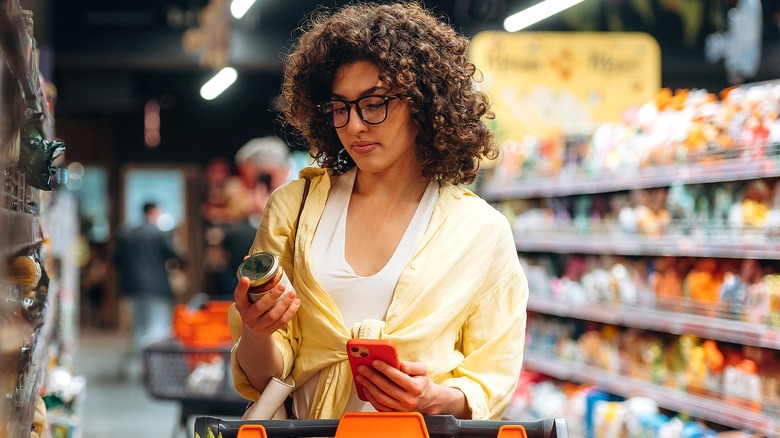
Unfortunately, the growing wage gap between high- and low-income families in America plays a huge role in what $100 can get you at the grocery store in this day and age. While historically, people spend less of their disposable income on groceries than they did in 1960, people who make less than six figures and also shop on a budget may feel the effects of these price hikes more considerably.
If you're trying to spend less on food overall, the first step is to reduce the amount of money you spend on food outside the home. Especially since 1960, more and more people spend their hard-earned dollars on convenience foods instead of taking the time to make their own meals. By primarily sticking to home-cooked meals, you can significantly reduce your food expenditures.
Most importantly, to effectively stretch your next $100 dollar bill at the supermarket, shop at grocery outlets like Grocery Outlet Bargain Market and cost-saving supermarkets like WinCo Foods and Aldi. While the way bargain grocery stores keep their prices low is through selling overstock of various products, stores like Aldi and Food 4 Less save money through private-label marketing and no-frills advertising. You can also keep your food costs low by shopping strategically. Take your time shopping for the best deals per supermarket. Also, don't overlook the benefits of meal planning and writing out itemized shopping lists to save the most money possible.