

How To Choose The Best Prime Rib On A Tight Budget
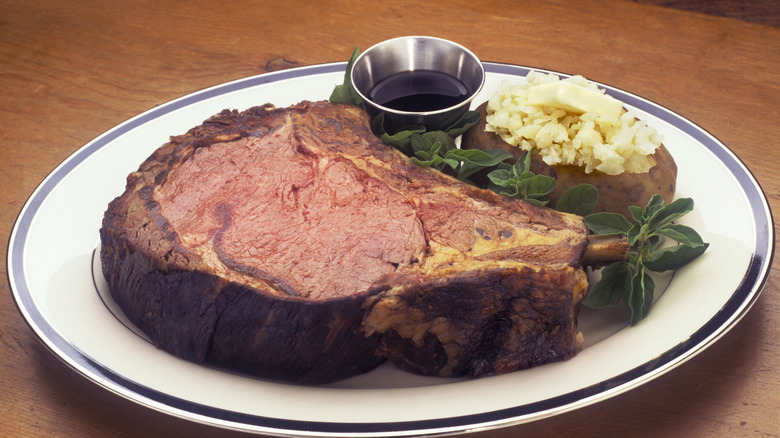
Want to buy prime rib without dropping a boatload of cash? It makes sense — prime rib is a pricey cut, and figuring out how much you should expect to spend on a quality prime rib before you hit up the grocery store or the butcher shop is a smart move. Katie Flannery, COO of Flannery Beef, talked exclusively with Chowhound to share what you need to know about getting the most from your money when you're buying a prime rib roast.
First, you'll want to take a look at the USDA grade of the meat, says Flannery. Since the fat helps the meat retain moisture at it cooks, marbling matters, and choosing a higher grade of meat means better marbling. "Prime versus Choice is the difference in how much intramuscular fat runs through the muscle, and a rib roast has a long time in the oven," Flannery explains. If you're looking to save money, you can go with Choice and still get a delicious result, however. Prime grades cost a lot more than Choice, but there isn't a significant enough improvement in flavor to justify the higher price. "A well-marbled Choice rib roast from a good butcher beats a poorly handled Prime one every time."
You might also want to go with a boneless roast over a bone-in prime rib. Flannery says that you're getting the same muscle and a similar taste, but you won't have to pay for the weight of the bones, which can make it a smarter choice if you're on a budget.
Questions to ask the butcher — and how to figure out how much prime rib you'll actually need
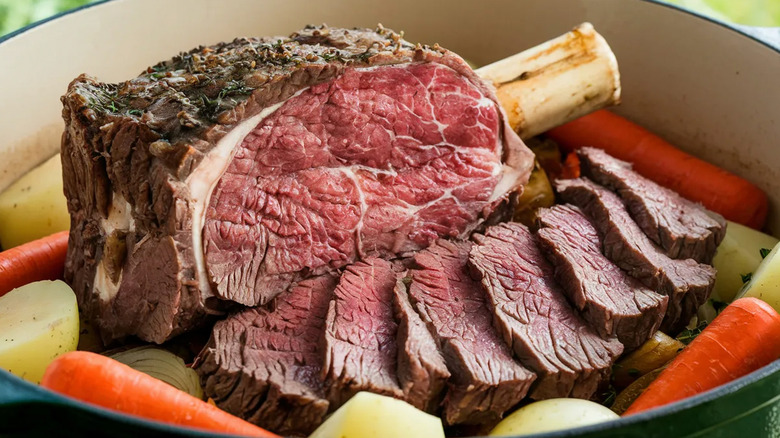
Having a quick chat with the butcher (there are several reasons to always buy your meat from a legit butcher, by the way) can help you get the best cut of meat for your budget. Katie Flannery recommends asking your butcher for the chuck end section. Chuck end has thicker cap muscle, which means there is more marbling and deeper, beefier flavor. This doesn't mean that it'll be the prettiest cut. "The loin end looks cleaner and more uniform, which is why it often gets marketed as the premium price, but give me the chuck end every time." She also recommends asking your butcher whether they dry-age their prime rib in-house — you're looking for an aging period of about a month.
Whether you head to the butcher or you simply buy prime rib at the grocery store, you'll also want to consider how much meat you'll actually need so your precious cash doesn't go to waste. Flannery recommends going with 1 ¼ to 1 ½ pounds per person. "That sounds like a lot, but you're accounting for the bone weight and the shrinkage during cooking," she says. Once you've baked up your delicious roast, make the most of in the days to come by reheating it properly so that it doesn't dry out.