

How Much You Should Expect To Spend On A Quality Prime Rib In 2026
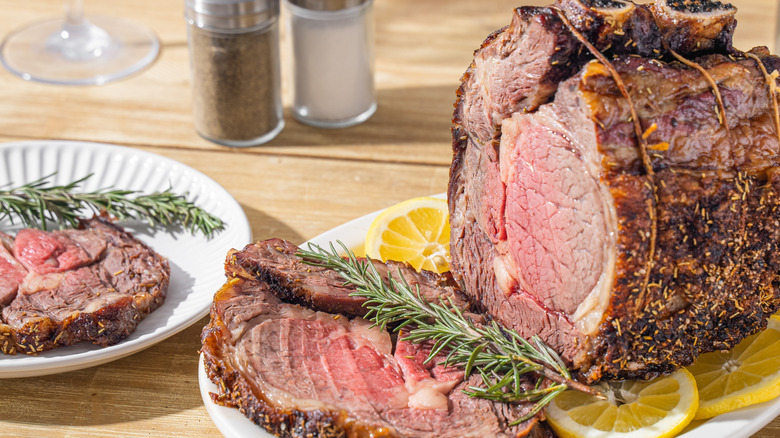
Dining on mouthwatering prime rib, which is among the best cuts of beef you can buy, is a deluxe experience that most meat lovers can appreciate. Because it's a special cut of beef that can range in price, we spoke with Mark Trimble, executive chef at Omaha Steaks, who shared his expertise about the cost, quality, and varieties of prime rib exclusively with Chowhound.
This tender, juicy cut of beef is often more costly than dining on a more modest slice of meat. "When shopping for a quality prime rib, it's helpful to remember that this is a premium cut," Mark Trimble explained. In 2026, he said you should expect to pay between $10 to $50 per pound, adding that the exact price will depend on the meat's grade as well as its age and source, plus where you're shopping. You might find cheaper meat at the supermarket, but it's worth going to specialty shops, such as a reputable butcher or purveyor, to buy good quality prime rib. Trimble explained that this "helps ensure you start with well-marbled, carefully handled meat for a roast that's juicy, tender, and flavorful."
Part of the prime rib's price is determined by the USDA grade, which Trimble said includes Prime, Choice, and Select. "Prime is the highest grade, known for abundant marbling and superior tenderness, making it the most expensive option and especially well-suited for special occasions." If you'd like a cheaper option, USDA Choice is a moderately-priced alternative that's still a quality cut with good marbling and flavor.
More characteristics of a high-quality prime rib that can affect price
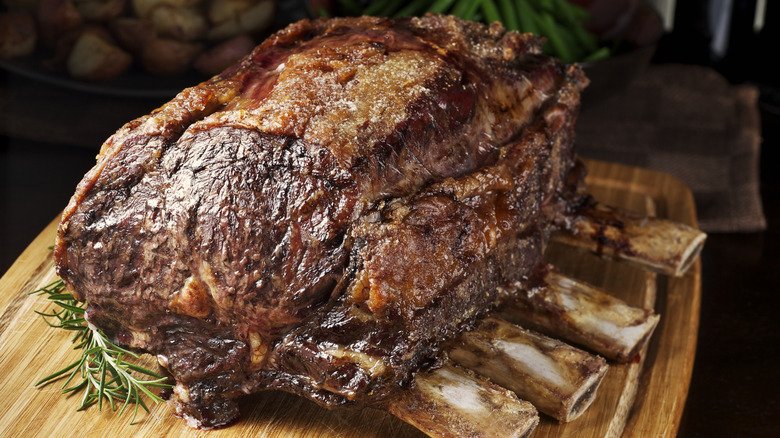
You can purchase both wet- and dry-aged prime rib, which are different aging processes that break down the meat's muscle, enhancing flavor and tenderness, but expect to pay more for this. Dry-aging takes place in a climate-controlled, open-air environment; if you're not familiar with aged meat, you know dry-aged beef is safe to eat when it comes from a reputable source that uses temperature and moisture control properly. Wet-aged beef is made when meat is sealed in vacuum bags and allowed to age in its own juices in a temperature regulated environment. "This process adds time, care, and cost, which is reflected in the final price," Mark Trimble explained.
In addition, there are subtle differences between cuts of prime rib and standing rib roast, all of which come from the same part of the cow, called the primal section, which is located between the shoulder and loin. Prime rib is available in two cuts. One comes from the loin end, which is larger and more tender, making it a premium cut that also costs more. The other cut is from the chuck end which is less tender. However, Trimble suggested that "It still carries great flavor, so it's a great option if you're looking for a less expensive cut." Standing rib roasts are bone-in cuts, and these "typically cost more because you're paying for the weight of the bone as well as the meat," he explained. However you enjoy eating prime rib, the experience is well worth the price of a premium cut that will make your meal memorable.