

This Country Is Home To The Mango Capital Of The World
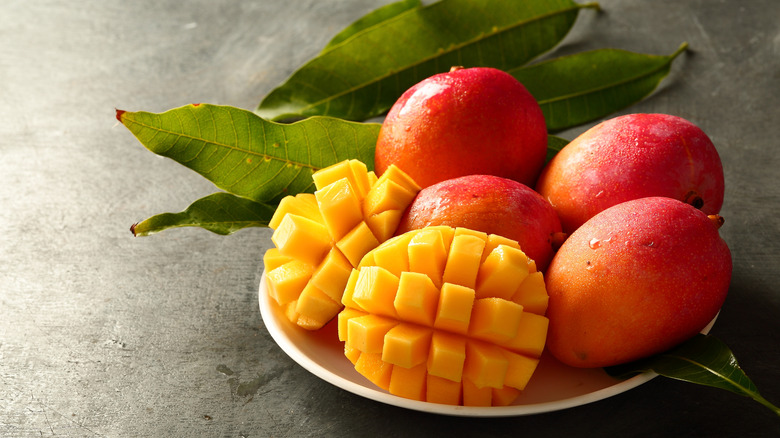
We tend to take food for granted when we see full displays every time we go to the grocery. Today's grocery stores have so much abundance and variety that we don't even need to wonder if the foods we love are even native to our home country. Such is the case with the mango. Although it is popular around the world, this delicious fruit requires a warm, frost-free environment to thrive. While they aren't going to grow well everywhere due to their tropical and subtropical needs, mangoes still grow in plenty of locations. But one country in particular is home to a city that is actually known as the mango capital of the world. That city is Malihabad, and you'll have to travel all the way to India to visit it.
India not only produces the most milk in the world, it is also the world's largest producer of mangoes — more than 26 million metric tons are grown there each year. And Malihabad, which you may not have heard of unless you are a mango aficionado, is a small city located in the state of Uttar Pradesh, which borders Nepal. This state produces almost 6,000 metric tons of the fruit a year — over 26% of India's mangoes — according to the Uttar Pradesh Index. While it is unclear exactly how many of those come from Malihabad, it is clear that the city's signature mango variety, the beloved Dasheri, has an unparalleled sweet flavor and aroma, as well as a smooth and juicy flesh. The mango capital of the world produces other varieties, too, each with its own distinctive flavor and texture.
Mango appears in many Indian dishes, but it also enriches other countries' cuisines

Mangoes are a common ingredient in Indian cuisine, and cultivation practices there likely date back thousands of years. The fruit is rich in symbolism, standing for prosperity and joy in Indian culture, and the leaves of the tree are often used as decoration in wedding ceremonies as they symbolize fertility. When it comes to the cuisine, mangoes are eaten year-round in a variety of ways, both when they are ripe and in-season, and before fully ripening. Chopped up and still green, they make a beautiful mango chutney or batch of mango pickles. They are also used in rice dishes and curries. When ripe and sweet, they are ideal for desserts and drinks like juices, fruity ice cream, and lassi — the delicious, yogurt-based drink.
Mangoes may be the national fruit of India, but they also show up in plenty of other cuisines around the world. In Mexico, where mangoes are extremely popular and grow well in the warm climate, mangoes are used in salsas. They are also a popular street food snack served raw and sprinkled with tajín, a flavor-packed seasoning of red chili, lime, and salt for a sweet, salty, savory treat. Coconut sticky rice, a dish popular in the cuisines of many Southeast Asian countries like Thailand, often pairs fresh mango alongside a sweet and glutinous rice drenched in coconut milk. These dishes all prove that, while mango is the king of fruits in India, it is enjoyed around the world.