

Most Whiskey Drinkers Probably Don't Know What Legally Defines Scotch

Navigating the ins and outs of liquor can be surprisingly treacherous. Varieties of alcohol, even within specific categories, can vary widely in origin, taste, and production method. In many cases, these differences aren't simply a matter of custom, but actual legal dictate. Such is the case with Champagne, which must be produced in the Champagne region of France. Another drink with specific legal parameters is Scotch whisky, a subtype known for its rich flavor and even richer history.
Most whiskey sippers with some sense of the spirit's subtypes know scotch is set apart from other varieties, such as bourbon and rye. However, most people probably don't know what legally makes scotch, scotch. First, and perhaps most obviously, it must be made in Scotland. Scotch must also be made with only water, yeast, grain (mostly malted barley), and caramel coloring (though the coloring is optional). It must also be aged for at least three years in oak barrels, and be no less than 40% alcohol by volume when it's bottled. Only if a whiskey fits these standards can it be called scotch.
Setting scotch apart
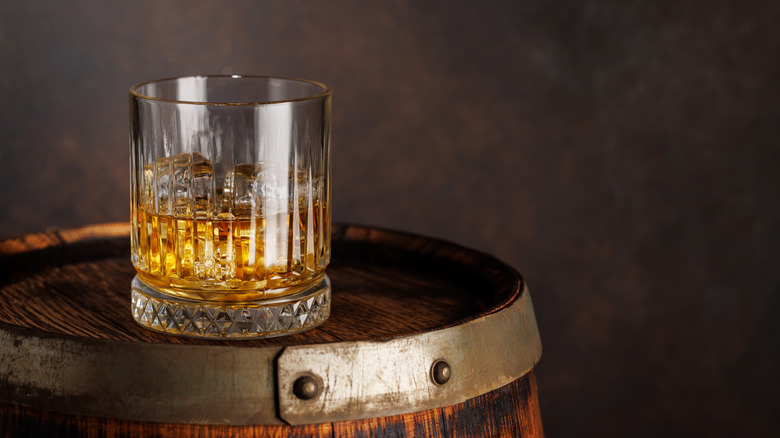
Now that we know the legal requirements of scotch, let's dive into how it's set apart from other whiskey products. Let's start with bourbon, which is an American whiskey made with mostly corn. It technically has no age requirement, but most are aged at least two years. Bourbon tends to be sweeter, with more caramel notes. Scotch can be more floral and smoky.
Then there's rye whiskey, an American (and Canadian) take. While Canadian rye is pretty lenient, American rye must be made with a mash bill of at least 51% rye grains. Like bourbon, rye is usually aged for at least two years, though has no requirements, and must also be at least 40% ABV when bottled. Rye has a bit more of an edge to its flavor profile than bourbon, whereas bourbon is smoother and sweeter.
Scotch, meanwhile, is a bit more complex than both of these whiskeys. It also tends to be more expensive than rye or bourbon. However, price, and the flavor profile of individual whiskeys, does vary quite a bit. This is why whiskey enthusiasts love collecting and sampling unique bottles.
Serving scotch
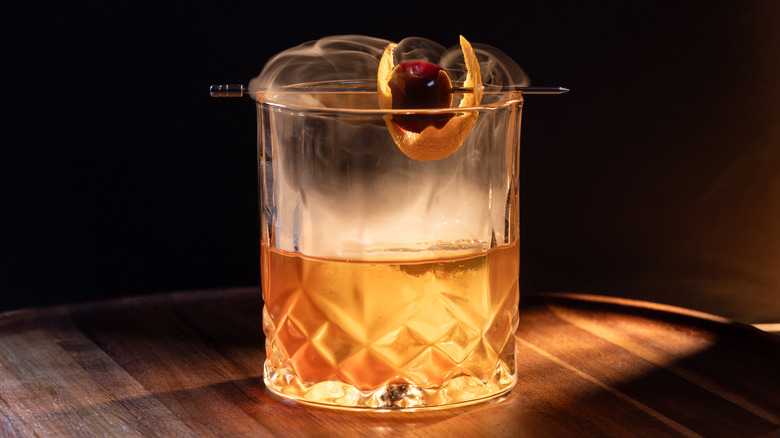
Perhaps the biggest difference between scotch and other whiskey varieties is the way in which it's served. Unlike bourbon or rye, which are often found in cocktails, scotch is most commonly served on its own due to its price and complex flavor profile, with no adornment to muddy the experience. However, a bit of water is sometimes added to scotch to help unwind the intense flavors, though some scotch enthusiasts turn their nose up at this practice. Really, the best way to enjoy scotch is how you like it; don't listen to the naysayers if you enjoy your scotch, say, on the rocks.
This also means you can add scotch to cocktails. Start by subbing in scotch in place of bourbon or rye in classic whiskey cocktails, such as an old fashioned or Manhattan. Both make whiskey the highlight of the drink, and don't drown its complexity out with too many frills. While you can get more intricate with your drinks, it's a good move to keep scotch as the centerpiece of your sipping experience, and add only a few spare flourishes for a bit more flare.