

The Best Oven Temperature For Crispy, Not Burnt, Cookies
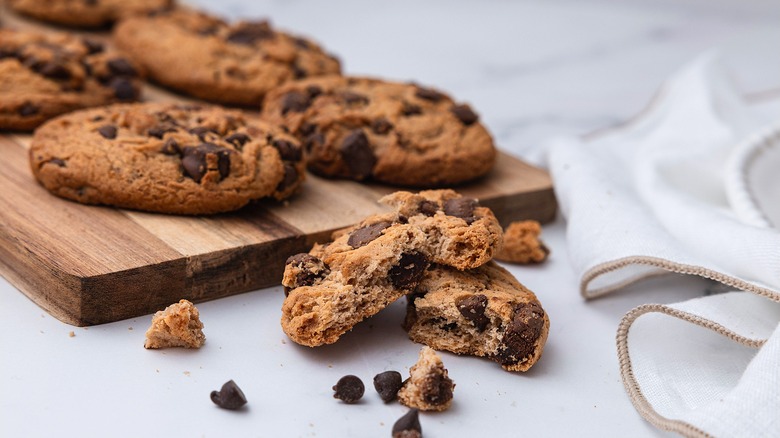
There aren't many foods more satisfying to eat than buttery, crisp cookies. Especially when it comes to preparing your own, whether they're old-fashioned oatmeal chocolate chip cookies or even caramel dark chocolate chip cookies, you may have a deep-seated preference for crispy over chewy results. Fortunately, if you're looking for a simple way to alter your favorite recipe for an extra-crunchy bite every time, all you need to do is set your oven a bit higher than 350 degrees Fahrenheit. In most cases, baking cookies at 375 degrees Fahrenheit will help you achieve evenly browned, crunchy baked goods without burned edges.
More specifically, to trigger the Maillard reaction and caramelization of excess sugars, cookies need to reach a base temperature of 285 and 330 degrees Fahrenheit, respectively. However, you can speed up these distinct processes by opting for a slightly higher oven temperature. In turn, your cookies will set quicker and have more time to brown and crisp in your oven. While most classic drop cookies, including chocolate chip, are typically baked at 350 degrees Fahrenheit, upping your oven temperature 25 degrees will, in most cases, lead to crunchier results in the same amount of time. Yet, besides increasing the temperature of your oven to 375 degrees Fahrenheit, there are other factors that affect the texture of homemade cookies.
More ways you can achieve crispy cookies from scratch
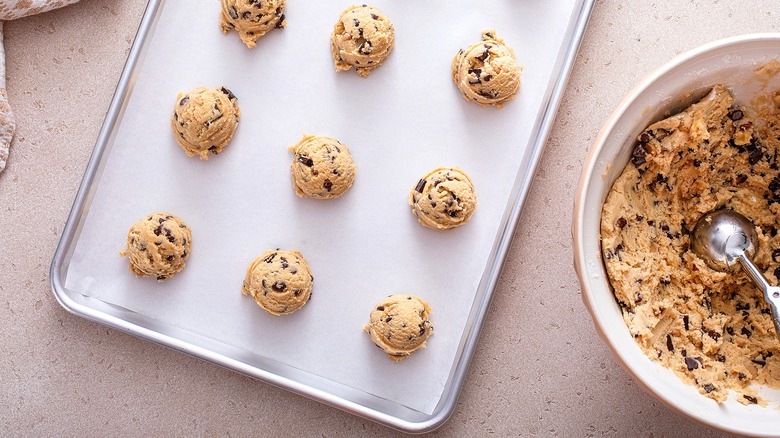
For starters, instead of adjusting the oven temperature, consider baking your cookies for a few extra minutes at the recipe's recommended temperature for a crunchier bite. Or, on the more technical side, you can make crispier cookies with white granulated sugar. Believe it or not, the ubiquitous sweetener may produce crunchier cookies when used on its own as compared to recipes that call for both white and brown sugar. This is partly because brown sugar has more moisture than white sugar.
Conversely, using a moisture-rich fat like butter instead of shortening may more easily produce a crunchier texture and golden edges. While butter contains water (whereas shortening doesn't), it also has a lower melting point. Therefore, butter melts faster at higher temperatures, which may cause your cookies to spread and set more rapidly.
Regardless of the changes you make to your next batch of cookies, it's important to remember that not every cookie recipe is created equal. For example, certain treats like butter cookies or shortbread may benefit from a longer baking time at a lower temperature, like 325 degrees Fahrenheit, for crispier results. Since cookies with a higher fat or sugar content tend to burn faster at higher temperatures, using the low-and-slow method for these baked goods often yields more consistent results.