

The Key Difference Between McDonald's And In-N-Out's Beef
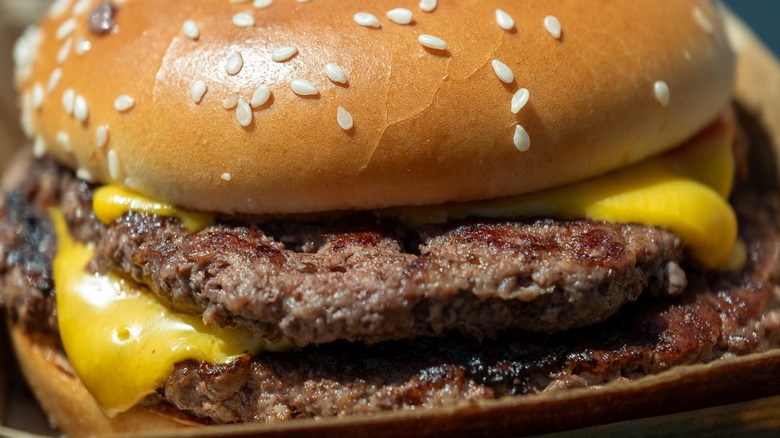
The average American chows down on roughly three burgers every month, according to a 2024 report from Datassential, a market research firm for the food and beverage industry. But regardless of how much you're contributing to that number, there's a good chance you have preferences on where to order the iconic sandwich. However, if you're making your burger-eating decisions based on perceptions of beef quality, you might be a bit off in your assumptions. QSR Magazine data ranks McDonald's as the largest fast food burger chain in the United States in terms of both sales and number of stores, but In-N-Out was crowned the top burger chain in America by Yelp in 2025 based on sheer popularity and is commonly viewed as serving higher-quality burgers. That depends on how you view quality, though. In-N-Out's patties consist entirely of ground chuck, whereas McDonald's grinds its patties out of trimmings from a few different beef cuts, namely chuck, round, and sirloin.
Here's the kicker, though: The difference is not just in the beef itself, but everything else that surrounds it. You might think that the regional, West Coast-based In-N-Out may have significantly better quality beef due to its smaller footprint and McDonald's former reputation for "pink slime" in its food. But aside from the specific cuts used in their ground meat, each restaurant's burgers are still 100% USDA-inspected beef, without any fillers or preservatives. Instead, there are larger differences between the beef from the two fast food chains: namely, where it comes from and how it's prepared.
McDonald's beef is more broadly sourced than In-N-Out's
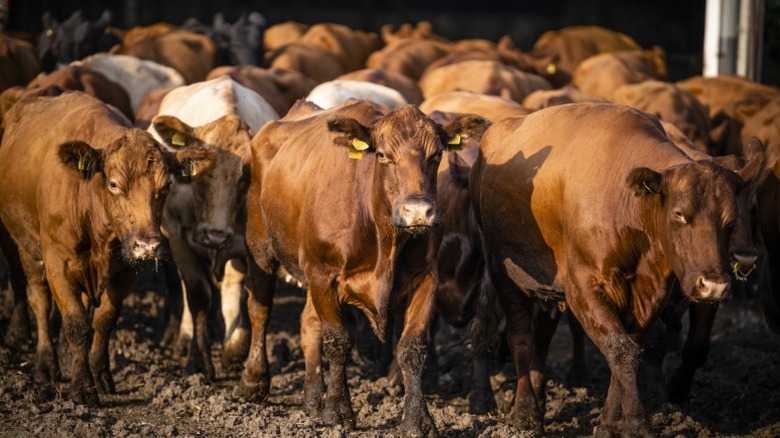
Given that McDonald's is the considerably larger chain with over 44,000 stores globally compared to In-N-Out's 400 or so solely in the United States, it probably comes as no surprise that it has a much wider reach in terms of where its beef comes from. The franchise lists only two beef suppliers — Lopez Foods, the primary company behind McDonald's burgers for more than three decades, and Keystone Foods — on its suppliers page. Neither are small companies. Lopez Foods (also known as Lopez Dorada) is a major national beef, poultry, and pork supplier that relies on a network of U.S. farms and processing plants, though it also sources meat from foreign suppliers (primarily located in Australia and New Zealand) to meet domestic demands when necessary. Keystone's own network supplies McDonald's with over 150 million pounds of beef every year.
In-N-Out, meanwhile, has a smaller footprint, stating on its Food Quality page that it relies on just three regional facilities to make its burger patties: two in Baldwin Park and Lathrop, California, and another in Dallas, Texas. Where exactly the meat for these patties comes from isn't clear, but numerous social media posts allege that a major supplier is Harris Ranch, in Selma, California. One Quora user claiming to be a butcher for In-N-Out distribution said that some of the meat also comes from a Cargill facility in Fresno, California.
In-N-Out doesn't freeze its beef
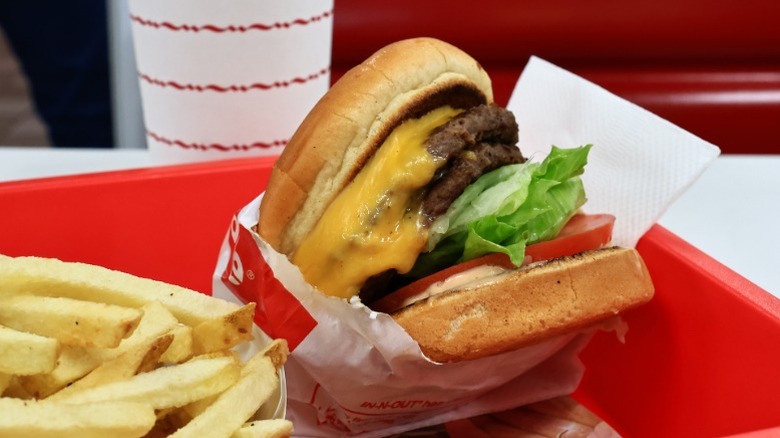
Regardless of the herds and specific suppliers behind each chain, both McDonald's and In-N-Out use beef from cattle that have received antibiotics. This is actually an ethical reason why some people avoid ordering In-N-Out despite its popularity, but the truth is that most fast food burger joints have been found to do the same. However, one key difference between In-N-Out and McDonald's burgers is that In-N-Out claims to never freeze its meat. Instead, the chain delivers its patties, freshly made at its meat facilities, straight to its stores.
McDonald's, on the other hand, openly admits to flash freezing its meat. This is a widely used method in the food industry and essentially just means the meat is subjected to a sudden drop in temperature, rapidly freezing to prevent large ice crystals from forming. The exception is the Quarter Pounder and certain specialty (Signature Crafted) burgers, which McDonald's switched from frozen to fresh back in 2018. Of course, if you're not ordering one of these and prefer the idea of your burger never even seeing the inside of a freezer, then it's In-N-Out's meat for the win. Otherwise, your choice will really come down to the buns and toppings at each restaurant.