

Your Oven Could Be Turning Your Kitchen Into A Heat Trap. Here's How To Prevent That
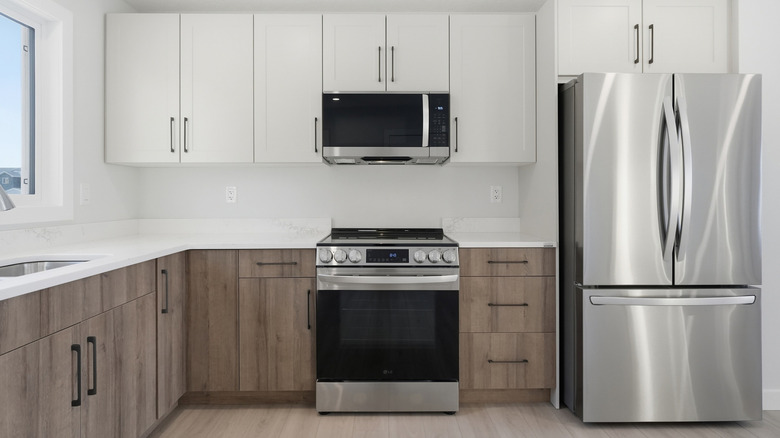
Many people think twice before turning their oven on in the summer. After all, that increased heat output can tax your AC (and your budget) even further. And while there are some practical ways to help keep your kitchen cool, like grilling outside and prioritizing no-cook meals or dishes that will stretch beyond a single meal, it may be worth taking a look at your kitchen setup itself. Chowhound spoke with a few experts in the field — John Dean, owner of Dean Cabinetry; chef Jamie Simpson, executive chef at the Culinary Vegetable Institute; and Joseph Haycock, vice president of Fresh Air Concepts, LLC — to learn more. Dean told Chowhound that the two biggest culprits of extra-warm kitchens are usually poor ventilation and concentrated heat. "If the heat has nowhere to go," he says, "it gets trapped in the kitchen, especially if it's a smaller layout or lacks nearby windows/airflow."
If you can, re-thinking your kitchen layout may be helpful. For example, stacking your microwave and oven on top of each other — a common space-saving measure — can concentrate heat, Dean says. "Ceiling height and open concept layouts help disperse heat," he continues. "In a more enclosed kitchen, ventilation and appliance placement are even more important."
Chef Simpson concurs. He acknowledges that, comparatively, modern kitchens don't get as hot as they did 40 years ago before open kitchens existed. This is just one factor that led to over-heating problems back in the day. "That being said," Simpson says, "kitchens still get pretty hot."
Ventilation and simpler solutions
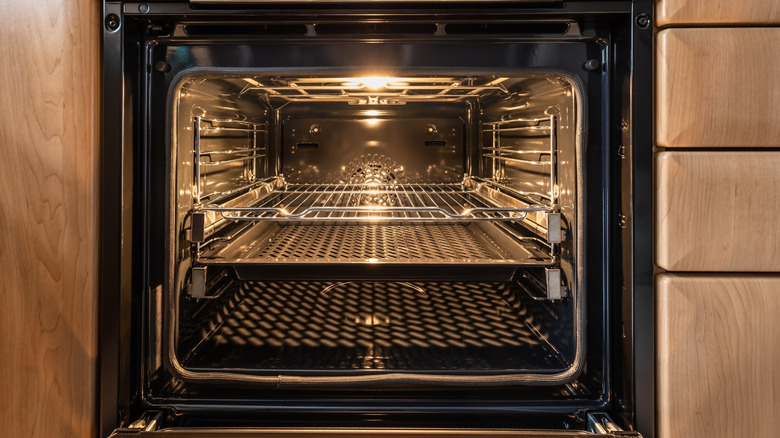
If you can't do a total kitchen redesign, one area to prioritize might be your oven ventilation hood. "Quality range hoods matter more than homeowners realize," says John Dean. "It helps pull heat and steam out of the kitchen." When your oven starts to heat up, chef Jamie Simpson recommends turning the vent on. Joseph Haycock also emphasizes the importance of ventilation. "A weak exhaust system is often one of the main reasons a kitchen heats up faster and stays hot much longer," he says. Older ovens can also play a role, he adds, as they typically release more heat (which is just one sign it may be time to replace your oven).
But there are some easy, practical things people can do to minimize heat. Start by limiting the number of times you open the oven door when cooking. As Simpson puts it, "There's an old saying, 'If you're lookin, you ain't cookin,'" which refers to opening the oven door as things bake. This action means the cooler air in your kitchen and the hotter air in your oven trade places, leading to inefficient baking and a warmer kitchen. Simpson recommends purchasing a probe thermometer to leave in the oven — this will tell you how the cooking is progressing, without needing to open the door.
Timing your oven use is important, too, says Haycock. Try not to cook during the hottest parts of the day. If possible, increase airflow by opening doors and windows, or turning on a fan or vent hood.