

Load Glasses And Lids This Way To Prevent Dishwasher Damage
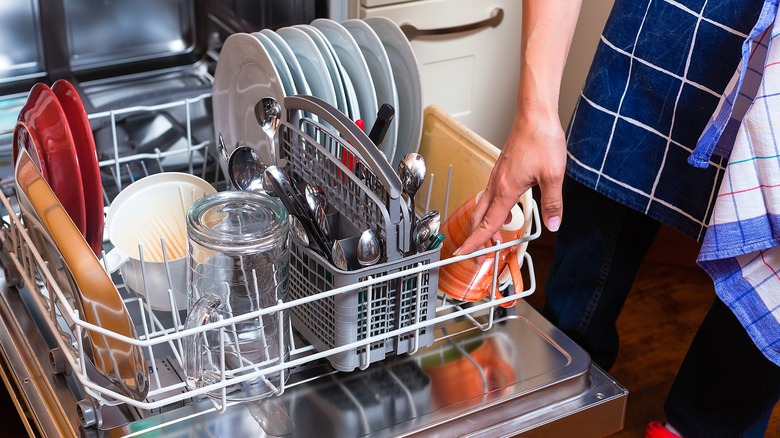
Loading a dishwasher can feel like a mind-bending puzzle — especially for people who like to reconfigure their bowls, glasses, and plates again and again to avoid potential chips, scrapes, and residual damage. However, don't despair if you fall into this category. Thankfully, there's a noteworthy, stress-free way to load your glassware. To keep common, everyday glassware safe from damage during your next washing cycle, use plastic lids from food containers as sufficient safety dividers.
While crystal glassware is easily one of the many kitchen items you should never put in the dishwasher, most everyday glassware is fine to wash as long as it's not packed in. If you haphazardly overstuff the top and bottom racks of this handy appliance, the outer edges of your drinking glasses and glass containers may collide from the pressure of the water and ultimately chip, crack, or break. To prevent this from happening, simply place any push-and-snap-on container lids you need to wash between your drinking glasses and bowls so your more delicate items don't get jostled too much during washing. These malleable lids serve as a barrier between glasses and protect your delicate items from breaking or becoming damaged during washing. However, to simultaneously clean your lids and use them to safely and effectively protect your glassware, there are certain factors you should keep in mind.
The best way to load your dishwasher for clean, consistent results
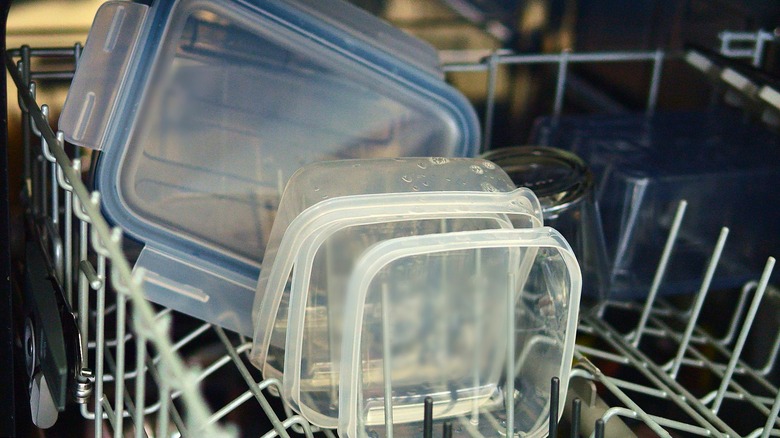
For starters, make sure the lids you're positioning between your drinking glasses and glass containers are actually safe to run through your dishwasher. To determine which ones pass the test, look for a "dishwasher-safe" emblem, which is usually faintly marked on the bottom or side of each container. Next, always make sure to store your lids on the top rack of your dishwasher since the heating element is located near the bottom rack. Keeping your lids on the top rack prevents them from getting too hot and warping, or accidentally touching the heating element directly, which may cause them to melt.
To ensure both your glassware and lids are actually getting clean during each wash cycle, avoid common dishwasher-loading mistakes like not placing your glasses top-down so they don't fill up with water, and positioning them over the tines instead of between them (which helps prevent excess movement). You may also want to consider which cycle you're using — standard or heavy-duty cycles may be sabotaging your glassware.
Most importantly, don't overfill your dishwasher and wedge your silicone or plastic containers too tightly between your glasses and bowls. Instead, leave a tiny bit of space between each lid and container to prevent food particles and water from getting trapped between items. That being said, follow proper dishwasher protocol and always remove excess food from dishes and glasses before running this appliance. You should also